
Unprecedented Escalation: The Lathi Charge on CJP Protest
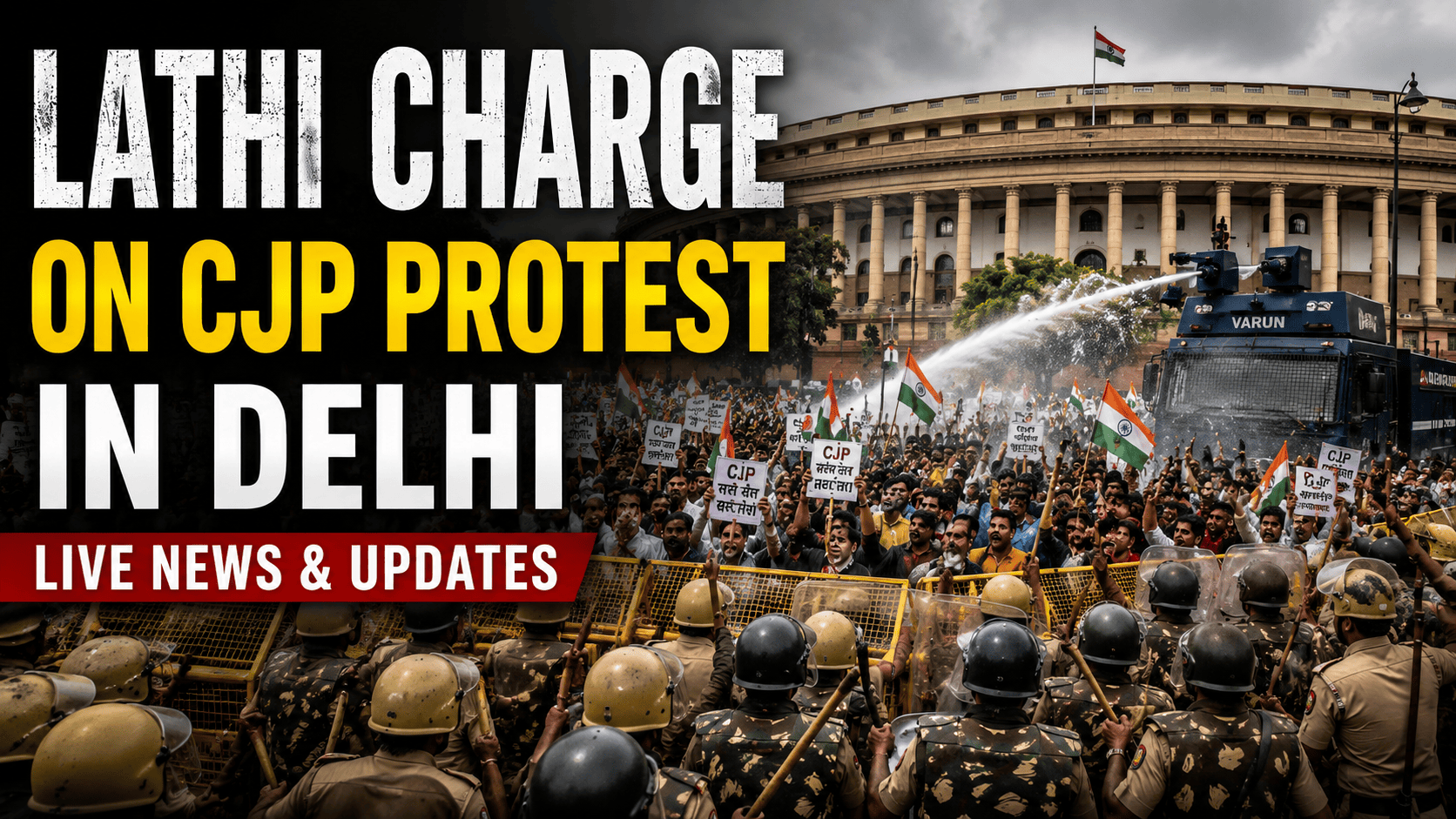
On Monday, July 20, 2026, the heart of New Delhi witnessed unprecedented chaos as a massive demonstration culminated in a fierce lathi charge on CJP protest participants. Thousands of youth and supporters associated with the Cockroach Janta Party (CJP) had gathered at the historic Jantar Mantar site, fully determined to execute their planned “Chalo Sansad” (March to Parliament) rally. Timed to coincide with the first day of the Monsoon Session of Parliament, the demonstration aimed to amplify long-standing grievances regarding the national education system. However, the peaceful gathering quickly descended into conflict, triggering a nationwide debate on police brutality, student rights, and government accountability.
For more ongoing updates on this political crisis and other trending global events, stay tuned to our dedicated news coverage on Jivan Jarurat.
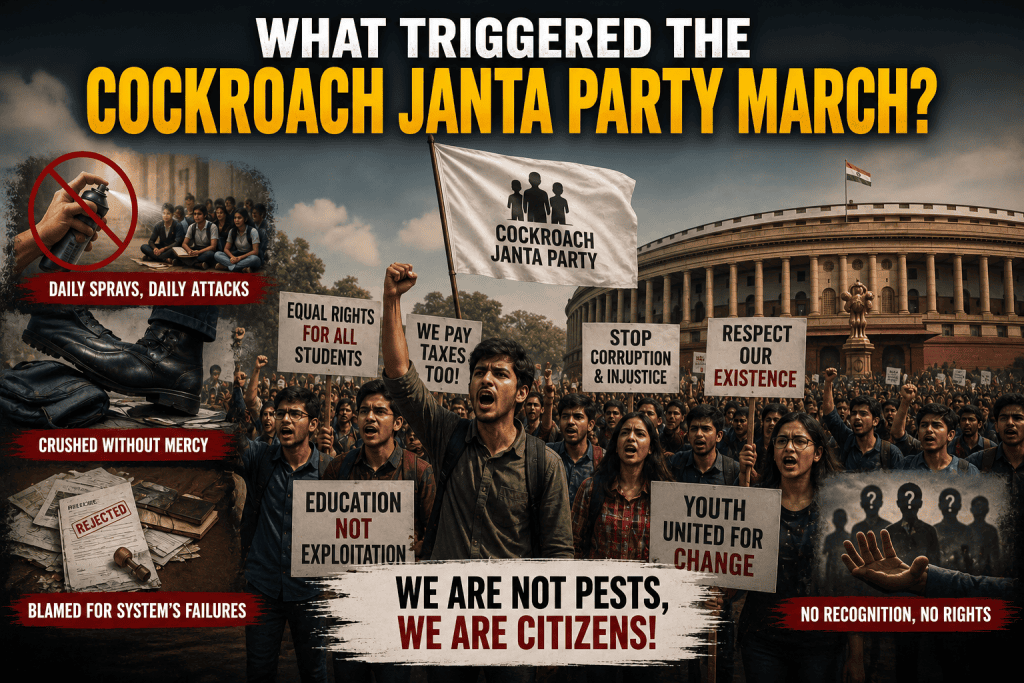
What Triggered the Cockroach Janta Party March?
The root cause of the intense public anger stems from alleged systemic failures within the country’s educational framework. Over the past few months, the Cockroach Janta Party has been fiercely campaigning against the reported irregularities and paper leaks associated with the NEET examination—a crucial gateway for aspiring medical students in India. The campaign’s primary demands include the immediate resignation or sacking of Union Education Minister Dharmendra Pradhan, alongside sweeping reforms to safeguard the future of students.
Adding emotional weight to the movement is the plight of prominent climate activist Sonam Wangchuk. Following an indefinite hunger strike demanding broader accountability, Wangchuk was admitted to Safdarjung Hospital. The protesters have been staunchly demanding his immediate release and expressing solidarity with his cause.
The ‘Chalo Sansad’ March Escalation
Despite severe rain and exhaustive security protocols implemented across central Delhi, thousands of resilient youths poured into Jantar Mantar on Monday morning. Anticipating the march, the Delhi Police had pre-emptively sealed multiple roads leading to the Parliament building, erected heavy multi-layered barricades, and imposed strict prohibitory orders under Section 163 of the Bharatiya Nagarik Suraksha Sanhita (BNSS). Furthermore, major transit hubs, including the Janpath, Patel Chowk, Rajiv Chowk, and Central Secretariat metro stations, were entirely shuttered to curb the influx of demonstrators.
As the enormous crowd initiated their peaceful march toward the Parliament building, the situation grew volatile. Demonstrators allegedly breached the preliminary security barricades, prompting an immediate tactical response from law enforcement.
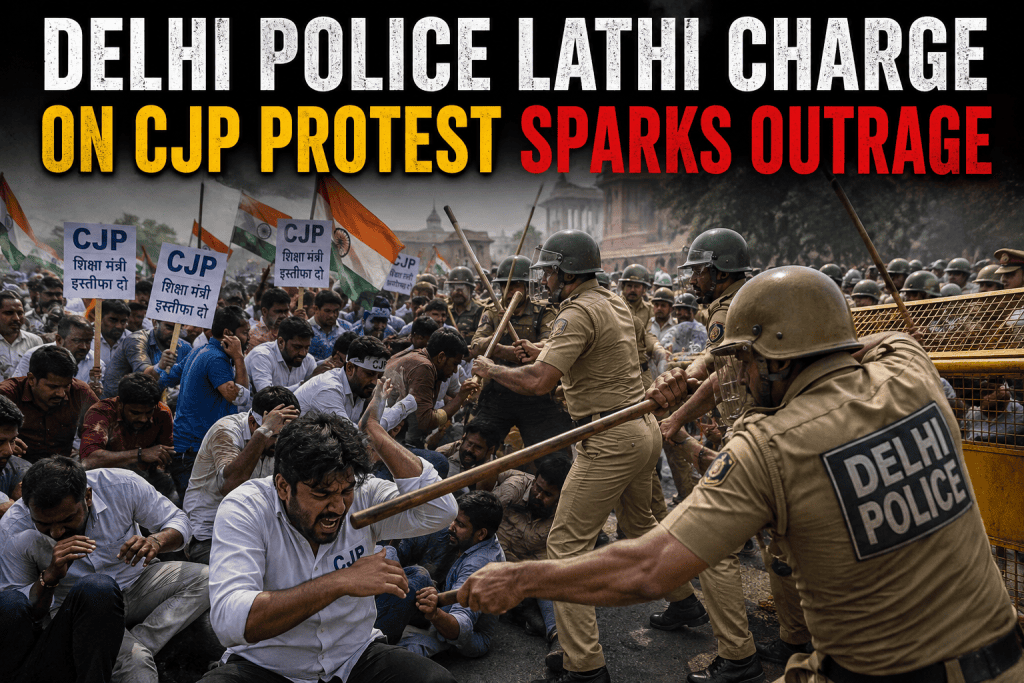
Delhi Police Lathi Charge on CJP Protest Sparks Outrage
The confrontation reached its peak when the Rapid Action Force (RAF) and Delhi Police personnel engaged the advancing crowd. Visuals circulating widely on social media depicted security forces deploying tear gas shells and executing a heavy lathi charge on CJP protest attendees to disperse the massive gathering. Multiple reports from the ground indicated that pellet guns were also utilized, a crowd-control tactic classified as non-lethal but capable of causing severe soft tissue and ocular damage.
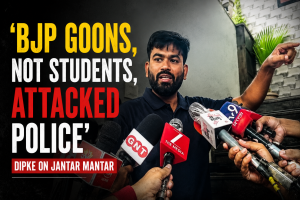
CJP president Abhijeet Dipke publicly expressed his deep dismay over the events, issuing a formal apology to the party’s supporters. “I apologise to all our supporters, especially the girls who were brutally beaten by male police officers. We could have done better to protect you from the inhumane actions of the Delhi Police,” Dipke posted on the social media platform X. He emphasized that the brutal response was an institutional attempt to shield the Education Minister from accountability.
Claims, Casualties, and Detentions
The aftermath of the lathi charge on CJP protest participants has resulted in vastly differing narratives from the authorities and the organizers.
According to official statements released by the Delhi Police, the protesters exhibited “unruly, aggressive and violent behaviour,” resorting to stone-pelting and systematic destruction of public property[2][5]. Law enforcement officials claimed that over 118 police personnel, including several high-ranking officers, sustained injuries during the clashes, leading to the detention of approximately 70 demonstrators.
Conversely, the CJP reported catastrophic injuries among their ranks. Medical sources revealed that at least 38 injured protesters were rushed to Lady Hardinge Medical College, while another 65 were admitted to Dr. Ram Manohar Lohia (RML) Hospital. Party spokespersons highlighted that one female protester remains in critical condition at RML following the baton charge. Furthermore, there were serious allegations regarding the physical assault of CJP spokesperson Gitanjali Angmo by police personnel.
While dealing with high-stress environments and national crises, prioritizing your physical well-being is essential. Readers looking to navigate stress can explore our comprehensive health tips to improve wellness naturally.
Political Uproar and Parliament Disruptions
The forceful suppression of the protest reverberated immediately inside the halls of Parliament. The first day of the Monsoon Session was entirely derailed as Opposition MPs aggressively raised the issue of the lathi charge.
Rahul Gandhi and Opposition Leaders React
Leader of the Opposition in the Lok Sabha, Rahul Gandhi, launched a scathing attack on the ruling government, labeling the Prime Minister the “most anti-youth” PM in India’s history. Following the crackdown, Gandhi convened an urgent meeting with Lok Sabha Speaker Om Birla, firmly demanding an immediate parliamentary discussion regarding the brutality unleashed on students. “Students were beaten for asking legitimate questions about their own future. If Parliament cannot discuss the future of India’s youth, what is it for?” Gandhi remarked. Due to the ensuing ruckus, both the Lok Sabha and the Rajya Sabha were adjourned.
Other notable political figures and celebrities, including Azad Samaj Party chief Chandrashekhar Azad, TMC MP Mahua Moitra, veteran actors Prakash Raj and Shabana Azmi, and popular YouTuber Elvish Yadav, publicly condemned the violence. Shabana Azmi reportedly suffered dizziness during the protest and required medical assistance. Elvish Yadav specifically emphasized that protesting students should never be subjected to such violent state measures.
For insights into how public figures are influencing civic movements, check out our latest articles in the entertainment section.
Government Intervention and Legal Hurdles
In an attempt to defuse the escalating tension, CJP spokesperson Sourav Das managed to secure an audience with Union Health Minister J.P. Nadda. Submitting a formal letter of demands, Das received assurances from Nadda that the protesters’ grievances, including the release of Sonam Wangchuk, would be discussed at an “appropriate level.” However, Das reiterated that the peaceful agitation would not cease until concrete commitments were made.
Meanwhile, attempts to seek immediate judicial intervention hit a roadblock. A Public Interest Litigation (PIL) was filed in the Delhi High Court alleging the use of excessive force and violent crackdown by the police. The High Court, however, declined an urgent hearing for the plea, stating that the matter would follow standard judicial scheduling. Human Rights Watch has simultaneously issued a statement urging the authorities to exercise maximum restraint and restore mobile internet connectivity, which had been throttled to slow the dissemination of visual evidence from the protest site.
Protesters Reclaim Jantar Mantar
Despite the heavy-handed clearing of the site on Monday afternoon, the resilience of the youth movement remained unbroken. By late Monday night, Abhijeet Dipke and hundreds of Cockroach Janta Party supporters returned to successfully reclaim the dismantled Jantar Mantar protest site[9]. As they await a formal response from the government regarding their core demands, the standoff highlights a critical juncture in the nation’s democratic dialogue.
13. Frequently Asked Questions (FAQs)
Q1: What is the Cockroach Janta Party (CJP) protesting against?
The CJP is primarily protesting against alleged systemic irregularities and paper leaks in the national NEET examinations. They are demanding accountability, the resignation of Education Minister Dharmendra Pradhan, and the release of activist Sonam Wangchuk.
Q2: Why did the Delhi Police use a lathi charge on the CJP protest?
According to Delhi Police, the lathi charge was deployed after protesters exhibited unruly behavior, allegedly breached heavily guarded barricades, threw stones, and damaged public property during their unauthorized march toward Parliament.
Q3: How many people were injured during the lathi charge?
The police reported that 118 security personnel were injured. On the protesters’ side, at least 38 individuals were admitted to Lady Hardinge Medical College, and 65 were taken to RML Hospital, with one female demonstrator reported in critical condition.
Q4: How did political leaders react to the incident?
Opposition leaders strongly condemned the police action. Rahul Gandhi met with the Lok Sabha Speaker to demand a parliamentary discussion, calling the violent suppression “un-Indian” and referring to the PM as the “most anti-youth” leader in history.
Q5: Did the Delhi High Court take action against the police crackdown?
A Public Interest Litigation (PIL) was filed regarding the alleged excessive use of police force, but the Delhi High Court refused an urgent listing of the petition, opting to hear it through standard procedures.
14. Key Takeaways
- Massive Youth Mobilization: Thousands of CJP supporters gathered at Jantar Mantar on the first day of the Monsoon Session to demand structural educational reforms and accountability for NEET exam leaks.
- Violent Clashes: The demonstration escalated into chaos when a lathi charge on CJP protest participants was executed by the Delhi Police and RAF, resulting in widespread injuries and the use of tear gas.
- Political Disruption: The incident caused significant uproar in Parliament, leading to adjournments in both Houses as Opposition leaders, spearheaded by Rahul Gandhi, demanded immediate discussions on student rights.
- Continuing Standoff: Despite the severe daytime crackdown, protesters successfully reclaimed the Jantar Mantar site by Monday night, vowing to continue their peaceful agitation until their demands are met.