

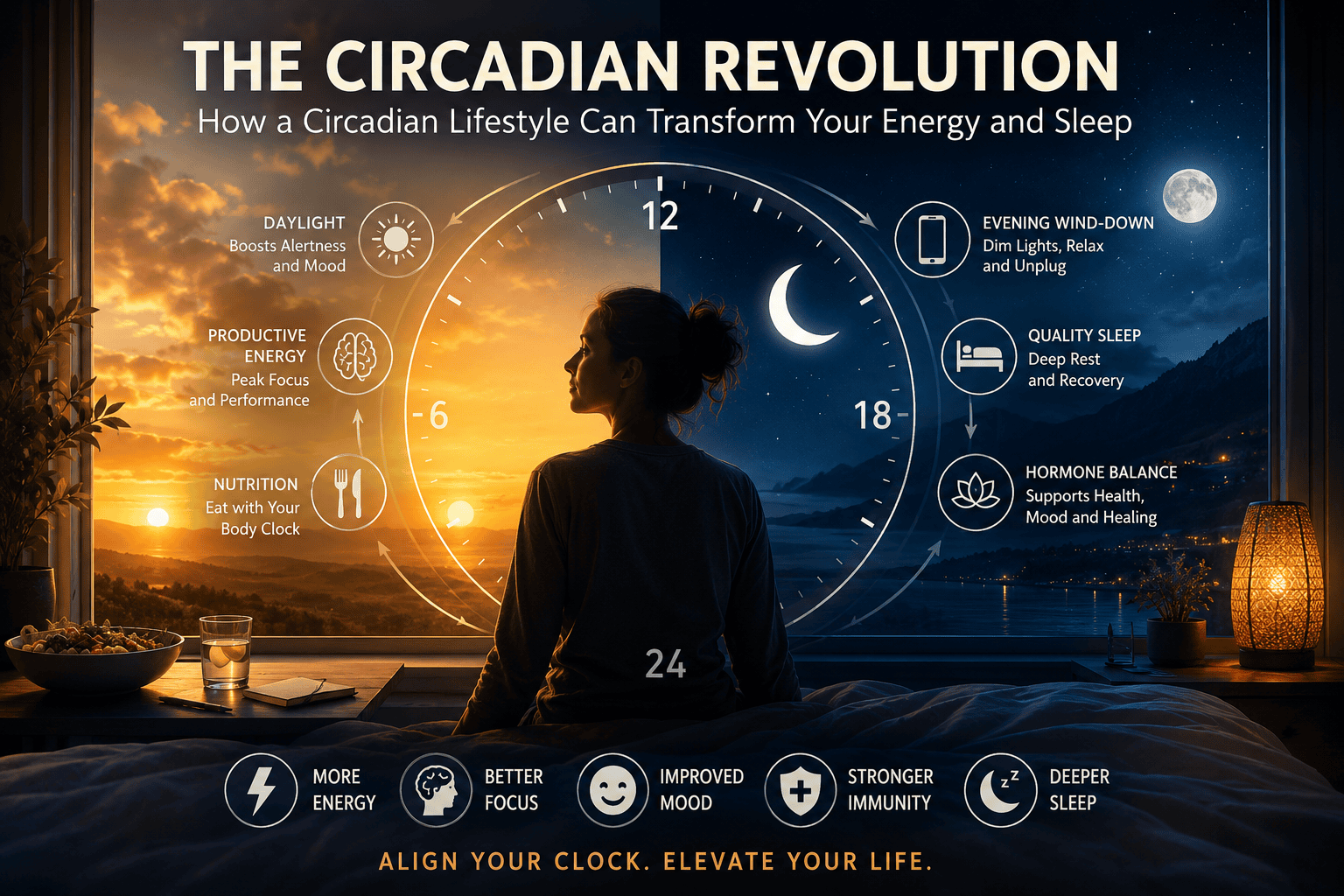
Introduction: Why Modern Life Disrupts Natural Energy
Many people feel exhausted during the day but suddenly alert late at night. Others struggle with poor sleep, low energy, brain fog, and inconsistent focus despite following healthy habits. One major reason is the disconnect between modern routines and the body’s natural biological timing.
A circadian lifestyle focuses on aligning daily habits with natural light, sleep cycles, eating schedules, and energy rhythms. Instead of forcing the body to adapt to artificial schedules, a circadian lifestyle works with the body’s internal clock to improve physical and mental performance.
Today, researchers increasingly connect circadian health with better sleep, stronger immunity, improved metabolism, and emotional balance. Understanding the science behind a circadian lifestyle can help create long-term improvements in overall well-being.
1. Understanding the Body’s Internal Clock
At the center of a circadian lifestyle is the circadian rhythm, a natural 24-hour cycle that regulates sleep, hormones, digestion, and alertness.
Inside the brain, a small region called the Suprachiasmatic Nucleus acts as the body’s master clock. This system responds mainly to sunlight and darkness to control biological timing.
Every Organ Has Its Own Rhythm
Modern research shows that the body does not rely on only one clock. The liver, digestive system, heart, and even skin cells follow their own timing systems.
When people eat late at night, stay awake under bright screens, or sleep irregularly, these systems become misaligned. A circadian lifestyle aims to restore synchronization between these biological rhythms.
2. Morning Sunlight and Energy Regulation
One of the most important principles of a circadian lifestyle is morning light exposure.
Natural sunlight shortly after waking helps regulate melatonin and cortisol production. This process signals the body to feel alert during the day and sleepy at night.
Why Morning Light Matters
Morning sunlight helps:
- Increase daytime energy
- Improve focus and mood
- Support healthy sleep cycles
- Reduce late-night alertness
People following a circadian lifestyle often begin their day with outdoor light exposure for at least 10–20 minutes.
Even cloudy outdoor light is significantly brighter than indoor lighting and helps reset the body clock naturally.

Image 1 ALT Text: “Person standing in warm morning sunlight to support a healthy circadian lifestyle”
3. Artificial Light and Circadian Disruption
Modern technology is one of the biggest obstacles to a healthy circadian lifestyle.
Phones, televisions, LED bulbs, and laptops emit blue light that mimics daylight. Exposure to this light late at night can delay melatonin release and disrupt sleep timing.
Reducing Evening Light Exposure
People adopting a circadian lifestyle often reduce artificial light exposure by:
- Using warm lighting at night
- Activating night-mode screens
- Avoiding bright devices before sleep
- Wearing blue-light-blocking glasses
Small lighting changes can significantly improve sleep quality and nighttime relaxation.
4. Circadian Eating and Meal Timing
A circadian lifestyle is not only about sleep. Meal timing also plays a major role in metabolic health.
Research suggests the body processes food more efficiently during daylight hours. Eating very late at night may disrupt digestion, blood sugar regulation, and sleep quality.
Time-Restricted Eating
Many people practicing a circadian lifestyle eat within a consistent daytime window, often around 10–12 hours.
Benefits may include:
- Better digestion
- More stable energy
- Improved metabolic function
- Reduced nighttime hunger
Aligning meals with natural biological timing helps support the body’s internal rhythms.

Image 2 ALT Text: “Healthy balanced meal served during daylight hours to support circadian metabolism”
5. Social Jetlag and Irregular Sleep Patterns
One major challenge in maintaining a circadian lifestyle is social jetlag.
Social jetlag happens when sleep schedules change dramatically between weekdays and weekends. Sleeping several hours later on weekends can confuse the body similarly to changing time zones.
Why Consistency Matters
A stable wake-up time helps regulate:
- Hormone production
- Energy levels
- Mood stability
- Sleep quality
People following a circadian lifestyle often try to maintain similar sleep and wake times throughout the week.
6. Understanding Different Chronotypes
Not everyone naturally functions best at the same time of day. A circadian lifestyle recognizes that people have different chronotypes, or natural activity patterns.
Common Chronotypes
Morning-Oriented Individuals
Most productive early in the day with earlier sleep cycles.
Midday-Oriented Individuals
Follow balanced daytime energy patterns.
Evening-Oriented Individuals
Experience peak focus later in the afternoon or evening.
Understanding personal energy patterns helps people design a more effective circadian lifestyle for work, creativity, and rest.
7. Designing a Circadian-Friendly Home
Environment strongly influences a circadian lifestyle. Lighting, temperature, and room design all affect sleep and energy regulation.
Bedroom Environment
A healthy sleep environment should include:
- Minimal light exposure
- Cooler temperatures
- Quiet surroundings
- Comfortable bedding
Daytime Spaces
Bright natural light during the day supports alertness and healthy circadian timing.
Many people improving their circadian lifestyle place workspaces near windows or use lighting systems that shift from cool daylight tones to warmer evening tones.
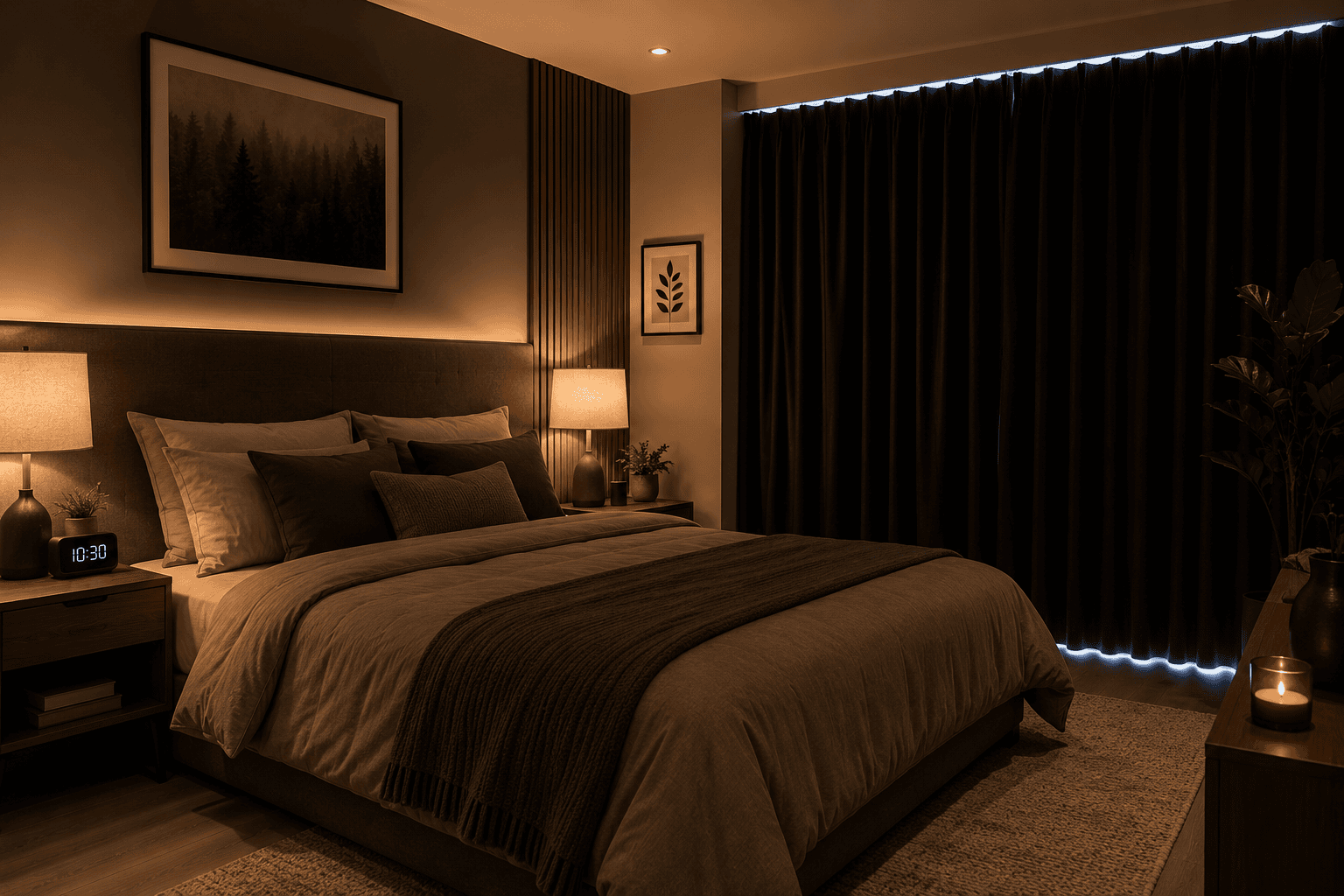
Image 3 ALT Text: “Modern bedroom with warm dim lighting and blackout curtains for better sleep”
8. Long-Term Benefits of a Circadian Lifestyle
Research increasingly shows that a circadian lifestyle may provide benefits beyond better sleep.
- Improved Mental Wellness
Consistent sleep timing supports emotional balance and cognitive function.
- Better Immune Function
Important repair and recovery processes happen during healthy sleep cycles.
- More Stable Energy
Balanced circadian rhythms reduce daytime fatigue and improve productivity.
- Metabolic Support
Proper timing of food and sleep may improve weight management and blood sugar control.
A circadian lifestyle helps the body function more efficiently by respecting natural biological timing.
9. Why Circadian Health Matters Today
Modern society often encourages late-night activity, irregular schedules, and constant screen exposure. Unfortunately, these habits can disrupt biological rhythms over time.
A circadian lifestyle offers a practical approach to restoring balance in a technology-driven environment. Instead of relying only on stimulants or sleep aids, circadian health focuses on working with natural biological systems.
As awareness grows, more people are exploring how a circadian lifestyle can improve sleep, focus, recovery, and overall quality of life.
Conclusion: Returning to Natural Rhythms
The human body evolved in connection with sunlight, darkness, and predictable daily rhythms. Modern lifestyles often separate people from these natural patterns, contributing to fatigue, stress, and poor sleep.
Adopting a circadian lifestyle does not require extreme changes. Simple habits like morning sunlight, consistent sleep schedules, reduced nighttime screen exposure, and mindful meal timing can gradually improve energy and well-being.
By aligning daily routines with natural biological rhythms, a circadian lifestyle helps create healthier sleep, clearer thinking, and more balanced living.
DoFollow the link of our website Jivan Jarurat to read more about Lifestyle.