Could a Saturn Moon Have Life? The Latest Space Discoveries
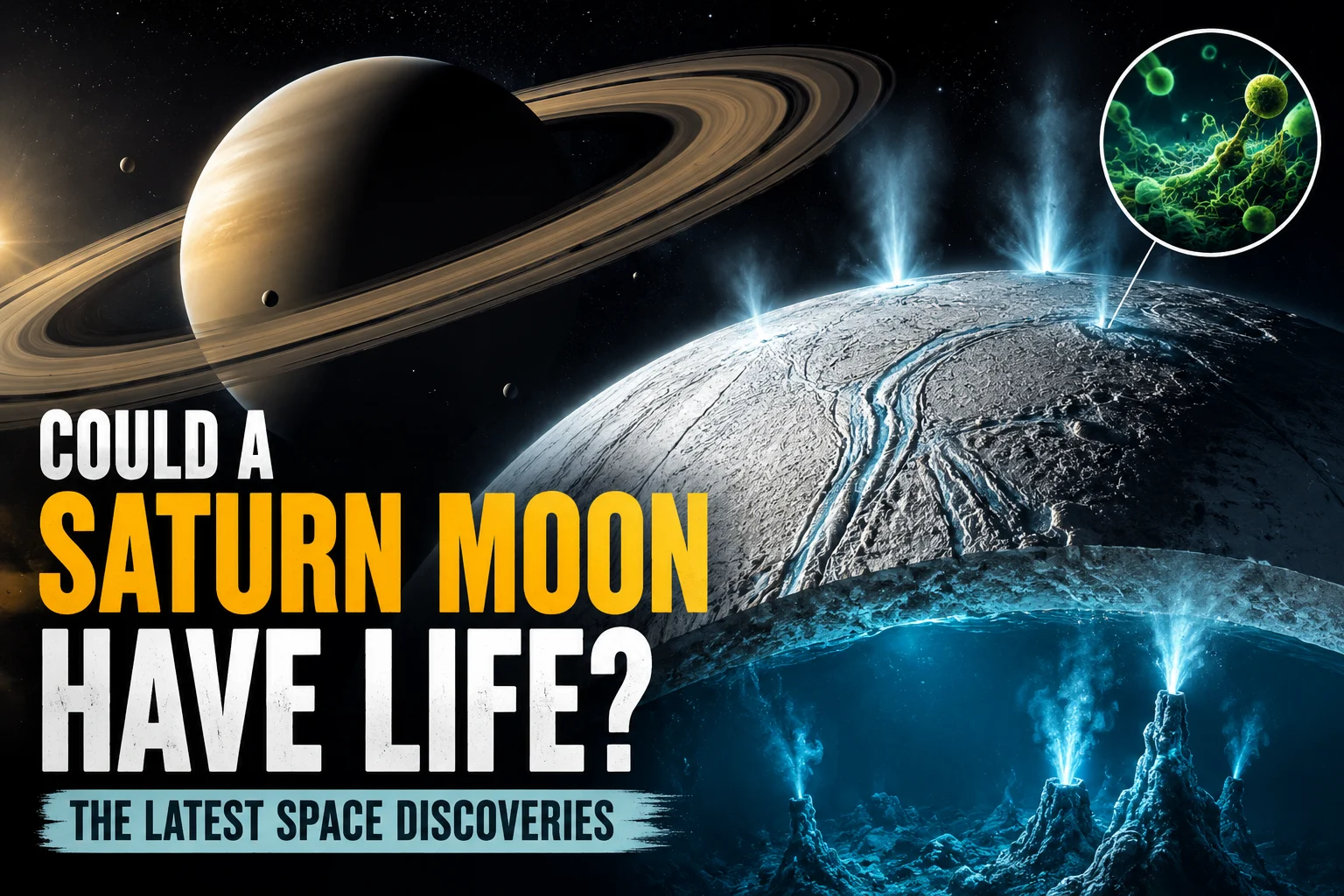
Many people look up at the night sky and wonder if we are alone in the universe. While Mars has traditionally stolen the spotlight, modern astronomers are looking further out into the solar system. Today, one of the most exciting questions in space science is whether a Saturn moon have life.
Saturn has over 140 recognized moons, but two of them stand out: Enceladus and Titan. Both worlds contain unique environments that challenge everything we know about biology. From underground oceans to thick, chemical-rich atmospheres, these moons possess the core ingredients necessary for life.
In this comprehensive guide, we will explore the latest scientific discoveries, explain what makes these moons so special, and look at the upcoming NASA missions designed to finally give us answers.
Does a Saturn Moon Have Life? The Big Question Answered
To put it simply, scientists have not yet found living aliens or microbes on any planet or moon. However, if you are asking if a Saturn moon have life, the answer is that the habitable potential is incredibly high.
Life as we know it requires three main things: liquid water, essential chemical elements, and an energy source. Surprisingly, both Enceladus and Titan check these boxes in different ways. Researchers are not looking for little green men. Instead, they are searching for microscopic organisms, similar to the bacteria found deep in Earth’s oceans near hydrothermal vents.
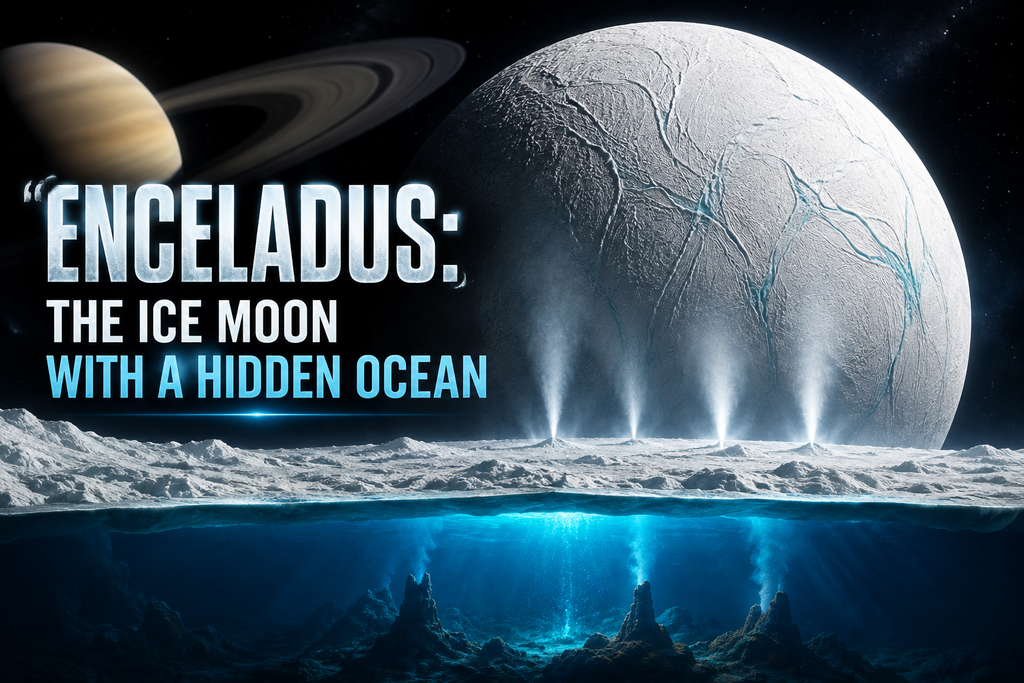
Enceladus: The Ice Moon with a Hidden Ocean
At first glance, Enceladus looks like a barren, frozen wasteland. It is highly reflective, covered in a thick shell of bright, clean ice. However, beneath that frozen crust lies one of the most exciting discoveries in modern astronomy: a global underground ocean on Saturn’s moon.
Water Plumes and Geysers
In 2005, scientists noticed something strange happening at the south pole of Enceladus. Massive geysers were shooting icy particles and water vapor hundreds of miles into space. This discovery proved that the moon is not frozen solid.
The gravity of Saturn constantly stretches and squeezes Enceladus. Therefore, this gravitational friction generates massive amounts of internal heat. This heat melts the subsurface ice, creating a deep, dark, and warm ocean below the crust. The pressure forces this water out through cracks in the ice, allowing spacecraft to sample the ocean without ever having to land.
The Discovery of Phosphorus and Fresh Organics
Finding water was a massive step, but recent data has pushed the habitability of Saturn moons even further. In 2023, scientists analyzing older data alongside new observations from the James Webb Space Telescope discovered phosphorus in the icy plumes of Enceladus. Phosphorus is a crucial building block for DNA and RNA.
Additionally, in late 2025, researchers from the Freie Universität Berlin identified “fresh” organic compounds within these plumes. These complex carbon-based molecules were detected just minutes after erupting from the ocean. Meanwhile, earlier detections only found older organics that had been degraded by space radiation. Finding fresh organics strongly indicates active chemistry beneath the ice, elevating Enceladus as a prime candidate for extraterrestrial life in the solar system.
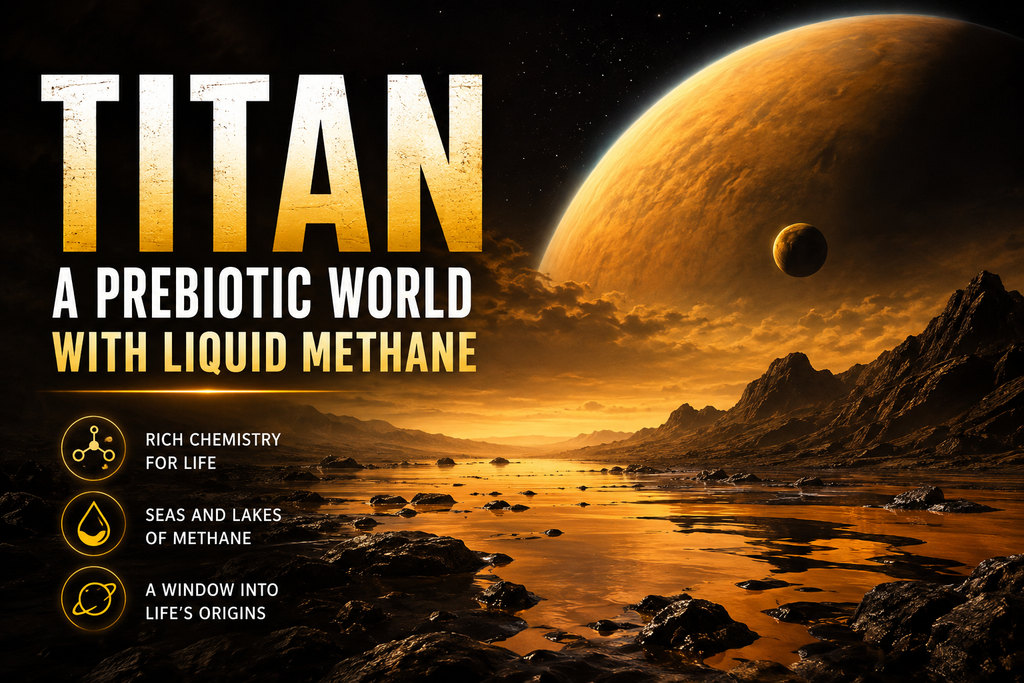
Titan: A Prebiotic World with Liquid Methane
While Enceladus is famous for its underground water, Titan takes a completely different approach to habitability. Titan is Saturn’s largest moon, and it is bigger than the planet Mercury. It is also the only moon in our solar system with a thick, dense atmosphere.
A Thick Atmosphere Like Early Earth
Titan’s atmosphere is mostly nitrogen, much like Earth’s. However, it also contains a high concentration of methane. Sunlight interacts with this methane to create a thick, orange smog of complex organic molecules.
Scientists often compare Titan’s atmosphere to that of the early Earth, billions of years ago before life evolved. Studying the Titan atmosphere helps researchers understand how the building blocks of life in space might naturally assemble over time.
Methane Lakes and Rivers
Titan is incredibly cold, with surface temperatures hovering around -290°F (-179°C). At these temperatures, water is as hard as rock. However, Titan still has weather. It rains, it has rivers, and it has vast lakes.
The catch? These bodies of liquid are not made of water. They are made of liquid methane and ethane. If life exists on Titan’s surface, it would be entirely different from anything on Earth. It would have to use liquid methane as a solvent instead of water. This possibility fascinates astrobiologists because it suggests that life could adapt to incredibly extreme environments.
What Makes a Moon Habitable? The Building Blocks of Life
To understand why scientists are so focused on Saturn’s moons, we need to look at the strict criteria for habitability. A planet or moon needs three fundamental things to support life.
Liquid Water
Water is a universal solvent. It allows chemical reactions to happen efficiently. Enceladus clearly has liquid water beneath its surface. Titan has a frozen water-ice crust, but scientists believe it may also harbor a liquid water ocean deep underground, beneath the methane surface.
Chemical Ingredients (CHNOPS)
Life requires six primary elements: Carbon, Hydrogen, Nitrogen, Oxygen, Phosphorus, and Sulfur (often remembered by the acronym CHNOPS). Thanks to recent discoveries, we now know that Enceladus contains almost all of these, including the rare but essential phosphorus. Titan is similarly rich in carbon and nitrogen.
An Energy Source
Organisms need energy to survive. On Earth’s surface, that energy comes from the sun. But in the dark oceans of Enceladus, sunlight cannot penetrate the ice. Instead, life would need to rely on chemical energy. Scientists believe that hydrothermal vents on the ocean floor of Enceladus could provide this exact type of energy, just as they do at the bottom of Earth’s oceans.
Cassini-Huygens: The NASA Saturn Missions That Changed Everything
Much of what we know about Saturn and its moons comes from the legendary Cassini-Huygens mission. Launched in 1997, the Cassini spacecraft arrived at Saturn in 2004 and spent 13 years exploring the system.
Major Cassini Mission Discoveries
The Cassini mission discoveries revolutionized space science. The spacecraft successfully mapped Titan’s surface using radar, seeing through the thick clouds to reveal mountains, sand dunes, and methane seas. Furthermore, it dropped the Huygens probe onto Titan’s surface in 2005, marking the most distant landing ever achieved by humanity.
Cassini also discovered the geysers on Enceladus. Before its mission ended in 2017, NASA intentionally flew Cassini directly through Enceladus’s plumes. The spacecraft “tasted” the water, detecting salts, silica, and simple organic materials. This daring maneuver confirmed that Enceladus holds the ingredients for life.
Comparing Titan and Enceladus for Potential Life
Both moons are fascinating, but they offer completely different environments for potential life. Here is a quick comparison:
| Feature | Enceladus | Titan |
| Surface Environment | Bright, frozen ice crust | Thick, orange smog with methane lakes |
| Atmosphere | Very thin, mostly water vapor | Very thick, nitrogen and methane |
| Liquid Present | Water (underground ocean) | Methane/Ethane (surface lakes) |
| Energy Source | Hydrothermal vents | Sunlight, chemical reactions |
| Type of Potential Life | Microbes similar to Earth’s deep ocean | Exotic, methane-based life forms |
Common Myths About Extraterrestrial Life in the Solar System
When discussing whether a Saturn moon have life, it is easy for misinformation to spread. Let’s clear up a few common myths:
- Myth: NASA has found aliens on Enceladus.
Fact: NASA has found the chemical building blocks of life (like carbon and phosphorus), but they have not found actual living organisms. - Myth: Titan is just like Earth.
Fact: While it has lakes and rain, Titan is nearly 300 degrees below zero. Its lakes are made of flammable methane, not water. - Myth: We can send astronauts to Saturn’s moons soon.
Fact: Saturn is roughly a billion miles away. It takes spacecraft about 7 to 9 years just to get there. Currently, only robotic missions are planned.
Future Space Exploration: When Will We Know for Sure?
The data we have today is incredible, but to finally answer the question of life, we need to go back. Thankfully, space agencies are already preparing the next generation of explorers.
The Dragonfly Mission Launch Date to Titan
NASA’s next major step is the Dragonfly mission. Set for a launch date in July 2028, Dragonfly is not a traditional rover. It is a car-sized, nuclear-powered drone featuring eight rotors.
Because Titan has low gravity and a very thick atmosphere, flying is actually easier there than on Earth[6]. Scheduled to arrive in 2034[6][9], Dragonfly will hop from location to location, analyzing the organic sand dunes and an ancient impact crater where liquid water and complex organics may have once mixed.
The Proposed Enceladus Orbilander
While Dragonfly targets Titan, scientists are also pushing for a return to Enceladus. A heavily proposed concept is the Enceladus Orbilander. This spacecraft would orbit the moon, repeatedly flying through the water plumes to collect large amounts of data. Finally, it would land directly on the ice to search for absolute proof of microbial life. Though still in the planning stages, it represents our best hope for exploring the underground ocean on Saturn’s moon.
Expert Tips on Tracking Space Discoveries
If you want to stay updated on the search for life in space, follow these best practices:
- Follow Official Sources: Always verify space news through official channels like NASA, ESA (European Space Agency), and the JPL (Jet Propulsion Laboratory).
- Beware of Clickbait: If a headline claims “Aliens Found on Saturn,” read the article carefully. Usually, the discovery is about chemical molecules, not actual life.
- Track the Webb Telescope: The James Webb Space Telescope continues to analyze the solar system. Keep an eye on its findings regarding icy moons.
- Watch the Dragonfly Timeline: Mark your calendars for 2028 (launch) and 2034 (arrival) for major updates on Titan[6][9].