

Navigating the Major Financial Changes of July 2026
The beginning of the second half of the calendar year consistently introduces a wave of new regulations and policy shifts, and July 2026 is no exception. A series of critical financial updates has just taken effect across India, impacting everything from everyday digital payments and identity management to taxation and luxury travel benefits.
Whether you are an aggressive investor, a frequent flyer, or a standard retail banking customer, staying informed about these modifications is essential for effective wealth management. Below is a detailed breakdown of the most significant financial changes in July 2026 and how they will shape your monetary decisions over the coming months.

1. Crucial ITR Filing Deadline for FY 2025-26
July is synonymous with tax season in India. For salaried employees, freelancers, and businesses, managing tax obligations efficiently is a top priority. For the Financial Year 2025-26 (Assessment Year 2026-27), the deadline for taxpayers to file their ITR-1 or ITR-2 returns is strictly set for July 31, 2026[1].
Penalties for Missing the ITR Due Date
Failure to file your income tax returns by this designated deadline can result in several financial setbacks. Under Section 234F of the Income Tax Act, missing the July 31 cutoff may attract a late filing fee of up to ₹5,000[1]. Furthermore, late filers are severely restricted from carrying forward eligible financial losses to offset future gains[1]. Delays also mean taxpayers could lose out on the flexibility to choose specific tax regimes that are highly beneficial to their current income brackets.
For more updates on maintaining financial stability and managing your lifestyle without monetary stress, you can read our latest financial updates and news on Jivan Jarurat.

2. Updated Credit Card Rules and Benefits
Banks continually adjust their credit card ecosystems to balance customer rewards with operational costs. July 2026 has witnessed significant restrictions introduced by top lenders, primarily affecting reward points and airport lounge access.
HDFC Bank Airport Lounge Access Revisions
HDFC Bank has tightened the eligibility criteria for its complimentary domestic airport lounge access program. Effective July 1, 2026, select cardholders must now meet a minimum expenditure threshold of ₹60,000 in the preceding calendar quarter to qualify for three complimentary lounge visits[2]. For instance, a customer’s spending between April and June 2026 dictates their lounge access eligibility from July to September 2026[2]. Those failing to meet this limit will no longer enjoy free entry into domestic lounges.
SBI Card Reward Point Modifications
Similarly, SBI Card has restructured its reward point framework for specific co-branded offerings. Effective this month, the PhonePe SBI Credit Card PURPLE and PhonePe SBI Credit Card SELECT BLACK variants face new monthly reward limits[2]. Furthermore, SBI Card has expanded the list of excluded transaction categories that no longer yield reward points, encouraging users to reassess their preferred spending platforms[2].
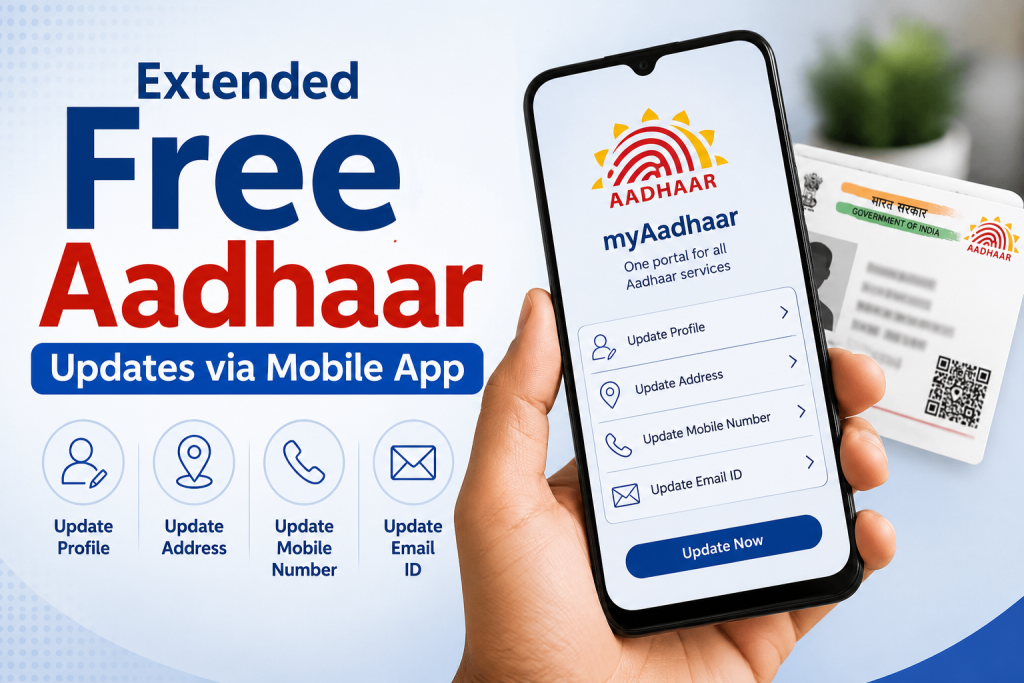
3. Extended Free Aadhaar Updates via Mobile App
In a major relief to citizens aiming to keep their biometric and demographic data current, the Unique Identification Authority of India (UIDAI) has extended its fee waiver for specific online updates. Between July 1 and December 31, 2026, individuals can update their registered email addresses and mobile numbers through the official Aadhaar mobile app without incurring the standard ₹75 administrative fee[1].
This temporary waiver is a calculated move to ensure citizens maintain accurate digital records, which is crucial for authenticating transactions, filing taxes, and accessing government subsidies.
4. Revision in Passport Application Charges
International travelers need to adjust their budgets as the cost of securing travel documents has increased. Beginning July 1, 2026, the charges associated with applying for a new Indian passport or renewing an expiring one have been revised upwards[1]. While the exact increment varies depending on the type of application (standard or tatkal) and page booklet size, applicants should verify the latest fee structures on the official Passport Seva portal before initiating their applications.
5. Economic Resilience: Strong GST Collections and Low Unemployment
Beyond personal finance regulations, July 2026 also highlighted India’s broader macroeconomic health. The gross Goods and Services Tax (GST) collections for June 2026 reached an impressive ₹1,94,812 crore, marking a robust 13.9% annual growth[3]. Maharashtra led the state-wise collections with over ₹30,714 crore, driven largely by a surge in import revenues and domestic spending[3].
Additionally, recent data reveals that the national unemployment rate has dropped to an eight-year low of 3.1%[3]. This reflects sustained economic recovery and aggressive job creation across both urban and rural demographics, giving consumers higher purchasing power amidst the newly implemented banking regulations.
6. Advancements in Cross-Border UPI Transactions
India’s flagship digital payment system is expanding its global footprint. In a monumental move for international finance, the National Payments Corporation of India (NPCI) has forged strategic partnerships with HSBC India and JP Morgan Payments[4].
Implemented in July 2026, this collaboration facilitates real-time Foreign Exchange (FX) settlements for cross-border UPI transactions[4]. With HSBC managing direct API integration for real-time rates and JP Morgan handling multi-currency conversions, Indian tourists and NRIs can now execute seamless digital transactions across 9 countries, including Singapore and the UAE, without relying on exorbitant traditional forex conversion structures[4].
7. Banking Sector Mergers and Acquisitions Focus
The corporate banking landscape is also experiencing a shift toward global consolidation. Bank of Baroda recently announced a high-profile partnership with Japan’s Mizuho Bank to enhance their Mergers and Acquisitions (M&A) financing capabilities[4]. This joint venture focuses on structuring, co-underwriting, and syndicating major corporate deals, blending Mizuho’s cross-border expertise with Bank of Baroda’s deep domestic market penetration[4].
Frequently Asked Questions (FAQs)
Q1: What is the last date to file ITR for the financial year 2025-26?
A: The final deadline to submit ITR-1 or ITR-2 for the Financial Year 2025-26 (Assessment Year 2026-27) is July 31, 2026[1]. Missing this date will attract late fees and loss of certain tax benefits.
Q2: How can I update my Aadhaar details for free in 2026?
A: You can update your registered email address for free using the official Aadhaar mobile app. The UIDAI has waived the ₹75 fee for this service from July 1 through December 31, 2026[1].
Q3: What are the new HDFC Bank credit card lounge access rules?
A: Effective July 2026, select HDFC Bank credit cardholders must spend a minimum of ₹60,000 in the previous calendar quarter to be eligible for three complimentary domestic airport lounge visits[2].
Q4: Which SBI credit cards are affected by the new reward point limits?
A: The reward point limits and expanded exclusions primarily apply to the PhonePe SBI Credit Card PURPLE and PhonePe SBI Credit Card SELECT BLACK variants[2].
Q5: How does the new cross-border UPI settlement work?
A: NPCI has collaborated with HSBC India and JP Morgan Payments to enable real-time foreign exchange conversions. This allows users to make UPI payments in 9 supported countries at live market exchange rates without traditional hidden forex fees[4].
Key Takeaways
- Tax Compliance is Critical: Ensure your ITR is filed by July 31, 2026, to avoid penalties up to ₹5,000 and retain the ability to carry forward eligible financial losses[1].
- Re-evaluate Your Credit Cards: With HDFC’s ₹60,000 quarterly spend requirement for lounge access and SBI’s reward caps, analyze whether your current credit cards still match your spending habits[2].
- Leverage Free Digital Services: Take advantage of UIDAI’s fee waiver to update your essential Aadhaar details via their mobile application before the end of the year[1].
- Global Digital Payments: Utilizing UPI internationally is now significantly cheaper and faster thanks to real-time FX settlement partnerships by NPCI[4].