

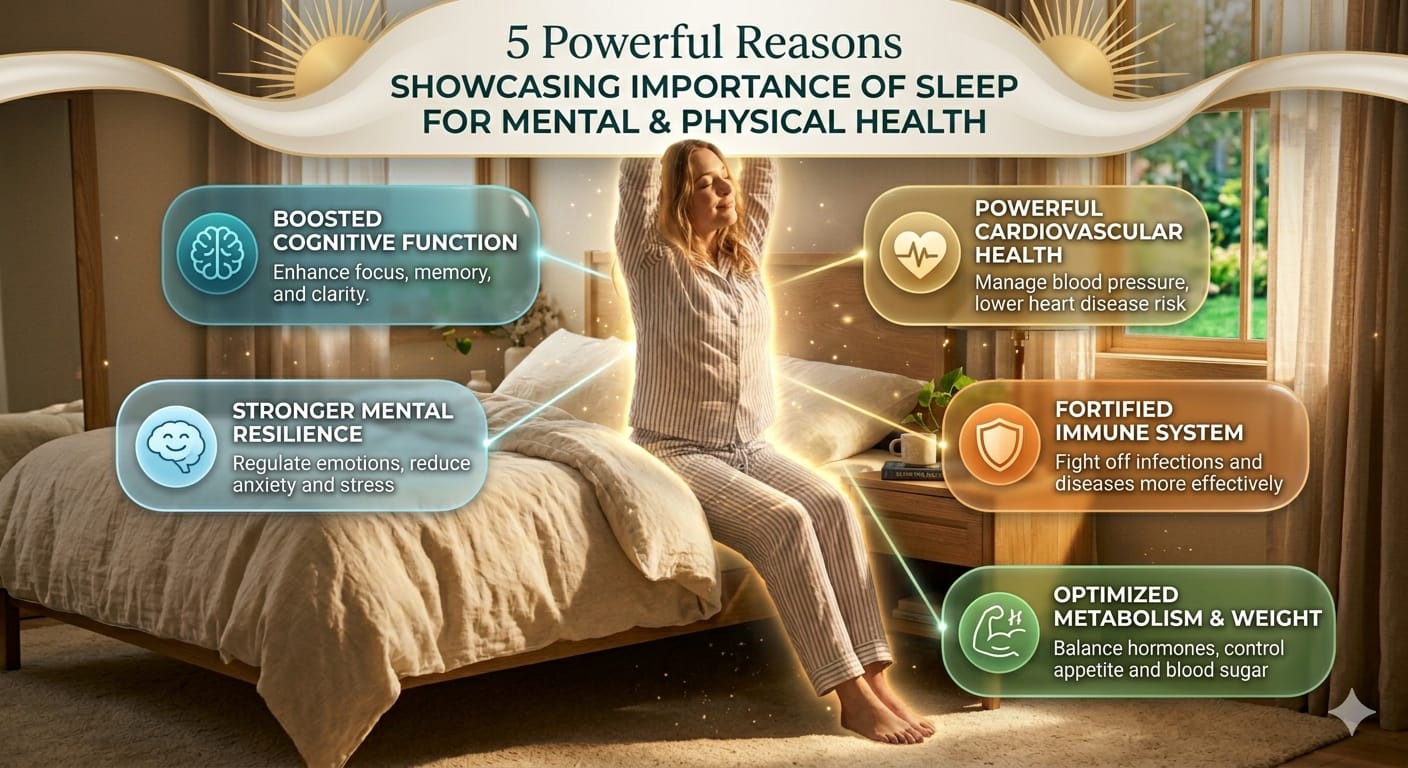
In today’s fast-paced, constantly connected world, sleep is often the first thing we sacrifice on the altar of productivity. We stay up late to finish work, binge-watch television shows, or mindlessly scroll through social media, convincing ourselves that we can function just fine on five or six hours of rest. However, science tells a remarkably different story. If you have ever wondered why sleep is essential for mental and physical health, the answer is profound: sleep is the foundational pillar of human well-being.
Without adequate rest, our bodies and minds begin to break down in subtle, yet deeply damaging ways. The importance of sleep for mental and physical health cannot be overstated. It is not merely a passive state of rest; it is an active, dynamic process where the brain and body engage in critical repair, detoxification, and memory consolidation.
In this comprehensive guide, we will explore the science behind our sleep cycles, delve into how a lack of rest destroys our cognitive and physical functions, and provide actionable, natural strategies to help you reclaim your nights and, consequently, your life.
Understanding the Science: What Happens When We Sleep?
To truly grasp the benefits of good sleep, we must first understand what the body does after we close our eyes. Sleep is divided into two main types: Non-Rapid Eye Movement (NREM) sleep and Rapid Eye Movement (REM) sleep. Throughout the night, we cycle through these stages multiple times.
NREM Sleep (Stages 1 to 3):
- Stage 1: This is the lightest stage of sleep, acting as the transition period between wakefulness and slumber.
- Stage 2: Heart rate slows, and body temperature drops. The brain begins to emit sleep spindles rapid bursts of brain activity believed to play a role in memory consolidation.
- Stage 3 (Deep Sleep): This is the most restorative stage of sleep. Blood pressure drops, breathing becomes slower, and blood flow is directed toward muscle tissue to repair and regenerate cells. Deep sleep is crucial for physical recovery and immune system strengthening.
REM Sleep:
Occurring about 90 minutes after falling asleep, REM sleep is where most of our dreaming happens. Brain activity increases significantly, mimicking the state of being awake. This stage is vital for emotional regulation, problem-solving, and creativity.
When we cut our sleep short, we often deprive ourselves of the crucial REM and deep sleep stages, leading to severe consequences for both our physical vitality and mental clarity.

ALT Text: Woman sleeping peacefully showing importance of sleep for mental and physical health
The Connection Between Sleep and Mental Well-Being
The relationship between sleep and mental health is profoundly intertwined. In fact, they possess a bidirectional relationship: poor mental health can lead to poor sleep, and poor sleep can severely degrade mental health.
How Lack of Sleep Affects the Brain
If you are looking to understand how lack of sleep affects the brain, you need to look at the prefrontal cortex and the amygdala. The prefrontal cortex is the logical, decision-making part of the brain, while the amygdala is the emotional center.
When we are sleep-deprived, the connection between these two areas is severed. The amygdala becomes hyperactive—up to 60% more reactive than usual. This is why a poor night’s sleep makes us irritable, emotionally volatile, and prone to extreme reactions over minor inconveniences. Without the prefrontal cortex to act as a rational brake, our emotions run completely unchecked.
Furthermore, during deep sleep, the brain utilizes the glymphatic system to flush out neurotoxins, including beta-amyloid plaques. The buildup of these specific plaques is strongly linked to cognitive decline and Alzheimer’s disease. In essence, sleep acts as a nightly “power wash” for your brain.
Sleep Deprivation, Anxiety, and Depression
The lack of sleep and mental well-being creates a vicious cycle. Chronic sleep deprivation is one of the leading lifestyle contributors to anxiety and clinical depression. REM sleep acts as overnight therapy. During REM sleep, the brain processes the emotional experiences of the day in a neurochemical environment completely stripped of noradrenaline, a stress-triggering chemical.
By dreaming about difficult experiences in a calm chemical state, the brain effectively strips the sharp, painful edges off our memories. If we do not get enough REM sleep, we wake up feeling the same acute stress and anxiety as the day before.
If you are struggling with anxiety or stress and want to incorporate holistic wellness routines into your daily life, you can read our guide on healthy lifestyle habits on Jivan Jarurat Health tips.
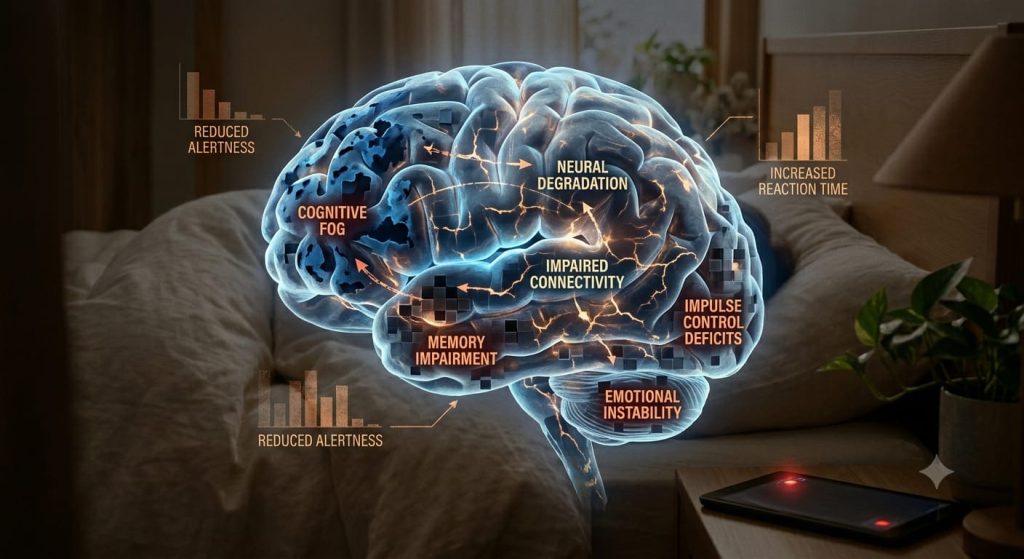
ALT Text: Glowing brain illustration depicting how lack of sleep affects the brain
Physical Health and Sleep: Healing the Body
While the brain is busy sorting memories and regulating emotions, the body is performing its own miraculous feats of healing. The connection between physical health and sleep is incredibly robust, affecting every major organ system in the body.
Boosting the Immune System
There is a reason you feel incredibly sleepy when you have a cold or the flu. Sleep and the immune system are deeply linked. During deep sleep, the immune system releases proteins called cytokines. Some of these cytokines promote sleep, while others naturally fight off inflammation, infection, and trauma.
When you do not get enough sleep, the production of these protective cytokines drops drastically. Studies have shown that people who sleep less than seven hours a night are nearly three times more likely to develop a cold when exposed to a virus compared to those who sleep eight hours or more.
Heart Health and Blood Pressure
During healthy NREM sleep, your heart rate slows, and your blood pressure drops. This provides your cardiovascular system with a much-needed break from the constant demands of the waking day. Chronic sleep deprivation forces the heart to work harder and keeps blood pressure artificially elevated. Over time, this significantly increases the risk of hypertension, coronary heart disease, and strokes.
Weight Management and Metabolic Health
One of the lesser-known benefits of good sleep is its role in weight management. Sleep heavily influences two crucial appetite-regulating hormones: leptin and ghrelin.
- Leptin is the hormone that signals your brain that you are full.
- Ghrelin is the hormone that signals hunger.
When you are sleep-deprived, your body suppresses leptin and spikes ghrelin. As a result, you wake up feeling ravenously hungry, specifically craving high-calorie, sugary, and carbohydrate-dense foods. Furthermore, lack of sleep makes your cells less responsive to insulin, which can lead to a pre-diabetic state and massive fat storage.
If you want to maintain a healthy weight and avoid metabolic syndrome, prioritizing seven to nine hours of high-quality sleep is just as important as your diet and exercise routine.

ALT Text: Person stretching morning sunlight enjoying benefits of good sleep physical health
The Hidden Dangers of Chronic Sleep Deprivation
It is completely normal to have a bad night of sleep occasionally. However, when poor sleep becomes a chronic, months-long issue, it transitions from a nuisance to a serious medical hazard.
According to leading experts at the National Sleep Foundation, chronic sleep deprivation is categorized as a public health epidemic. The long-term impacts are devastating.
- Increased Risk of Cancer: Shift workers who suffer from severely disrupted circadian rhythms have a higher incidence of certain cancers, including breast and prostate cancer. The World Health Organization has even classified nighttime shift work as a probable carcinogen.
- Accelerated Aging: Sleep deprivation causes the body to release excessive amounts of cortisol, the stress hormone. Cortisol breaks down skin collagen, the protein that keeps skin smooth and elastic, leading to premature aging and dark circles.
- Microsleeps and Accidents: Drowsy driving is just as dangerous as drunk driving. A sleep-deprived brain will force itself into “microsleeps”—brief moments of sleep lasting just a few seconds. If you are behind the wheel, a two-second microsleep at 60 mph means your car has traveled over 170 feet while you were completely unconscious.
To stay updated on the latest medical research, sleep science breakthroughs, and global health trends, be sure to visit our dedicated section on Jivan Jarurat News.
Natural Tips to Improve Sleep Quality
Now that we understand exactly why sleep is essential for mental and physical health, the most important question is: how can we fix it? Relying on sleeping pills is often a temporary band-aid that comes with grogginess and dependency. Instead, focusing on sleep hygiene offers a permanent, healthy solution.
Here are the best natural tips to improve sleep quality:
1. Maintain a Consistent Sleep Schedule
Your body operates on an internal 24-hour clock known as the circadian rhythm. Going to bed and waking up at the exact same time every day—even on weekends—anchors this clock. It trains your brain to naturally release melatonin (the sleep hormone) at the correct time each night.
2. Optimize Your Sleep Environment
Your bedroom should be optimized for one thing: rest.
- Temperature: The ideal temperature for sleep is surprisingly cool, around 65°F (18.3°C). A cool room helps facilitate the natural drop in core body temperature required to initiate sleep.
- Darkness: Any light in the bedroom can suppress melatonin production. Invest in blackout curtains and use a sleep mask if necessary.
- Noise: If you live in a noisy neighborhood, use earplugs or a white noise machine to block out sudden sounds that might pull you out of deep sleep.
3. Mind Your Diet and Caffeine Intake
Caffeine is a stimulant that blocks adenosine, the chemical that makes you feel sleepy. Because caffeine has a half-life of up to six hours, a cup of coffee at 4:00 PM will still be active in your brain at 10:00 PM. Aim to stop consuming caffeine by early afternoon. Similarly, avoid heavy, spicy, or highly acidic meals right before bed, as indigestion and acid reflux will disrupt your sleep architecture.
4. Create a Relaxing Pre-Bedtime Routine
Transitioning from a high-stress workday straight into bed is impossible for the brain. You need a buffer zone. Spend the last hour before bed doing relaxing activities: read a physical book, take a warm bath, practice deep breathing exercises, or drink a cup of herbal chamomile tea.

ALT Text: Chamomile tea and open book offering natural tips to improve sleep quality
How Entertainment and Screens Impact Our Rest
One of the biggest modern saboteurs of our sleep and mental well-being is technology. The blue light emitted by our smartphones, tablets, and televisions mimics daylight. When we stare at these screens in the evening, the blue light enters our eyes and tricks our brain into thinking the sun is still up, aggressively halting the release of melatonin.
Furthermore, the content we consume right before bed plays a huge role in our sleep quality. Watching an intense thriller movie, reading distressing news, or engaging in arguments on social media spikes adrenaline and cortisol. This places the body in a state of “fight or flight,” making relaxation physically impossible.
This modern phenomenon is known as “revenge bedtime procrastination”—staying up late to reclaim personal time and entertainment after a stressful workday, at the direct expense of sleep.
If you are looking for more relaxing, less stress-inducing ways to wind down before bed, or want to explore light-hearted pop culture that won’t keep you awake with anxiety, check out our latest reviews and stories on Jivan Jarurat Entertainment.
Conclusion: Prioritize Your Sleep, Prioritize Your Life
The cultural narrative that “sleep is for the weak” or “I’ll sleep when I’m dead” is not only factually incorrect; it is incredibly dangerous. We have clearly established why sleep is essential for mental and physical health. It is the ultimate life-support system.
Mother Nature did not design us to spend a third of our lives completely vulnerable and unconscious without a phenomenal reason. The importance of sleep for mental and physical health lies in its ability to repair our cellular damage, strengthen our immune systems, consolidate our memories, and provide emotional stability.
Choosing to prioritize your sleep is not an act of laziness; it is the highest form of self-care. By implementing good sleep hygiene, reducing screen time before bed, and honoring your body’s natural circadian rhythm, you can unlock unparalleled levels of energy, focus, and joy.
Do not wait until your health forces you to rest. Take control of your well-being today, turn off the lights, and give your body the healing rest it so desperately deserves. Your physical and mental health depend on it.