

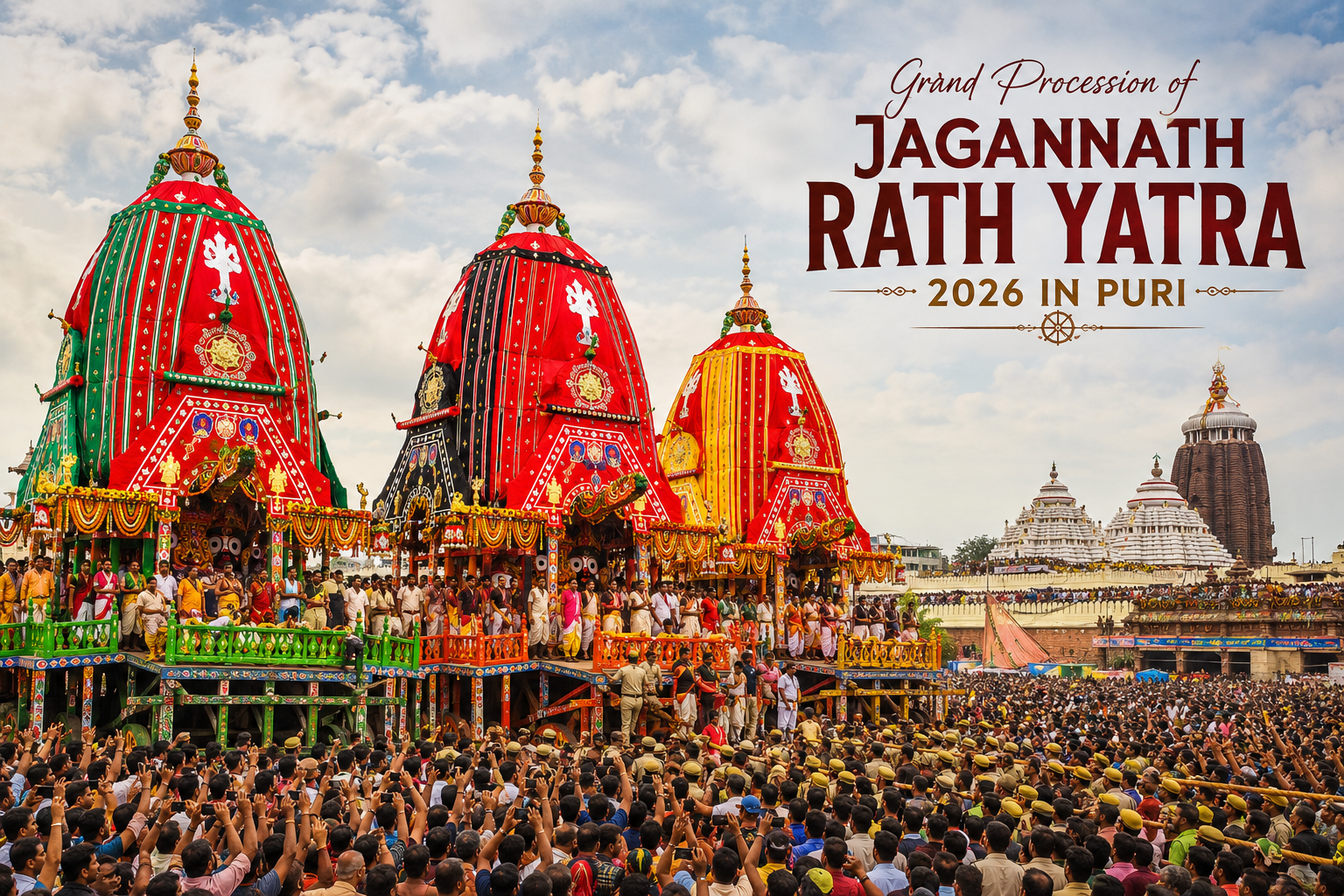
The Grandeur of Jagannath Rath Yatra 2026
The coastal city of Puri in Odisha is preparing to host one of the most magnificent and spiritually enriching events on the globe. The Jagannath Rath Yatra 2026 is officially set to take place on Thursday, July 16, 2026[1][2].
This historic chariot festival is a massive draw for spiritual seekers, tourists, and culture enthusiasts from all over the world[2][3]. Every year, millions of devotees flood the Grand Road, locally known as Bada Danda, to catch a glimpse of the deities[4].
Unlike traditional temple worship where devotees must enter the sanctum to pray, the Rath Yatra flips this dynamic. It is the one time of the year when the Supreme Lord leaves His sacred abode to mingle with the masses[2]. The core philosophy behind this procession is radical equality, ensuring that people from all walks of life—regardless of caste, religion, or social standing—can experience divine grace[3].

Historical Roots and Spiritual Significance
The festival traces its roots back thousands of years and remains steeped in fascinating lore. According to ancient Hindu traditions, the Rath Yatra commemorates the annual journey of Lord Jagannath, His elder brother Lord Balabhadra, and His younger sister Goddess Subhadra to their maternal aunt’s home, the Gundicha Temple[2][5].
They embark on a three-kilometer journey from the main 12th-century Jagannath Temple and stay at the Gundicha Temple for nine days[4][5]. This brief relocation is often described by scholars and priests as a deeply domestic and humanizing aspect of the divine, showcasing a God who yearns for a change of scenery and familial affection[5].

The wooden idols themselves are unique. Legend dictates that when King Indradyumna commissioned the idols, the celestial architect Lord Vishwakarma arrived disguised as an old carpenter. He agreed to carve the deities on the strict condition of absolute privacy. When the impatient king opened the door prematurely, the carpenter vanished, leaving the wooden deities without complete limbs. To this day, the idols are worshipped in this highly distinct, beautifully abstract form.
Details of the Three Sacred Chariots
The highlight of the Jagannath Rath Yatra 2026 will undoubtedly be the three colossal chariots, which are newly constructed every year using specific varieties of wood[4].
Nandighosha: This is the majestic chariot of Lord Jagannath. It stands an impressive 45 feet tall, features 16 massive wheels, and is traditionally draped in vibrant red and yellow canopies.
Taladhwaja: Lord Balabhadra rides in this 44-foot-tall chariot. It is recognizable by its 14 wheels and striking red and green fabric covering.
Darpadalana: Also known as Padmadhwaja, this is the chariot of Goddess Subhadra. It reaches 43 feet in height, runs on 12 wheels, and is decorated with striking red and black cloth.
The craftsmanship involved in building these chariots without modern machinery is a marvel of traditional engineering. Hundreds of local artisans, carpenters, and tailors work for months to ensure the chariots are structurally sound and aesthetically breathtaking.
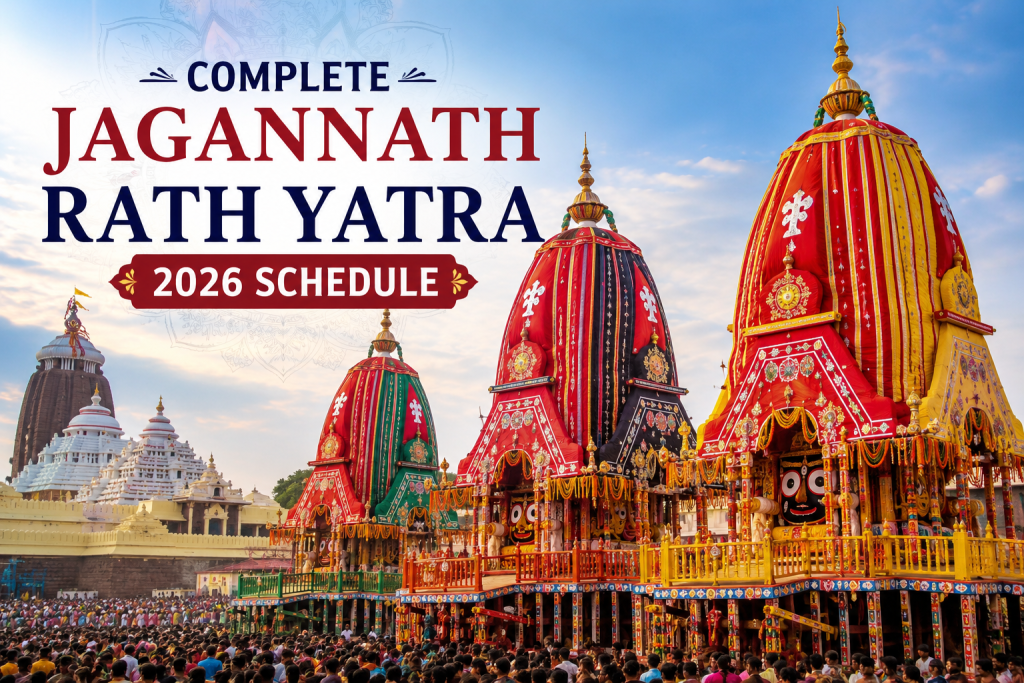
Complete Jagannath Rath Yatra 2026 Schedule
Planning a trip to Puri requires strict adherence to the festival timeline, as accommodations sell out months in advance[5]. The official dates for the 2026 festivities have been mapped out according to the traditional lunar calendar[1][5].
Important Dates to Remember
- July 16, 2026: Rath Yatra (Main Procession to Gundicha Temple)[2]
- July 20, 2026: Hera Panchami (Goddess Lakshmi’s ritualistic search for Lord Jagannath)[1]
- July 24, 2026: Bahuda Yatra (The Return Journey)[1][2][5]
- July 25, 2026: Suna Besha (Deities adorned in pure gold attire on their chariots)[1]
- July 26, 2026: Adhara Pana (Offering of a sweet drink to the deities)[2]
- July 27, 2026: Niladri Bije (The final return of the deities into the main temple sanctum)[2]
Official Ritual Timings for July 16, 2026
The Shree Jagannath Temple Administration (SJTA) manages the elaborate rituals with incredible precision[2]. If you are attending the festival or watching the live broadcasts, keeping track of the ritual timings is crucial.
The morning begins early with the Mangal Alati at 6:00 am, a sacred waking ritual for the deities[2]. By 9:00 am, priests perform the Ratha Pratishtha, blessing the chariots before the journey[2].
Between 9:30 am and 12:30 pm, the breathtaking Pahandi takes place[2]. This is when the heavy wooden idols are carried out of the temple in a spectacular, rhythmic, and swaying procession. Devotees cheer loudly as the deities “walk” step-by-step toward their respective chariots.
At 2:00 pm, the Gajapati Maharaja (the traditional King of Puri) arrives in a palanquin to perform the Chhera Pahanra[2]. He sweeps the floor of the chariots with a golden broom and sprinkles sandalwood water[2]. This beautiful custom reinforces the idea that in the eyes of God, the highest king and the humblest citizen are entirely equal.
Finally, at 4:00 pm, the eagerly anticipated chariot pulling begins[2]. Millions of hands reach out to grasp the thick ropes, believing that pulling the chariot will cleanse them of their past sins.

Health and Safety Tips for Devotees
Taking part in the Jagannath Rath Yatra 2026 requires physical endurance. July in coastal Odisha is known for its intense humidity and unpredictable monsoon showers.
While preparing for such a physically demanding spiritual journey, taking care of your physical well-being is vital. You can read our comprehensive guide on healthy lifestyle habits on Jivan Jarurat to prepare your body for such a demanding pilgrimage. Hydration is key, so carry sufficient clean water, wear comfortable cotton clothing, and avoid overeating before stepping into the massive crowds.
For those tracking local government announcements, transportation changes, and crowd management advisories, make sure to stay updated with the latest reports on Jivan Jarurat News. The local administration frequently releases essential guidelines for crowd control and traffic diversions which you should review before heading to the Grand Road.
Cultural Significance and Global Reach
The festival is not just a religious procession; it is a massive cultural exhibition. The streets come alive with the sound of traditional mridangam drums, cymbals, and blowing conch shells. Groups of classical Odissi dancers perform beautifully choreographed routines right in front of the chariots, offering their art as a form of devotion[6].
Even if you cannot physically make it to Puri, the festival’s vibrant cultural performances are broadcast globally to millions of households. You can discover more about India’s diverse and rich cultural events in our Jivan Jarurat Entertainment section.
For more authoritative information on travel logistics and heritage sites around Puri, travelers can also refer to the Odisha Tourism official website[7].
The Return Journey: Bahuda Yatra and Suna Besha
After enjoying a nine-day retreat at the Gundicha Temple, the deities begin their return journey on July 24, 2026, an event known as the Bahuda Yatra[4][5].
The festivities do not end when the chariots reach the main temple. On July 25, 2026, while still seated on their chariots outside the temple gates, the deities are decorated with massive, intricately carved gold jewelry weighing hundreds of kilograms[1][2]. This visual spectacle, called Suna Besha, draws crowds almost as large as the initial Rath Yatra.
The entire festival concludes peacefully with the Niladri Bije on July 27, 2026, when the deities are finally carried back into the temple’s inner sanctum[2], marking the end of the grand Jagannath Rath Yatra 2026.
13. Frequently Asked Questions (FAQs)
Q1. What is the date of the Jagannath Rath Yatra in 2026?
The main chariot procession for the Jagannath Rath Yatra will take place on Thursday, July 16, 2026[1][2].
Q2. Where does the chariot procession travel?
The three massive chariots are pulled by devotees from the main Jagannath Temple in Puri, along a 3-kilometer stretch known as the Bada Danda, to the Gundicha Temple[4][5].
Q3. When does the chariot pulling start?
According to the official schedule, the ceremonial pulling of the chariots by devotees is set to begin at 4:00 pm on July 16, 2026[2].
Q4. What is the significance of the Chhera Pahanra ritual?
During Chhera Pahanra, the Gajapati King of Puri uses a golden broom to sweep the chariots[2]. This ritual acts as a humbling reminder that all human beings, regardless of royal status, are equal servants of the divine.
Q5. When is the return journey (Bahuda Yatra) in 2026?
The deities will make their way back to the main Jagannath Temple on July 24, 2026, marking the Bahuda Yatra[1][2][5].
14. Key Takeaways
- Confirmed Date: The Jagannath Rath Yatra 2026 officially falls on July 16, 2026, in Puri, Odisha[1][2].
- Detailed Schedule: Morning rituals start at 6:00 am, and the grand chariot pulling commences at 4:00 pm[2].
- Universal Message: The festival uniquely brings the deities out of the temple to the streets, symbolizing divine equality for all people[2][3].
- Nine-Day Celebration: The event spans over a week, concluding with the Bahuda Yatra on July 24 and the spectacular Suna Besha on July 25[1][2][5].