
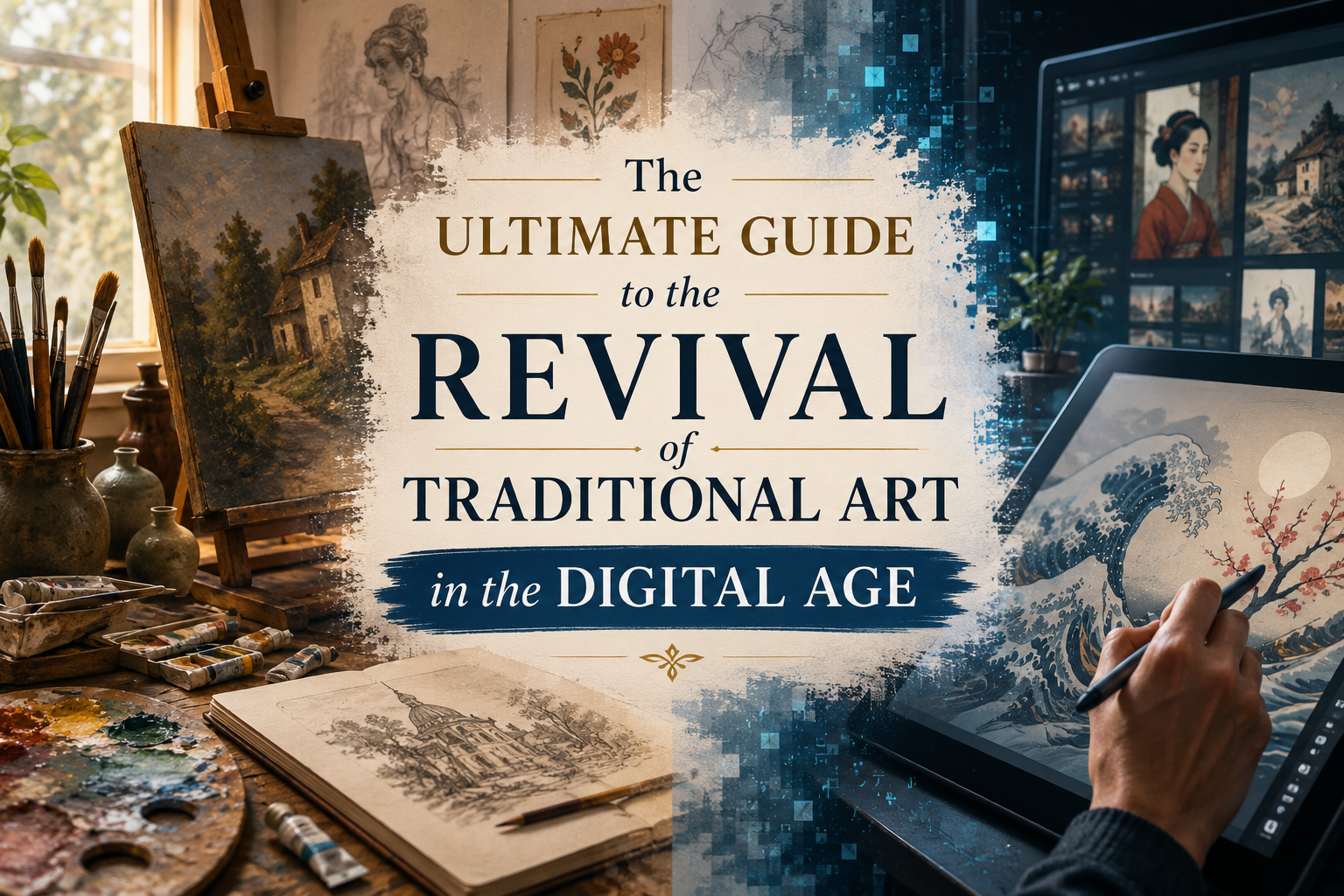
When we think of the modern world, our minds often jump to artificial intelligence, high-speed internet, and futuristic technology. However, an incredible cultural shift is happening right beneath our screens. We are currently witnessing a massive resurgence of traditional art in the digital age. Rather than replacing ancient techniques, modern technology is amplifying them, giving local artisans and cultural historians a global canvas like never before.
From tribal paintings going viral on social media to virtual reality museum tours, the intersection of old-world heritage and new-world technology is fascinating. In this comprehensive guide, we will explore the profound impact of the internet on global aesthetics, the economic empowerment of native creators, and how digital tools are ensuring that human history remains vividly alive for future generations.
If you are looking to stay updated on more fascinating topics, be sure to visit the homepage of Jivan Jarurat for your daily dose of knowledge.
1. Understanding Traditional Art in the Digital Age
For centuries, traditional art forms—such as pottery, weaving, calligraphy, and folk painting—were confined to their geographical origins. An artist creating beautiful Madhubani paintings in rural India or a master weaving intricate Kente cloth in Ghana relied heavily on local markets or rare tourism to sell their creations.
Today, the definition of modern art and culture has expanded to include a deep appreciation for the past. The digital age has democratized art. Through high-resolution photography, digital archives, and global e-commerce, a piece of ancient cultural heritage can now be appreciated and purchased by someone sitting halfway across the globe.
This fusion means that an artist does not have to abandon their ancestral techniques to stay relevant. Instead, they can use digital mediums to showcase their raw, authentic processes. This era marks the true digital revival of ancient crafts, turning local traditions into global phenomena.

- Local artisan painting traditional art in the digital age using modern tablet tools
2. Why Traditional Art is Important in Modern Culture
In an era dominated by mass production and artificial intelligence-generated imagery, you might wonder why traditional art is important in modern culture. The answer lies in the human desire for authenticity, storytelling, and connection.
A Connection to Human Roots
Traditional art carries the DNA of its creators. Every brushstroke, woven thread, and carved piece of wood tells a story about a community’s beliefs, struggles, and triumphs. In a fast-paced digital world, these artworks ground us. They remind us of our shared human history.
Promoting Diversity and Global Empathy
When we consume art from different cultures, we naturally develop empathy and a broader worldview. Seeing the intricate beadwork of the Maasai people or the delicate Kintsugi pottery of Japan teaches us about diverse philosophies. Art is a universal language that transcends political and geographical borders.
Breaking the Monotony of Mass Production
Today’s consumers are experiencing “factory fatigue.” People no longer want identical, machine-made decorations for their homes. There is a growing trend toward maximalism and cultural appreciation in interior design. Buyers want unique, handcrafted items that have a soul.
To see how cultural trends frequently influence our daily media consumption, you can always check out the latest updates in our Entertainment section on Jivan Jarurat.
3. How Technology is Helping Preserve Traditional Art
There is a common misconception that technology is the enemy of tradition. In reality, modern software and hardware are becoming the ultimate guardians of human heritage. If you want to know how technology is helping preserve traditional art, look no further than the incredible digitization efforts happening worldwide.
High-Resolution Digitization and 3D Scanning
Institutions and historians are using ultra-high-resolution cameras and 3D scanners to digitize ancient artifacts, crumbling manuscripts, and fading cave paintings. For instance, platforms like Google Arts & Culture partner with museums worldwide to bring terabytes of historical art to the internet. If a physical painting is ever destroyed by fire, flood, or time, its digital twin will exist forever in pristine detail.
Virtual Reality (VR) and Augmented Reality (AR)
Imagine walking through the Louvre in Paris or exploring the ancient Ajanta Caves in India from your living room. Virtual reality makes this possible. AR allows users to project traditional sculptures into their living rooms using their smartphones. This immersive technology makes learning about heritage interactive and incredibly engaging for younger generations.
Artificial Intelligence in Art Restoration
AI is not just for generating new images; it is a powerful tool for restoring old ones. AI algorithms can analyze a damaged traditional painting and accurately predict the missing colors and lines. This helps art conservators physically restore pieces without guessing, preserving the original artist’s exact vision.

- Image ALT Text: Virtual museum tour showing how technology is helping preserve traditional art and heritage.
4. Social Media: The New Canvas for Global Artisans
Perhaps the most visible impact of technology on art is the rise of social media. A decade ago, getting an art exhibition required wealthy patrons and gallery connections. Today, the algorithm is the gallery.
Viral Art Processes
Social media platforms like Instagram, Pinterest, and TikTok have revolutionized how art is consumed. Users do not just want to see the final product; they are mesmerized by the process. Short-form videos showcasing the mixing of natural pigments, the spinning of a pottery wheel, or the rhythmic clicking of a handloom often garner millions of views. These satisfying visual experiences captivate global audiences.
Highlighting Indigenous Talent
There are now dedicated digital platforms for indigenous artists to share their work with the world without intermediaries. Social media acts as a direct-to-consumer bridge. An Aboriginal artist in Australia or a Navajo weaver in the United States can build an audience of thousands who deeply respect their craft and culture.
By removing the middleman, social media empowers artists to tell their own stories in their own words, completely avoiding cultural misrepresentation.
5. The Economic Impact of the Digital Revival of Ancient Crafts
The preservation of art is not just a cultural endeavor; it is an economic necessity. Many traditional art forms were on the verge of extinction because artists could not make a living wage from them. Younger generations were forced to abandon their family crafts to seek corporate jobs in the city. The digital age has reversed this trend.
Global E-Commerce Marketplaces
Websites like Etsy, Shopify, and regional artisan portals have opened up global trade for rural craftsmen. A creator can set up a digital storefront in minutes. The digital revival of ancient crafts means that a weaver in a small village can receive orders from buyers in New York, London, or Tokyo.
Fair Pricing and Eliminating Middlemen
Historically, middlemen bought traditional art for pennies and sold it to tourists or urban galleries for massive profits. The original artist saw very little of this money. The internet empowers artists to price their work fairly and retain the majority of the profits. This economic sustainability encourages younger generations to take up ancestral crafts, ensuring these skills are not lost to time.
For more insights into how economic shifts and global trends affect daily life, read the latest reports in ourNews section on Jivan Jarurat.

(Insert an image of handmade cultural crafts being packed for shipping)
- Image ALT Text: Digital platforms for indigenous artists selling authentic cultural crafts to global online buyers
(Word count: 13 words – Clear, descriptive, includes long-tail keyword, avoids stuffing)
6. The Intersection of NFTs, Blockchain, and Cultural Heritage
It is impossible to discuss the digital age without mentioning Blockchain and Non-Fungible Tokens (NFTs). While NFTs are often associated with modern digital avatars, they are increasingly being used to protect and monetize traditional culture.
Provenance and Authenticity
One of the biggest issues in the traditional art market is forgery. Blockchain technology provides an immutable digital ledger. When a traditional piece of art is created, it can be linked to a digital certificate of authenticity on the blockchain. This proves exactly who made the art, when it was made, and verifies its cultural origin.
Royalties for Native Creators
Smart contracts in NFTs allow artists to earn a royalty every time their art is resold in the secondary market. This is a revolutionary concept for traditional artists who historically only got paid once, even if their art later sold for millions at an auction.
7. The Role of Modern Digital Tools in Enhancing Traditional Work
Traditional artists are increasingly adopting modern digital tools not to replace their physical work, but to enhance it.
- Digital Sketching: Many muralists and traditional painters now use software like Procreate or Adobe Photoshop to draft their designs. This saves expensive physical materials and allows for easy experimentation with color palettes before the physical painting begins.
- Laser Cutting and 3D Printing: Sculptors and woodworkers are combining hand-carving techniques with precision laser cutting to create intricate, mixed-media masterpieces that were previously impossible to achieve by hand alone.
- Digital Typography: Ancient calligraphy styles from Arabic, Chinese, and Sanskrit traditions are being digitized into modern fonts. This allows web designers and digital artists to incorporate ancient aesthetics into modern branding and websites.
This harmonious blend proves that modern art and culture are not about discarding the past, but evolving alongside it.
8. Bringing Art and Lifestyle Together for Better Well-being
Art is not just something you look at; it deeply impacts how you feel. Engaging with art—whether creating it or simply admiring it—has profound psychological benefits.
Art Therapy in the Digital Age
The practice of traditional crafts like knitting, painting, or clay sculpting requires immense focus and mindfulness. In a world full of digital distractions and screen fatigue, taking time to engage in tactile, traditional art serves as a powerful form of stress relief. Psychologists often recommend art therapy to help reduce anxiety and improve cognitive function.
Designing a Culturally Rich Living Space
Surrounding yourself with meaningful traditional art can turn a simple house into a culturally rich home. Warm, earthy tones from traditional pottery or vibrant, energetic colors from folk paintings can entirely shift the mood of a room.
Maintaining a balanced mind and body is essential. For more practical advice on living a vibrant and healthy life, you can also read our comprehensive guide on healthy lifestyle habits on Jivan Jarurat.

(Insert an image of beautiful, traditional handmade pottery displayed in a modern home)
- Image ALT Text: Handcrafted pottery representing the digital revival of ancient crafts and global cultural heritage
(Word count: 13 words – Clear, descriptive, includes secondary keyword, avoids stuffing)
9. Challenges and Ethical Considerations
While the digital age brings countless benefits, it also introduces specific challenges that need to be navigated carefully.
Cultural Appropriation vs. Appreciation
As traditional art becomes globally accessible, there is a fine line between appreciating a culture and appropriating it. Fast-fashion brands and mass-manufacturing corporations often steal indigenous designs and mass-produce them without giving credit or compensation to the original cultures. Digital platforms must enforce stricter copyright rules to protect native designs.
The Digital Divide
While the internet offers global reach, we must remember that many rural artisans still lack reliable internet access, smartphones, or digital literacy. For the impact of technology on art to be truly positive, governments and NGOs must work to bridge this digital divide, providing training and resources to remote artist communities.
10. The Future of Global Art and Culture
So, what does the future hold for traditional art in the digital age? The trajectory points toward an even more integrated ecosystem.
In the next decade, we will likely see the rise of Metaverse galleries where users can interact directly with holographic avatars of traditional artists. AI translation tools will break down language barriers entirely, allowing a buyer in Canada to easily converse and commission a custom piece of art from a craftsman in a small village in Southeast Asia.
Despite all the technological advancements, the core value of traditional art remains unchanged. It is the heartbeat of human history. The digital age is simply the newest, loudest amplifier for voices that have been whispering their beautiful stories for centuries.
Conclusion
The narrative that technology is erasing our history is a myth. As we have explored in this guide, traditional art in the digital age is experiencing an unprecedented renaissance. From utilizing AI for art restoration to leveraging social media for global exposure, modern tools are ensuring that ancient crafts not only survive but thrive.
By supporting digital platforms for indigenous artists, purchasing authentic traditional works, and educating ourselves on different cultures, we all play a part in preserving global heritage. The next time you scroll through your social media feed and see a mesmerizing video of a traditional artist at work, remember that you are witnessing the beautiful survival of human history.
Stay connected, stay curious, and keep exploring the beautiful world of art. For more trending updates, lifestyle guides, and cultural deep dives, keep visiting Jivan Jarurat.