

When we look up at the night sky, we are greeted by a breathtaking tapestry of stars, planets, and glowing nebulae. However, everything we see with the naked eye belongs strictly to our own neighborhood—the Milky Way. But what happens when we zoom out? The universe is unimaginably vast, and among its greatest secrets are the cosmic void mysteries. For decades, astronomers have probed the darkest depths of the universe, only to find that the most profound discoveries do not lie in the brilliant clusters of galaxies, but in the terrifying, sprawling emptiness that separates them.
In this ultimate guide, we will embark on a journey beyond our galaxy to explore deep space anomalies, rogue celestial bodies drifting in the dark, and the chilling expanses of absolute nothingness that dominate the architecture of the cosmos.
The Architecture of the Universe: Exploring the Cosmic Web
To understand what lies beyond our galaxy, we first need to understand the large-scale structure of the universe. If you were to step back billions of light-years and view the universe as a whole, it would not look like a random scattering of stars. Instead, it resembles a gigantic, glowing sponge or a complex neural network. Scientists call this the “Cosmic Web.”
The Cosmic Web is made up of massive filaments of dark matter and luminous gas. Galaxies, including our Milky Way, cling to these glowing threads. Where these filaments intersect, we find massive superclusters of galaxies. But what lies between these dense, glowing webs of light?
The answer is voids. The universe is mostly empty. In fact, these cosmic voids make up roughly 80% of the entire volume of the observable universe, yet they contain less than a tenth of its mass. Exploring these vast stretches of nothingness provides some of the most fascinating intergalactic space facts known to modern astrophysics.
What Exactly is a Cosmic Void?
When we talk about the cosmic void mysteries, we are referring to vast spherical or potato-shaped regions of the universe that contain virtually no galaxies. In a typical region of space, you might find thousands of galaxies clustered together over a span of a few million light-years. Inside a void, you might travel for tens of millions of light-years and not encounter a single star.
However, “empty” in astrophysics does not mean absolute zero. A cosmic void still contains faint traces of intergalactic gas, specifically hydrogen and helium, dark matter, and a sea of elusive subatomic particles called neutrinos. They are also awash in the faint glow of the Cosmic Microwave Background (CMB) radiation—the echoing heat left over from the Big Bang.
Despite not being purely empty, the density of matter in these regions is extremely low. If the Milky Way were located in the center of a typical cosmic void, humanity would not have known that other galaxies existed until the invention of powerful telescopes in the 1960s. The night sky would be almost entirely pitch black, devoid of the milky band of stars that stretches across our current sky.
(mage 1: Fascinating cosmic void mysteries revealing what lies beyond our Milky Way galaxy)
The Boötes Void: The Great Nothing
Of all the empty spaces ever discovered, none is as terrifying or mind-boggling as the Boötes Void. Often referred to as “The Great Nothing,” this spherical region of space is located in the constellation Boötes and represents one of the most chilling deep space anomalies.
Discovered in 1981 by astronomer Robert Kirshner and his team, the Boötes Void is exceptionally massive, measuring approximately 330 million light-years in diameter. To put that into perspective, our entire Milky Way galaxy is only about 100,000 light-years across. The Boötes Void is so incomprehensibly large that it makes up roughly 0.27% of the diameter of the observable universe.
The Secrets of the Boötes Void
According to standard cosmological models, a region of space the size of the Boötes Void should contain roughly 10,000 galaxies. When astronomers first peered into this dark abyss, they found nothing. As observational technology improved, they managed to spot a few isolated galaxies scattered within the void. To date, only about 60 galaxies have been discovered inside this massive volume.
The sheer emptiness of the Boötes Void poses a massive problem for cosmologists. The universe is about 13.8 billion years old. Based on the rate at which galaxies drift apart and form clusters, there simply hasn’t been enough time since the Big Bang for a void of this magnitude to form naturally.
So, how did it get there?
One leading theory suggests that the Boötes Void is actually the result of smaller voids merging together. Just like small soap bubbles merge to form one massive bubble, smaller empty pockets of space may have coalesced over billions of years, creating this colossal expanse of nothingness. Another, more radical theory suggests that it might be an artifact of an extremely advanced extraterrestrial civilization expanding and harvesting energy from stars—a concept known as a Kardashev Type III civilization—leaving a dark, invisible sphere in its wake. While purely science fiction at this point, it is a testament to how bizarre what lies in the cosmic void beyond our galaxy truly is.
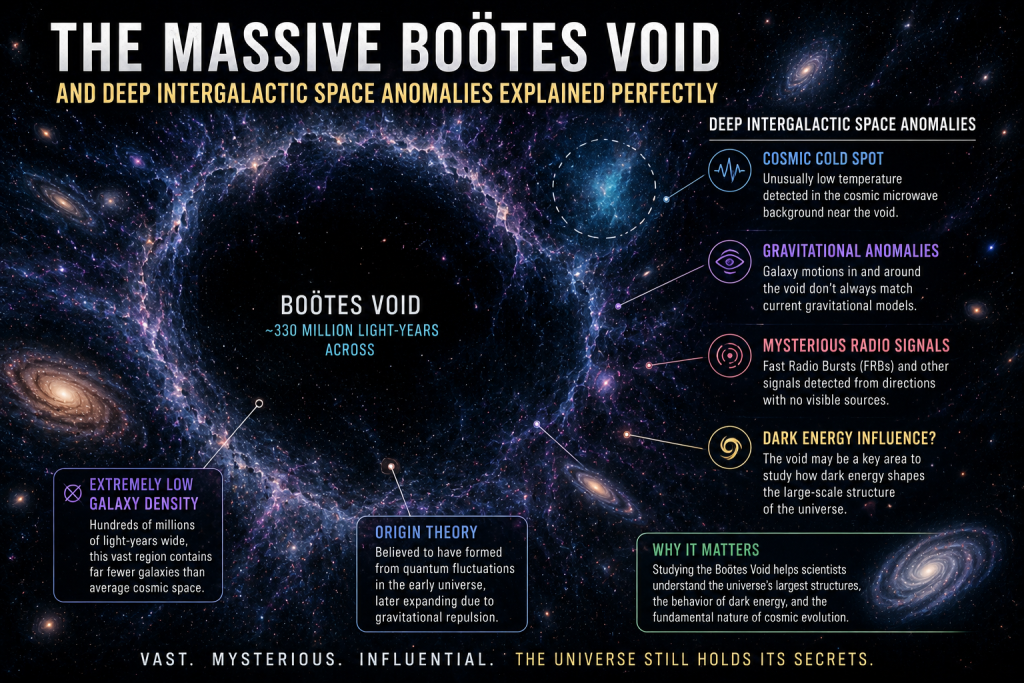
(Image 2: The massive Boötes Void and deep intergalactic space anomalies explained perfectly)
The Eridanus Supervoid and the Multiverse Theory
If the Boötes Void wasn’t mysterious enough, let’s travel to the Southern Hemisphere’s constellation of Eridanus. Here, scientists have discovered another one of the universe’s great secrets: the CMB Cold Spot, heavily linked to the Eridanus Supervoid.
The Cosmic Microwave Background (CMB) is an energy map of the universe, showing the heat distribution from the Big Bang. The temperature of this radiation is remarkably uniform, hovering around 2.7 Kelvin above absolute zero. However, in 2004, the WMAP satellite discovered a massive region in the sky that was unusually cold—much colder than standard physics could easily explain.
Astronomers soon deduced that this “Cold Spot” was likely caused by a massive supervoid. Because the universe is expanding, light entering a massive empty void loses energy. By the time it exits the void and reaches our telescopes, it has cooled down, creating a cold spot on our maps. The Eridanus Supervoid is estimated to be 1.8 billion light-years across, making it the largest known structure (or lack thereof) in the universe.
A Collision with Another Universe?
What makes the Eridanus Supervoid truly one of the greatest cosmic void mysteries is an alternative theory regarding its origin. Some quantum physicists and cosmologists have proposed that the Cold Spot isn’t just a void, but a “bruise” left over from a cosmic collision.
According to the Multiverse Theory, our universe is just one of many expanding bubbles in a grander cosmic foam. If another universe bumped into ours during the earliest moments of creation, it could have left a massive, cool, empty imprint—exactly like the Eridanus Supervoid. While highly speculative, it is one of the most exciting theories regarding what lies in the cosmic void beyond our galaxy.
Intergalactic Space: Not as Empty as You Think
While voids represent vast stretches of emptiness, the typical intergalactic space—the dark ocean between galaxies—harbors its own set of fascinating secrets. Unraveling fascinating facts about intergalactic space reveals that it is teeming with hidden, solitary travelers.
Rogue Stars: The Outcasts
Stars are born in the dense gas and dust clouds inside galaxies. However, not all stars get to stay there. Sometimes, incredibly violent gravitational interactions—such as a close encounter with a supermassive black hole at the center of a galaxy—can slingshot a star outward at incredible velocities.
These are known as hypervelocity stars, or rogue stars. Cut off from the gravitational anchor of their home galaxy, they drift alone in the freezing, pitch-black void of intergalactic space. Because these stars have no neighboring stars within millions of light-years, any planets orbiting them would experience a night sky that is completely blank, save for the faint, fuzzy smudges of distant galaxies.
Nomad Planets drifting in the Dark
If rogue stars exist, so do rogue planets. These are planets that were violently ejected from their solar systems during the chaotic early days of planetary formation. Without a sun to orbit, these nomad worlds wander blindly through the cosmic voids.
Some estimates suggest there could be billions, or even trillions, of rogue planets drifting through the spaces between galaxies. What is truly mind-blowing is the possibility of life on these planets. If a rogue gas giant has a rocky moon, the gravitational friction (tidal heating) from the giant could generate enough internal heat to melt subsurface ice. This means there could be hidden, underground oceans on rogue planets, swimming with alien life, completely devoid of any sunlight, drifting through the ultimate abyss.
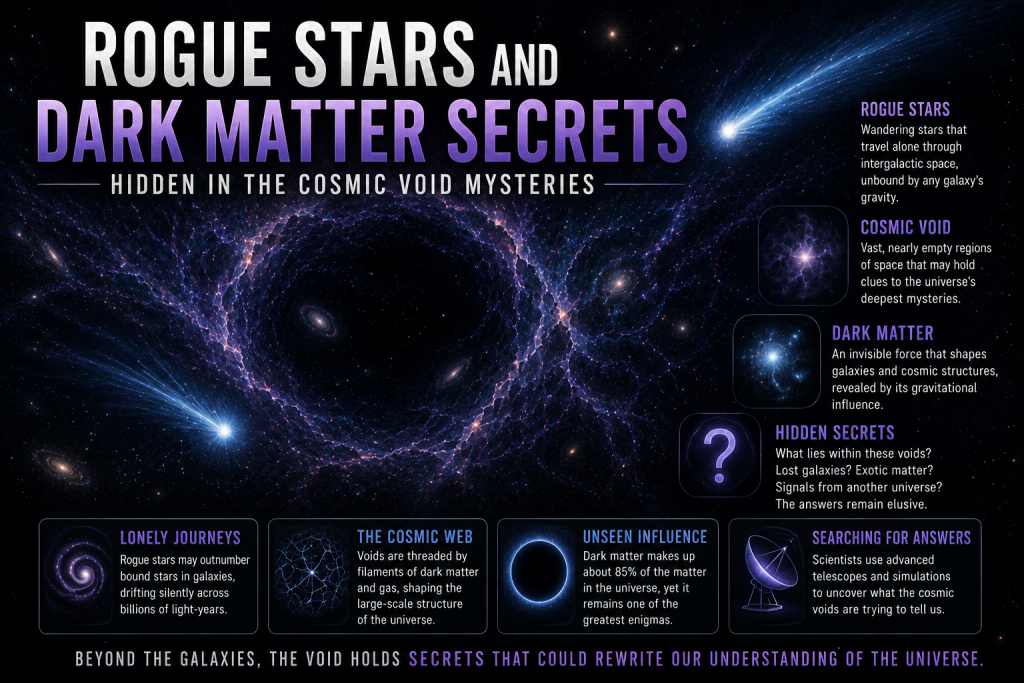
(Image 3: Rogue stars and dark matter secrets hidden in the cosmic void mysteries)
The Dark Rulers of the Void: Dark Matter and Dark Energy
You cannot discuss cosmic void mysteries without talking about the two most enigmatic forces in modern physics: dark matter and dark energy. Together, they make up 95% of the total mass-energy content of the universe, yet they are completely invisible to us.
Dark Matter: The Cosmic Glue
Dark matter is a mysterious substance that does not emit, absorb, or reflect light, making it completely invisible to our telescopes. We only know it exists because we can observe its gravitational pull on visible matter. Dark matter forms the invisible scaffolding of the Cosmic Web. It acts as the gravitational glue that holds galaxies and superclusters together.
Even in the emptiest cosmic voids, faint tendrils of dark matter stretch across the abyss, connecting distant galactic outposts. Scientists are still trying to determine what dark matter is made of, with leading candidates being WIMPs (Weakly Interacting Massive Particles) and Axions.
Dark Energy: The Architect of Emptiness
While dark matter pulls the universe together, dark energy tears it apart. Dark energy is an unknown form of energy that is causing the expansion of the universe to accelerate.
Cosmic voids are the true domain of dark energy. Because voids contain so little mass, gravity is incredibly weak inside them. This allows dark energy to reign supreme. In fact, dark energy is essentially “born” in the empty spaces. As the universe expands, voids grow larger. As voids grow larger, there is more empty space, which generates more dark energy, which in turn causes the universe to expand even faster.
If you want to understand the ultimate fate of our universe, you have to look into the voids.
How Do Astronomers Study the Nothingness?
You might be wondering: if these regions of space are completely dark and empty, how do astronomers study them? It sounds like trying to photograph a black cat in a dark room.
Astronomers rely on several highly advanced scientific techniques to map out the cosmic void mysteries. For authoritative insights on the tools used, one can look at the incredible work done by space agencies like NASA, which deploys advanced space telescopes to decode the universe.
1. Gravitational Lensing:
As light from a distant galaxy travels towards Earth, it has to pass through, or around, cosmic voids and dense galaxy clusters. Massive objects bend light, a process called gravitational lensing. By measuring how light is distorted as it travels across the universe, scientists can map out exactly where the dense matter is and where the empty voids are located.
2. The Lyman-Alpha Forest:
Quasars are incredibly bright, active supermassive black holes located at the edge of the observable universe. As the light from a quasar travels billions of light-years to reach us, it passes through intergalactic clouds of hydrogen gas. Each cloud absorbs a tiny fraction of the light, leaving a specific “barcode” on the light spectrum. By reading this barcode, astronomers can map the density of gas in intergalactic space and identify massive voids.
3. Cosmic Microwave Background (CMB) Mapping:
As mentioned earlier with the Eridanus Supervoid, mapping slight temperature fluctuations in the background radiation of the universe helps astronomers find the largest, most extreme voids.
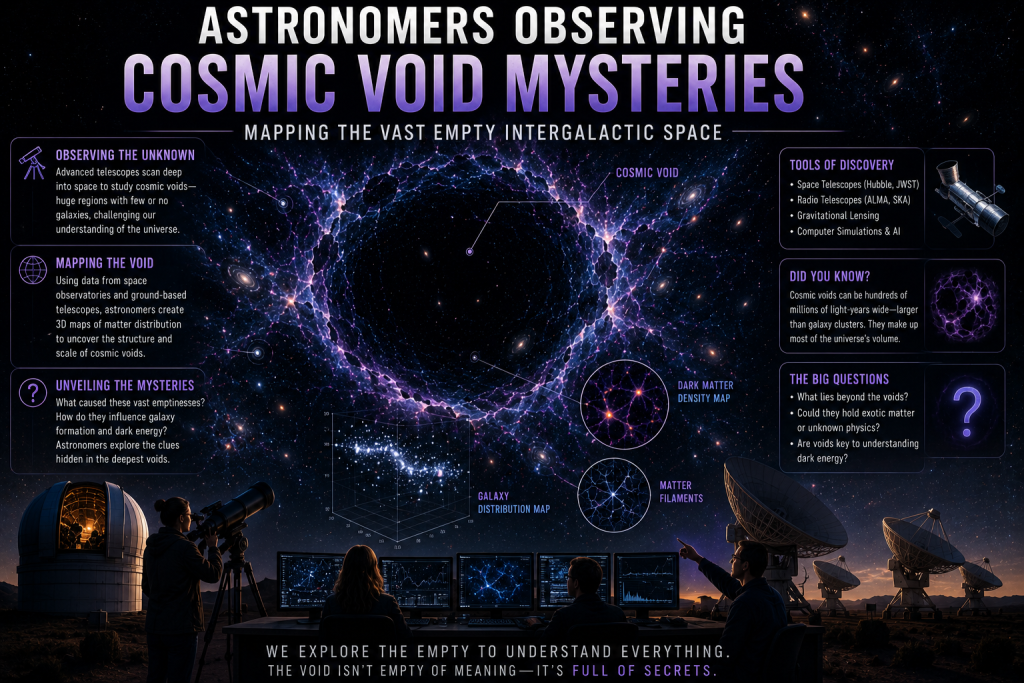
(Image 4: Astronomers observing cosmic void mysteries and mapping the vast empty intergalactic space)
The Future of the Universe: The Big Freeze and the Ultimate Void
What is the ultimate destiny of these voids? To understand this, we must look to the future of the cosmos. Because of the accelerating expansion of the universe driven by dark energy, the voids are growing.
Billions of years from now, the filaments of the Cosmic Web will snap. Galaxy clusters will drift further and further apart. The Milky Way will eventually collide and merge with the Andromeda galaxy, creating a massive elliptical galaxy known as “Milkdromeda.” But as we look outside our new, merged home, the night sky will slowly begin to dim.
Eventually, the expansion of space will push all other galaxies beyond the observable horizon. Light from distant galaxies will simply not be fast enough to reach us anymore. To an observer living on Earth (or whatever planet we inhabit) a trillion years from now, it will appear as though our galaxy is the only thing that exists in the entire universe. The universe will become one infinite, dark, freezing cosmic void.
This scenario, known as the “Big Freeze” or “Heat Death” of the universe, highlights the terrifying power of empty space. The voids will not just exist between galaxies; they will consume everything.
The Dipole Repeller: Being Pushed by the Void
Let’s bring our journey a little closer to home. You may know that the Milky Way is moving through space. We are part of the Local Group of galaxies, which is being pulled toward an incredibly massive region of space known as the Great Attractor, located in the Laniakea Supercluster.
However, gravity only tells half the story. Recent discoveries have shown that we are not just being pulled; we are being pushed.
In 2017, astronomers discovered a massive cosmic void directly behind our Milky Way galaxy. Because this void is so empty, it has virtually no gravitational pull. Surrounding, denser regions of space have stronger gravity, meaning mass naturally flows away from the void. Scientists named this region the “Dipole Repeller.” It is a massive expanse of nothingness that is literally pushing our entire galaxy through the universe at speeds of millions of miles per hour. We are fleeing from a void!
The Psychological Impact of the Cosmic Void
Thinking about the sheer scale of the universe and the cosmic void mysteries can trigger a profound sense of existential dread. It reminds us of how small and fragile our pale blue dot truly is. The silence of deep space and the realization of our microscopic size in the grand cosmic arena can be overwhelming.
However, this shouldn’t just be a source of fear; it should be a source of wonder. Despite being tiny specks on a rock orbiting an ordinary star, the human brain has evolved to the point where it can look out into the darkness, measure the unmeasurable, and comprehend the universe’s greatest secrets.
Space exploration requires immense physical and mental fortitude. Astronauts who leave the comfort of Earth have to maintain strict routines to preserve their well-being in the isolating darkness of space. If you are fascinated by how the human body adapts to extreme conditions or just want to improve your own daily habits, check out our comprehensive Health Tips on Jivan Jarurat. Maintaining a strong, healthy mind is crucial, whether you are traversing the stars or navigating daily life on Earth.
Furthermore, the vast emptiness of space and the idea of what lies beyond our galaxy has fueled human imagination for decades. From thrilling science fiction novels to blockbuster cinema, the mysteries of the void continue to captivate us. For the latest terrestrial updates and interesting terrestrial facts, visit our News section, or if you prefer diving into how deep space has inspired pop culture, check out our amazing Entertainment hub.
The Great Unknown: Unsolved Deep Space Anomalies
Despite our technological advancements, there is still so much we don’t know about what lies beyond our galaxy. The cosmic voids are holding tightly to their secrets.
For instance, there is the mystery of the “Dark Flow.” Astronomers have observed that large clusters of galaxies are moving uniformly in one direction at phenomenal speeds—something that standard cosmological models cannot explain. Some scientists hypothesize that this “Dark Flow” is being caused by the gravitational pull of massive structures located completely outside our observable universe, beyond the grandest voids we can see.
Are there other universes out there? Are there structures larger than the cosmic web? Does the nothingness ever end? As we build larger and more powerful instruments like the James Webb Space Telescope and the upcoming Nancy Grace Roman Space Telescope, we will undoubtedly peer deeper into the dark.
Conclusion: Embracing the Mystery of the Void
The universe is a masterclass in contrasts. It is filled with the brightest, most energetic phenomena imaginable—blazing quasars, explosive supernovas, and raging black holes. Yet, the vast majority of its real estate is ruled by silence, cold, and absolute emptiness.
The cosmic void mysteries challenge everything we know about physics, gravity, and the history of creation. From the eerie isolation of the Boötes Void to the chilling implications of the Eridanus Cold Spot, the nothingness is never truly empty. It is filled with rogue stars, dark matter, accelerating dark energy, and the ghostly whispers of the Big Bang.
By studying what lies in the cosmic void beyond our galaxy, we are not just looking at empty space. We are looking at the foundational architecture of the cosmos. We are looking at the past, present, and terrifying future of our universe.
So, the next time you look up at the night sky, don’t just look at the stars. Take a moment to look at the dark patches between them. In that darkness lies the greatest mystery of all—the immense, powerful, and ever-expanding cosmic void.
Stay curious, and keep exploring the wonders of the universe! For more fascinating deep dives into science, lifestyle, and global trends, make sure to bookmark Jivan Jarurat.

Hindi Version Audio By Priyanka Sogam