
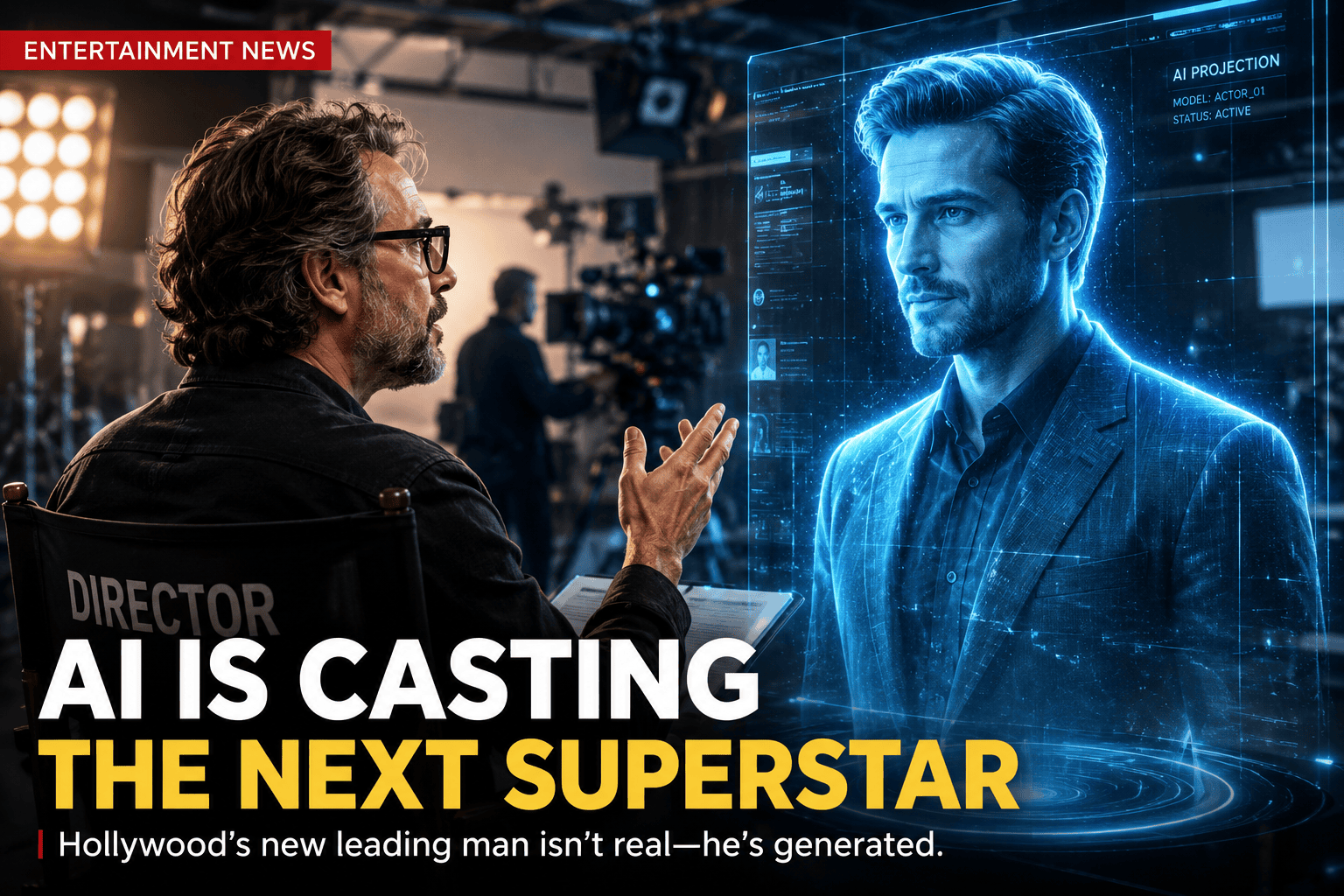
Imagine sitting down on a Friday night, opening your favorite streaming app, and watching a brand-new blockbuster movie starring a 25-year-old Marilyn Monroe acting alongside a modern-day Ryan Gosling. The script is flawless, the visual effects are breathtaking, and the soundtrack is a perfect blend of nostalgic and modern beats. Now, imagine finding out that no human wrote the script, composed the score, or operated a single camera.
Welcome to the future of human entertainment.
Artificial Intelligence (AI) has rapidly transitioned from a science fiction trope into a daily reality for the entertainment industry. For entertainment enthusiasts, celebrity news readers, and pop culture followers, AI is no longer just a buzzword—it is the driving force behind the next era of Hollywood, the global music industry, and streaming platforms. From deepfake technology to algorithmic scriptwriting, AI in entertainment is reshaping how we consume media, creating both unprecedented excitement and controversial debates.
In this comprehensive guide, we will explore the latest developments, the career timeline of AI in media, public reactions, and what the future holds for human creativity in a machine-driven world.
What Happened? The AI Explosion in Pop Culture
The integration of artificial intelligence into entertainment did not happen overnight, but its explosion into mainstream pop culture felt entirely sudden. Over the past few years, we have witnessed a massive shift in how technology interacts with art.
In the music industry, social media platforms were set ablaze when an AI-generated track featuring the cloned voices of Drake and The Weeknd went viral, racking up millions of streams before record labels scrambled to pull it down. Pop culture followers were left questioning: if a machine can make a hit song, what happens to the pop stars?
In Hollywood, the implications of AI technology became the focal point of the historic SAG-AFTRA and WGA (Writers Guild of America) strikes. Writers and actors took to the picket lines not just for fair pay, but to protect their own likenesses and intellectual property from being replaced by generative AI. Studios were proposing scanning background actors, paying them for one day of work, and owning their digital likeness forever—a terrifying prospect for the future of human actors.
Simultaneously, tools like OpenAI’s Sora and Mid-journey have demonstrated the ability to generate hyper-realistic, high-definition video and imagery from simple text prompts. Streaming platforms are heavily investing in AI to not only recommend what you should watch next but to predict what types of shows they should produce based on viewer data. The line between human creativity and technological generation is blurring, changing the entertainment landscape forever.
You can also read our guide on the latest celebrity updates on Jivan Jarurat News.
Background and Context: A Brief History of Technology in Hollywood
To understand the future of human entertainment, we must look at its past. The entertainment industry has always been at the forefront of technological adoption.
In the early days of cinema, the transition from silent films to “talkies” disrupted the careers of thousands of actors who could not adapt. Decades later, the advent of Computer-Generated Imagery (CGI) in films like Jurassic Park (1993) and Toy Story (1995) proved that technology could create worlds and characters that physical practical effects could not achieve.
The timeline of AI in entertainment truly began with recommendation algorithms. In the late 2000s, Netflix transitioned from sending DVDs in the mail to streaming content online. They utilized early machine learning to analyze viewing habits, pioneering the personalized streaming experience.
By the 2010s, AI was being used for visual de-aging in blockbuster franchises. Marvel Studios began utilizing AI-assisted visual effects to de-age actors like Samuel L. Jackson and Michael Douglas. In music, holograms of deceased legends like Tupac Shakur and Whitney Houston took to the stage, hinting at the digital resurrection capabilities of modern tech.
Today, we are in the era of Generative AI. We have moved past technology that merely assists in editing or recommending content to technology that can create the content from scratch. This evolution has set the stage for a massive industry disruption that affects everyone from the biggest movie stars to everyday TV show audiences.
Why This Matters: The Human vs. Machine Debate
Why should movie fans and streaming platform users care about artificial intelligence pop culture? Because AI touches the very soul of entertainment: human emotion and connection.
1. The Question of Authenticity
When we listen to a heartbreaking ballad or watch an actor cry on screen, we connect with their human experience. If an AI writes a beautiful script or composes a masterpiece, does it lose its emotional weight knowing a machine generated it without actually feeling the emotion? This authenticity crisis is a massive talking point among entertainment enthusiasts.
2. Job Security in the Creative Arts
The entertainment industry employs millions of people globally—not just celebrities, but set designers, script supervisors, makeup artists, and sound engineers. The future of human jobs in these sectors is threatened by efficiency-driven AI. If a studio can generate a lush alien landscape with a prompt, the need for location scouts and set builders diminishes.
3. Infinite, Personalized Content
For the consumer, AI matters because it promises an era of infinite content. Imagine an interactive TV show where the AI alters the plot based on your real-time reactions and preferences. The content will be tailored specifically to you, making entertainment more engaging but potentially isolating audiences from shared cultural moments.
Public and Social Media Reactions: Fans Speak Out
Social media trends are the perfect barometer for public sentiment regarding AI in entertainment. On platforms like TikTok, X (formerly Twitter), and Reddit, fan perspectives are deeply polarized.
The Fascination and Virality
On one hand, fans are having fun with AI. TikTok is flooded with AI covers—Frank Sinatra singing modern hip-hop songs, or SpongeBob SquarePants singing emotional ballads. These viral moments provide endless amusement for pop culture followers. Furthermore, fans are using AI tools to create their own fan-fiction movies, alternate endings to their favorite TV shows, and stunning digital fan art.
The Outrage and The “Uncanny Valley”
Conversely, there is intense backlash. When Disney used AI to generate the opening credits for Marvel’s Secret Invasion, the backlash on X was swift and severe. Fans criticized the studio for depriving human artists of work and pointed out the “uncanny valley” effect—the unsettling feeling when a digital creation looks almost human, but not quite right.
Celebrity news readers are also hyper-aware of deepfake controversies. High-profile celebrities, from Taylor Swift to Tom Hanks, have been victims of unauthorized AI-generated videos using their likeness for scams or inappropriate content. Fans are demanding stricter laws to protect the identities of their favorite stars, leading to viral hashtags like #ProtectHumanArtists.
Looking for more trending topics? Check out our latest articles on Jivan Jarurat Entertainment.
Industry Impact: Hollywood, Streaming, and Music
The implications of AI technology on the entertainment industry are monumental. Here is how the major pillars of showbiz are being disrupted:
Hollywood and Filmmaking
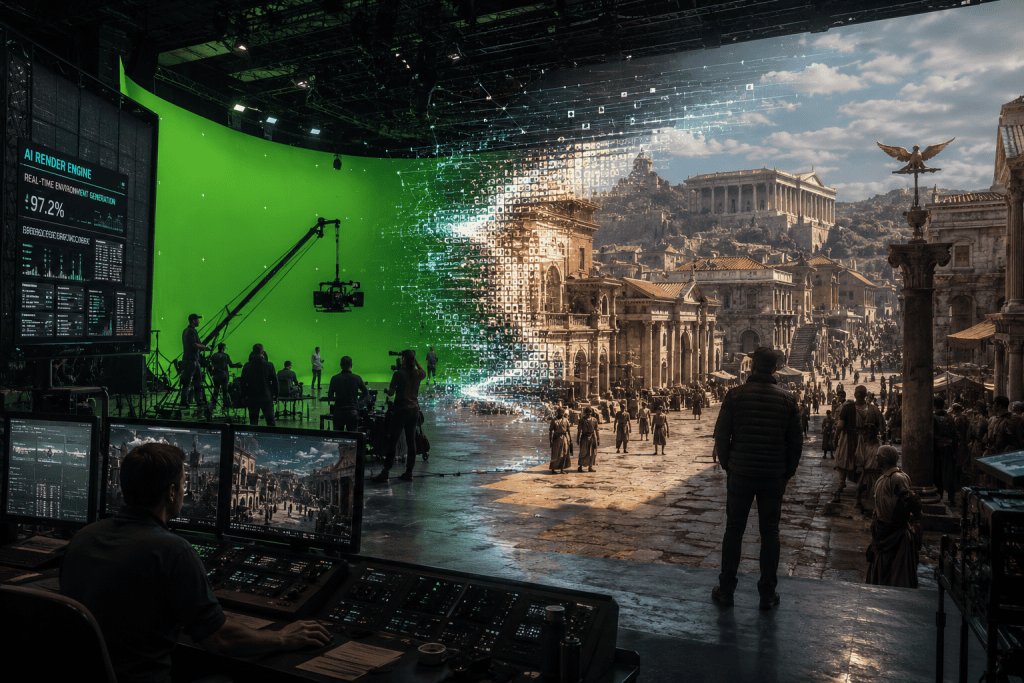
For movie studios, AI is the ultimate cost-cutting tool. Pre-production processes like storyboarding, which used to take months, can now be done in days. Post-production tasks, such as color grading, lip-syncing for international dubbing, and background noise removal, are now fully automated. Moreover, studios are exploring licensing deals to legally use the AI-generated voices or likenesses of iconic actors. James Earl Jones, for example, famously allowed AI to learn and recreate his legendary Darth Vader voice so the character can live on long after he retires.
Streaming Platforms
Streaming platforms like Netflix, Hulu, and Amazon Prime are taking AI beyond recommendation algorithms. They are using predictive AI to analyze what types of scripts will be successful before they are even greenlit. If the data shows that audiences want a romantic comedy featuring a specific trope in a specific setting, the platform will order it. Furthermore, AI is optimizing video compression, ensuring you get 4K streaming quality even on slower internet connections.
The Music Industry
The music industry is experiencing its biggest shift since the invention of the MP3. AI producers can instantly generate beats, while AI vocal synthesis can replicate the tone of any famous singer. To combat unauthorized cloning, labels are developing their own AI models. Some artists, like Grimes, have embraced the technology, offering to split royalties 50/50 with any creator who makes a hit song using her AI voice clone.
Expert Analysis: What Visionaries Are Saying
Expert opinions from industry titans highlight the divide between cautious optimism and existential dread regarding the future of human creativity.
Legendary director James Cameron (Avatar, The Terminator) has been vocal about his warnings, noting that he predicted the dangers of AI decades ago. Cameron argues that while AI can mimic art, it lacks the lived experience—the pain, love, and grief—that makes storytelling resonate.
Christopher Nolan (Oppenheimer, Inception) views AI as a powerful tool but stresses the importance of human accountability. He believes that as long as we view AI as a tool rather than an independent creator, human filmmakers will remain at the center of the industry.
On the tech side, streaming executives and Silicon Valley leaders argue that AI will democratize entertainment. According to tech analysts, AI removes the barrier to entry, allowing independent creators with no budget to produce Hollywood-level films from their bedrooms. It levels the playing field, making imagination the only limitation.
Future Developments: What Happens Next?
What does the timeline of AI in media look like for the next ten years? Here are the future expectations:
1. Hyper-Personalized Movies: In the near future, streaming platforms may offer customizable movies. Don’t like the ending of a thriller? Press a button, and the AI will generate an alternate ending in real-time. Want to insert your own face and voice into the lead role? AI will render it instantly.
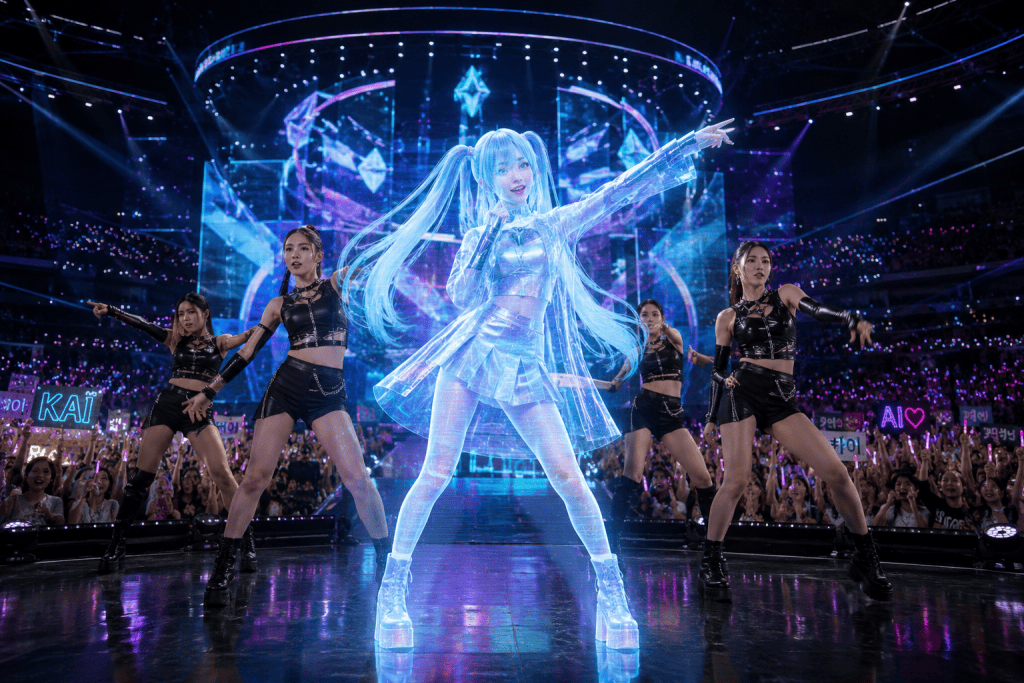
2. Virtual Pop Stars: We will see the rise of 100% AI-generated celebrities. Virtual influencers like Lil Miquela already secure massive brand deals. Soon, the biggest pop star in the world might not be a human at all, but an AI entity with a flawless voice, tireless work ethic, and scandal-free existence.
3. Digital Resurrection: The ethical debate will intensify as studios secure the rights to bring dead actors back to life for new films. We may see new movies starring Humphrey Bogart or Audrey Hepburn, requiring new laws and union regulations regarding digital legacy rights.
4. Real-time Interactive Gaming and VR: The line between movies and video games will disappear. AI will power non-playable characters (NPCs) in virtual reality to have unscripted, complex, and emotionally intelligent conversations with users, creating endless, immersive storytelling experiences.
Explore more about maintaining a balanced life amidst technological changes in our Jivan Jarurat Health Tips.
Frequently Asked Questions (FAQs)
1. How is AI currently being used in movies?
AI is used for visual effects, de-aging actors, script analysis, automating post-production editing, and translating/dubbing films into different languages with accurate lip-syncing.
2. Will AI replace human actors in the future?
While AI can generate digital humans and background extras, most experts believe AI will not fully replace lead human actors. Audiences still crave authentic human connection, off-screen celebrity drama, and real-life personalities.
3. What was the SAG-AFTRA strike about regarding AI?
The actors’ union struck to establish strict rules and consent regarding how studios can use AI to replicate an actor’s voice, face, and body, ensuring actors are fairly compensated for their digital likeness.
4. Can artificial intelligence write a good movie script?
Currently, AI can write competent, structured scripts, but they often lack deep emotional nuance and originality. Writers use AI as a brainstorming tool rather than a final scriptwriter.
5. Are AI-generated songs legal?
The legality is a gray area. If an AI song uses a copyrighted artist’s voice without permission, it can be taken down. However, new laws are actively being debated to protect artists’ vocal likenesses.
6. How do streaming platforms use AI algorithms?
Streaming services use AI to track your viewing history, analyze your preferences, recommend personalized content, and even decide which original shows they should fund based on predicted viewer trends.
7. What is a virtual influencer or AI pop star?
A virtual influencer is a CGI-created persona powered by AI that exists on social media. They release music, model for fashion brands, and interact with fans just like human celebrities.
8. Can AI revive deceased actors for new movies?
Yes. Through deepfake technology and CGI, deceased actors can be digitally resurrected on screen, provided their estate or family gives legal permission and licenses their likeness.
9. How will AI change video games and interactive media?
AI will allow video game characters to have dynamic, unscripted conversations with players, meaning no two gaming experiences will ever be exactly the same.
10. How can I protect my digital identity from AI deepfakes?
As technology advances, individuals should be cautious about sharing high-resolution voice and face data publicly. Lawmakers are currently working on deepfake legislation to protect both celebrities and everyday citizens.
Final Thoughts
The integration of AI in entertainment is not a passing trend; it is a fundamental shift in how the future of human creativity will operate. For movie fans, TV audiences, and pop culture followers, the coming years will be a thrilling ride filled with unimaginable visual spectacles, interactive storylines, and revolutionary music.
However, this technological renaissance comes with profound responsibilities. The entertainment industry must balance efficiency with the preservation of human emotion, ensuring that writers, actors, and creators are protected and compensated. Ultimately, while AI can replicate the mechanics of art, the soul of a great movie, song, or story will always require the human touch. The future of entertainment won’t be Humans vs. AI, but rather, what Humans can achieve with AI.