

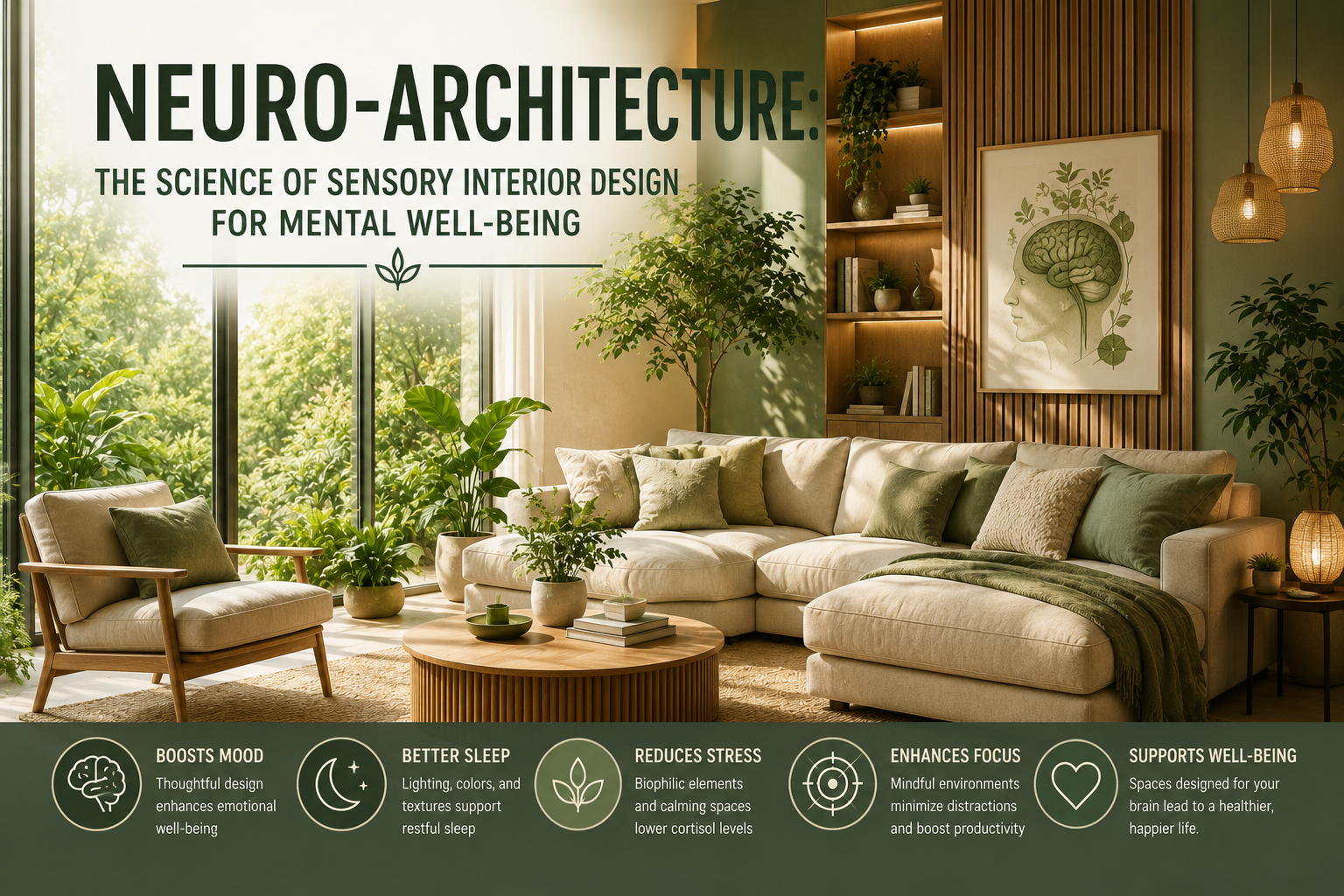
For decades, interior design was viewed mainly as an aesthetic practice focused on beauty and decoration. Today, however, science is changing how we understand our homes. Neuro-architecture and sensory interior design explore how physical spaces directly affect brain chemistry, stress levels, emotions, productivity, and even long-term mental health.
Every room we enter sends thousands of sensory signals to the brain. The lighting, textures, colors, sounds, temperature, airflow, and layout of a space can either activate stress responses or create feelings of calm and safety. This is why sensory interior design has become one of the most important modern approaches to healthy living.
In this comprehensive guide, we will explore how sensory interior design can help create emotionally supportive environments that improve focus, sleep, creativity, and overall well-being.
What is Sensory Interior Design?
Sensory interior design is the practice of designing spaces that positively influence the five senses and the nervous system. Unlike traditional decorating, this approach focuses on how environments make people feel rather than simply how they look.
Modern neuroscience shows that our surroundings shape:
- Stress hormone levels
- Mood regulation
- Sleep quality
- Cognitive performance
- Emotional stability
- Physical relaxation
The goal of sensory interior design is to create spaces that support both mental and physical health through intentional design choices.
1. Fractal Patterns and Sensory Interior Design
One of the most fascinating discoveries in sensory interior design is the psychological effect of fractal patterns.
Fractals are repeating organic patterns found throughout nature:
- Tree branches
- River networks
- Leaves
- Clouds
- Seashells
Why Fractals Calm the Brain
Studies show the human brain processes natural fractals more efficiently than artificial geometric designs. Looking at these patterns increases alpha brain waves associated with relaxation and mental clarity.
How to Use Fractals at Home
- Botanical wallpaper
- Natural wood grain textures
- Stone-inspired rugs
- Live-edge furniture
- Organic curved decor
Adding these natural elements through sensory interior design can significantly reduce visual stress and create emotional calmness.
For additional wellness strategies, explore healthy lifestyle habits on Jivan Jarurat.
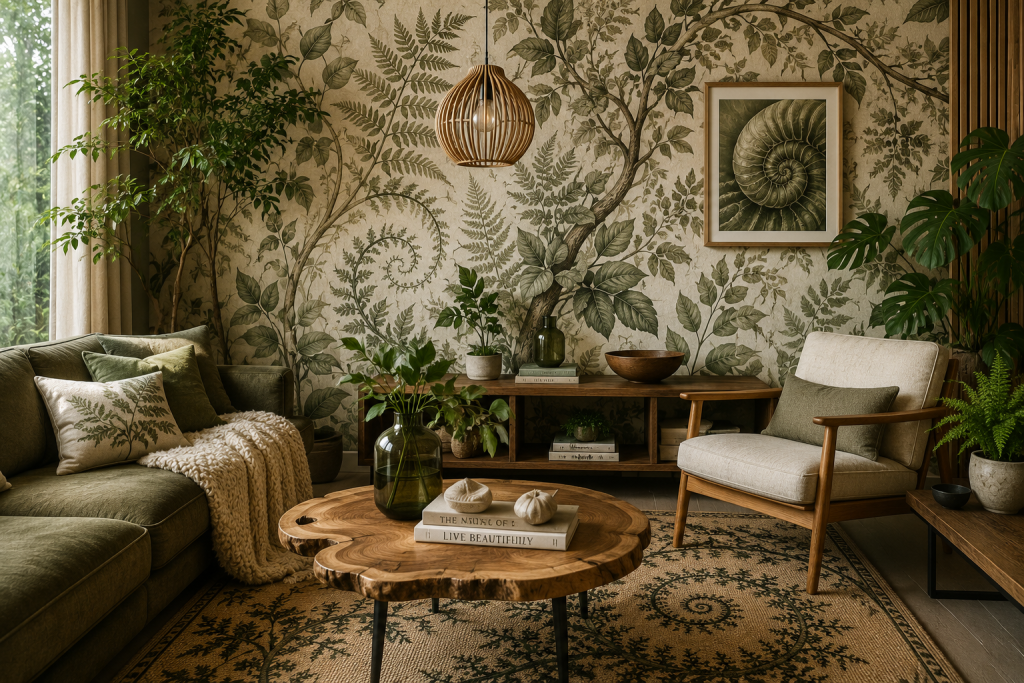
ALT Text: Using fractal patterns and botanical wallpaper in sensory interior design for mental wellness
2. Circadian Lighting: The Foundation of Sensory Interior Design
Lighting is one of the most powerful tools in sensory interior design because it directly influences circadian rhythms, hormone production, and sleep quality.
Unfortunately, most homes rely on harsh artificial lighting that confuses the body’s internal clock.
Understanding the Kelvin Scale
Daytime Lighting (4000K–5000K)
Cool white or blue-toned lighting improves:
- Focus
- Productivity
- Alertness
- Serotonin levels
Ideal for:
- Kitchens
- Home offices
- Study spaces
Evening Lighting (2000K–2700K)
Warm amber lighting supports:
- Melatonin production
- Relaxation
- Better sleep quality
Ideal for:
- Bedrooms
- Living rooms
- Reading corners
Unique Lighting Tip
One valuable sensory interior design strategy is avoiding harsh overhead lights during the evening. Instead, use:
- Floor lamps
- Wall sconces
- Table lamps
- Candle-style lighting
This mimics sunset conditions and helps prepare the nervous system for rest.
3. Biophilic Design and Sensory Interior Design
Biophilic design focuses on strengthening the connection between humans and nature. It is a core component of modern sensory interior design because natural environments reduce cortisol and support emotional well-being.
More Than Just Houseplants
Biophilic design includes:
- Natural airflow
- Indoor water sounds
- Organic materials
- Sunlight patterns
- Nature-inspired textures
The Psychological Benefits
Research shows biophilic environments can:
- Reduce anxiety
- Improve concentration
- Lower blood pressure
- Increase creativity
- Improve sleep quality
Easy Ways to Add Biophilic Elements
- Open windows regularly
- Add indoor plants
- Use linen, wood, and stone materials
- Incorporate natural sunlight
- Add water fountains or nature sounds
These features make interior design feel deeply calming and restorative.
Stay informed with more environmental and lifestyle insights on Jivan Jarurat.
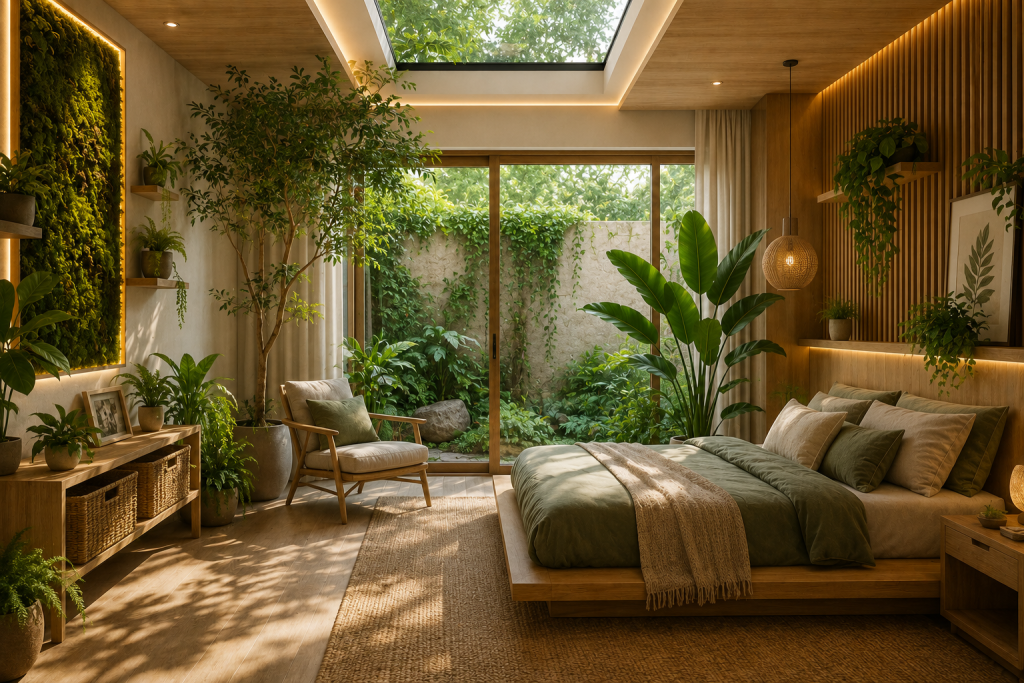
ALT Text: Biophilic sensory interior design featuring indoor plants and natural lighting
4. The Psychology of Texture in Sensory Interior Design
Modern life has reduced physical sensory stimulation. Most people spend hours touching smooth digital screens, which can create a form of “tactile deprivation.”
This is why texture plays an important role in interior design.
Creating Textural Contrast
Combining different materials stimulates the somatosensory cortex and increases feelings of comfort and grounding.
Examples
- Soft wool blankets on leather sofas
- Smooth marble with rough wood
- Velvet cushions beside linen fabrics
- Natural woven baskets
Texture-rich environments help people feel emotionally secure and physically connected to their surroundings.
5. Digital-Free Zones and Mental Recovery
As remote work grows, many homes no longer separate productivity from relaxation. This constant overlap increases burnout and mental fatigue.
One of the smartest sensory interior design techniques is creating “digital-free zones.”
Designing a Recovery Space
Create a corner dedicated to rest and reflection:
- No screens
- No chargers
- Comfortable seating
- Soft lighting
- Natural views
- Books or calming artwork
This tells the nervous system it is safe to leave “work mode” and enter “recovery mode.”
These intentional environments are central to effective sensory interior design.
6. Color Psychology in Sensory Interior Design
Colors strongly influence emotional states, heart rate, and energy levels.
Soft Low-Saturation Colors
Colors like:
- Sage green
- Warm beige
- Pale terracotta
- Dusty blue
help reduce anxiety and create openness.
Dark Saturated Colors
Colors such as:
- Navy blue
- Emerald green
- Charcoal gray
create feelings of safety, focus, and emotional security.
The Baker-Miller Pink Effect
One fascinating discovery in sensory interior design is Baker-Miller Pink, a specific shade scientifically linked to reduced aggression and muscle tension.
Used subtly, it can create calming effects in stressful environments like offices or study areas.
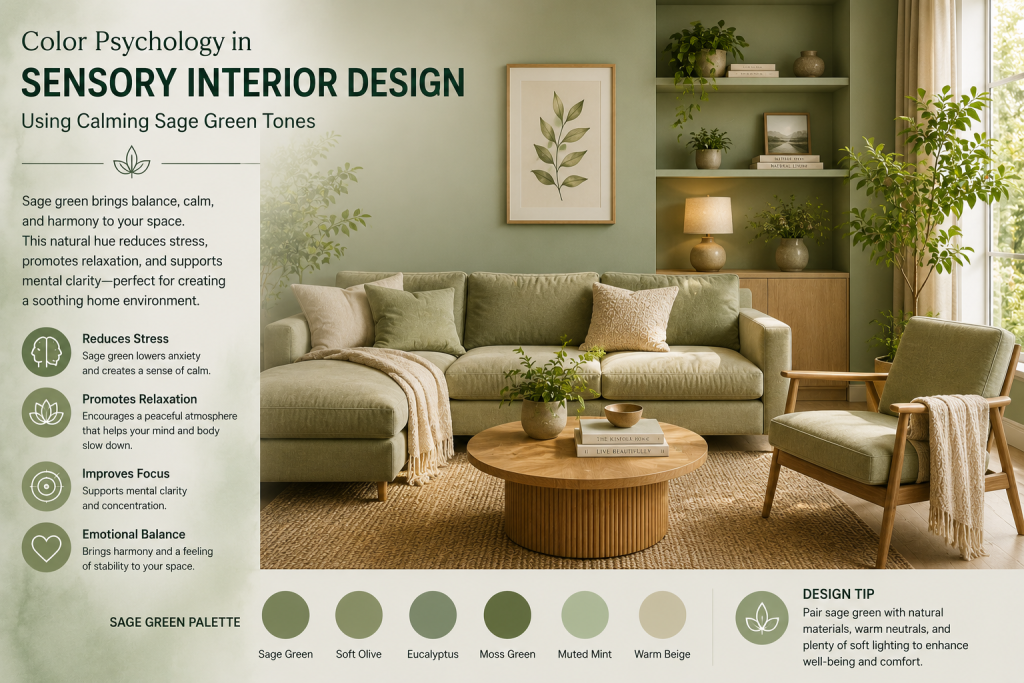
ALT Text: Color psychology in sensory interior design using calming sage green tones
7. Acoustic Design: The Hidden Element of Sensory Interior Design
Sound is often ignored in home decorating, yet noise heavily affects mental health.
Hard surfaces such as:
- Glass
- Concrete
- Tile
- Hardwood
reflect sound waves and increase sensory stress.
Softening the Soundscape
Acoustic Design Solutions
- Thick curtains
- Rugs and carpets
- Upholstered furniture
- Fabric wall art
- Bookshelves
One overlooked benefit of sensory interior design is how sound management improves relaxation, sleep, and concentration.
8. Prospect and Refuge Theory
Humans naturally prefer environments where they can observe surroundings while feeling physically protected.
This psychological principle is called “Prospect and Refuge.”
How to Apply It
- Position sofas facing entrances
- Keep backs protected by solid walls
- Avoid desks facing away from doors
- Create cozy enclosed reading corners
This arrangement reduces subconscious vigilance and improves comfort.
9. The Mental Health Benefits of Sensory Interior Design
A thoughtfully designed environment can positively influence:
- Anxiety levels
- Mood stability
- Sleep quality
- Creativity
- Emotional resilience
Scientific studies increasingly support the idea that interior design functions as preventative mental healthcare.
By reducing environmental stressors, homes become restorative spaces rather than sources of stimulation and exhaustion.
10. Affordable Sensory Interior Design Ideas
You do not need a luxury budget to apply these concepts.
Budget-Friendly Improvements
- Change warm light bulbs
- Rearrange furniture
- Add indoor plants
- Use calming colors
- Declutter surfaces
- Add textured fabrics
- Open windows daily
Even small adjustments can significantly improve emotional well-being.
Conclusion: Designing a Home That Heals
Interior design is no longer only about aesthetics — it is about supporting human biology and emotional health.
Through sensory interior design, homes can become spaces that:
- Reduce stress
- Improve sleep
- Increase focus
- Support emotional balance
- Encourage relaxation
Whether you begin by changing your lighting, adding plants, or improving sound absorption, every small change affects how your brain experiences space.
A healthier mind often begins with a healthier environment.
Learn more about Interior Design on the our website Jivan Jarurat.
Frequently Asked Questions (FAQs)
What is the most important part of sensory interior design?
Lighting is often considered the most powerful factor because it directly influences hormones, sleep, and mood.
Is sensory interior design expensive?
No. Many improvements such as rearranging furniture, changing bulbs, or adding plants are affordable.
Can sensory interior design work in small apartments?
Absolutely. Small spaces benefit greatly from calming layouts, decluttering, proper lighting, and natural textures.
Does sensory interior design improve mental health?
Yes. Research suggests calming environments reduce cortisol, anxiety, and sensory overload while improving emotional well-being.