

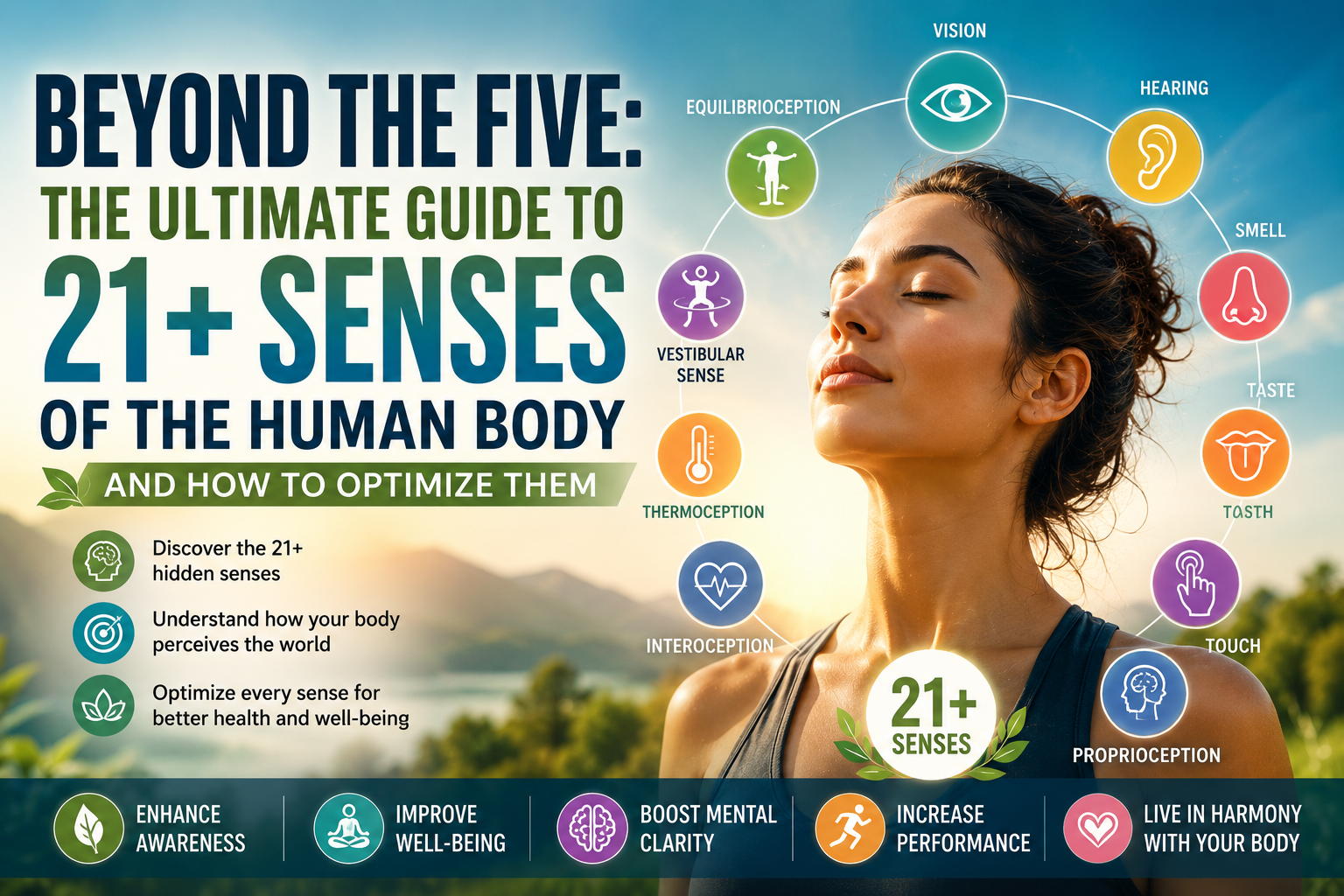
Introduction: The Truth About Human Body Senses
For many years, we’ve been taught that there are only five human body senses: sight, hearing, smell, taste, and touch. This traditional understanding of human body senses dates back to Aristotle and has remained part of education for centuries.
However, modern neuroscience and biology reveal that human body senses are far more complex. Scientists now believe humans possess at least 21 distinct human body senses, while some researchers suggest there may be as many as 33 sensory systems working together.
These advanced human body senses help us interpret the external world, maintain internal balance, regulate emotions, and support survival. Understanding human body senses is more than academic knowledge — it is a true Jivan Jarurat (life necessity).
When we learn how human body senses control pain, temperature, balance, hunger, and body awareness, we can better protect our mental and physical well-being. This guide explores the fascinating science behind human body senses and uncovers biological abilities most people never realize they possess.
1. The Evolutionary Power of Sight (Vision)
Sight is one of the most powerful human body senses because it delivers the largest amount of information to the brain.
About 30% of the brain’s cortex is dedicated to processing visual signals.
Interesting Fact
Your eyes can capture an image in just 13 milliseconds. Although the eyes gather light, the brain constructs the final image. Humans also possess a natural blind spot where the optic nerve connects to the retina, but the brain automatically fills in the missing visual information.
Tip for Eye Health
Practice “Eye Yoga” by focusing on a distant object for 30 seconds and then a nearby object for another 30 seconds. This exercise strengthens eye muscles and supports healthy human body senses related to vision.
Eating orange and dark green vegetables rich in lutein can also support retinal health.
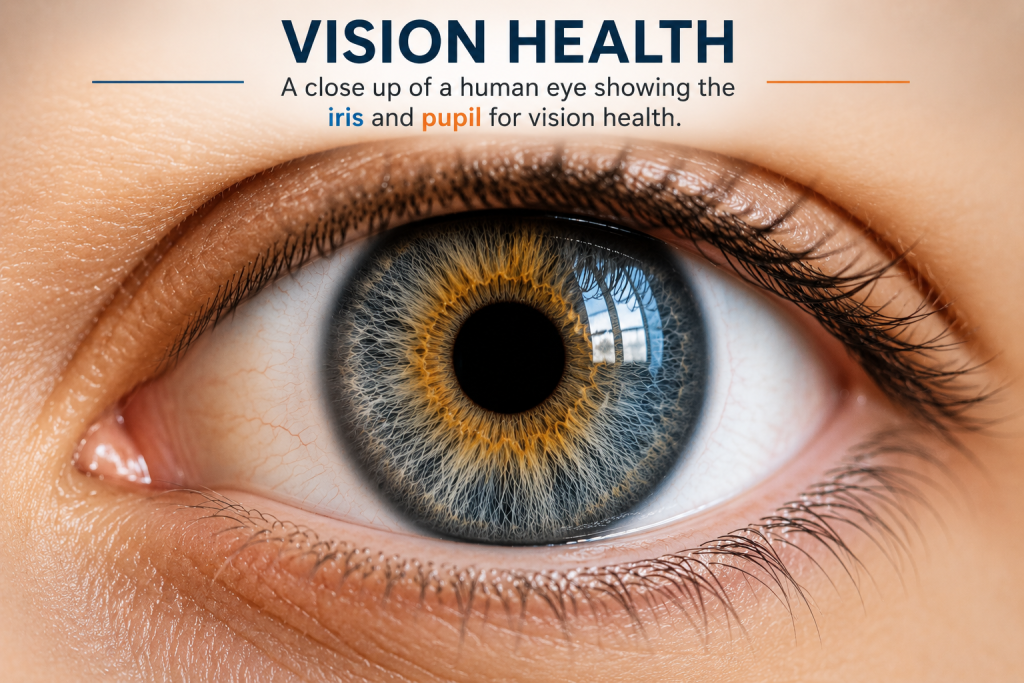
Image ALT Text: “A magnified view of a human eye showing the iris and pupil for visionhealth
2. The Mechanics of Sound: How We Hear
Among all human body senses, hearing is one of the fastest. The brain can identify sounds in approximately 0.05 seconds.
Natural Maintenance
Earwax (cerumen) acts as a natural antibacterial and antifungal shield. It protects the ear canal while carrying away dust and dead skin cells.
Supporting Auditory Longevity
Research shows magnesium and zinc help maintain the tiny hair cells inside the ear that convert sound waves into electrical signals.
3. The Chemistry of Scent: Understanding Olfaction
Our sense of smell is deeply connected to survival, memory, and emotional processing. Among all human body senses, olfaction is considered one of the most ancient sensory systems because it evolved early to help humans detect food, danger, smoke, and environmental changes.
Scientists estimate that humans can identify more than one trillion different scents. The nose contains millions of sensory receptors that send signals directly to the brain’s emotional and memory centers. This explains why certain fragrances can instantly transport you back to childhood memories or emotionally important moments.
Research also suggests that pleasant natural aromas such as lavender, sandalwood, and jasmine may help reduce stress levels and improve sleep quality. Essential oils are often used in aromatherapy because smell directly influences mood-regulating areas of the nervous system.
People who lose their sense of smell often experience reduced appetite, emotional disconnection, and lower quality of life. This demonstrates how important human body senses are for mental and emotional wellness.
Daily Tips to Improve Your Sense of Smell
- Spend time outdoors in nature to expose your nose to diverse natural scents.
- Avoid smoking and excessive pollution exposure.
- Stay hydrated to maintain healthy nasal tissues.
- Practice mindful smelling by identifying individual scents in foods and environments.
Smell is one of the oldest human body senses from an evolutionary perspective.
Unlike other sensory systems, smell directly connects to emotional and memory centers in the brain, which explains why scents can instantly trigger memories or emotions.
The Science of Chemosignals
Humans may subconsciously detect emotional states through scent. Sweat contains chemical markers linked to stress, fear, and happiness.
The Sensory-Gut Connection
The smell of food activates digestive enzymes before eating begins. This process is called the Cephalic Phase of Digestion.
4. The Sophisticated Palette of Taste (Gustation)
Taste is another essential part of human body senses because it helps guide nutritional choices.
Taste buds are found not only on the tongue but also in the roof of the mouth and throat. These cells regenerate approximately every two weeks, although regeneration slows with age.
5. The Complexity of Touch (Somatosensation)
Touch is not a single sensation but a collection of specialized human body senses involving pressure, vibration, texture, and movement.
The Power of Physical Connection
A 20-second hug releases oxytocin, often called the “bonding hormone,” which may help lower stress and blood pressure.
6. Beyond the Five: Hidden Human Body Senses
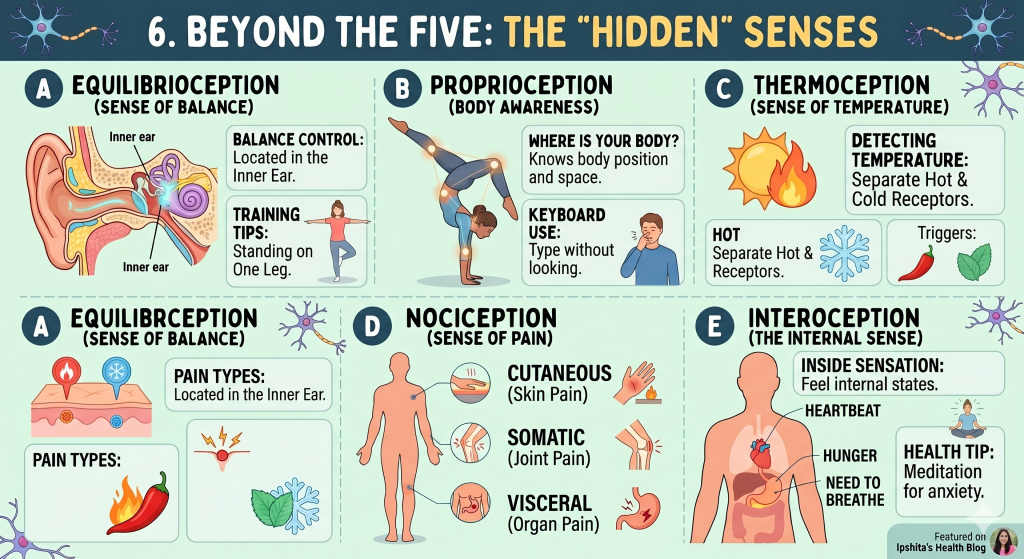
Image ALT Text: An infographic illustrating six hidden human senses beyond the basic five, with brief explanations.
A. Equilibrioception (Sense of Balance)
Located in the vestibular system of the inner ear, this sensory system helps maintain balance and posture.
B. Proprioception (Body Awareness)
This allows you to sense where your body parts are without looking at them.
C. Thermoception (Sense of Temperature)
Different receptors detect heat and cold separately.
D. Nociception (Sense of Pain)
Pain acts as a survival warning system for the body.
E. Interoception (Internal Awareness)
Interoception is one of the most important human body senses because it allows you to feel hunger, heartbeat, thirst, breathing, and emotional stress.
Meditation and mindfulness exercises can improve interoception and reduce anxiety.
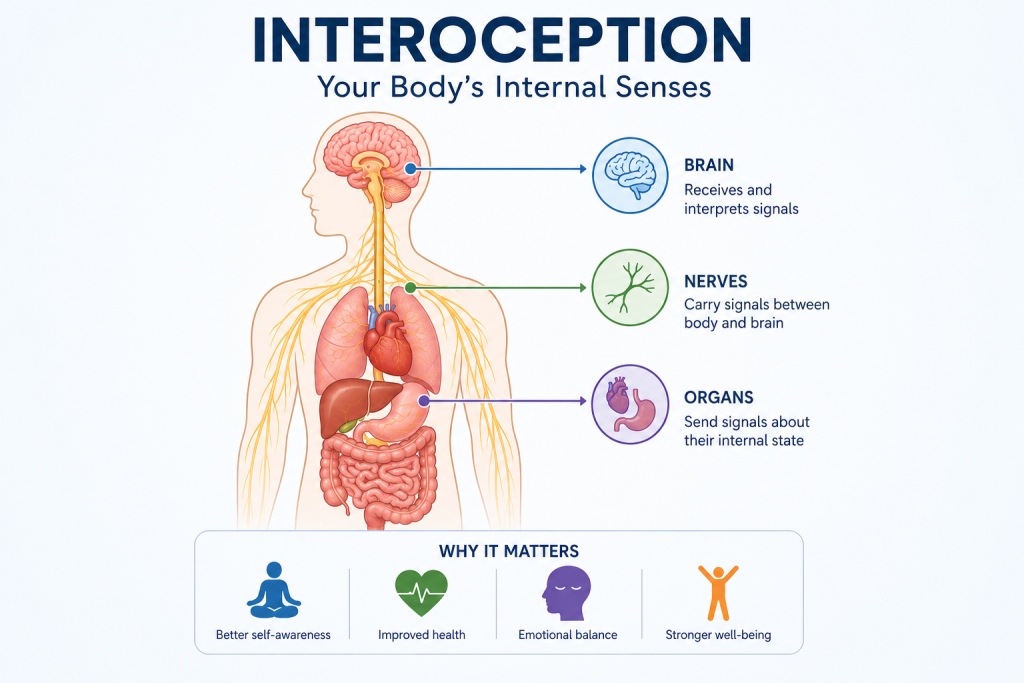
Image ALT Text: “Diagram of human nervous system explaining interoception and internal
body senses”
7. Amazing Facts About Human Body Senses
The more scientists study human biology, the more surprising discoveries they make about human body senses and hidden sensory abilities.
1. Humans Glow Naturally
The human body produces a tiny amount of bioluminescent light due to chemical reactions inside cells. Although this light is invisible to the naked eye, specialized scientific cameras can detect it.
2. Your Brain Predicts Reality
The brain does not simply react to sensory information. Instead, it constantly predicts what it expects to see, hear, or feel. This predictive ability helps human body senses work efficiently and quickly.
3. Music Changes the Brain
Learning a musical instrument strengthens auditory processing, memory, coordination, and emotional control. Neuroplasticity allows sensory areas of the brain to physically expand with training.
4. Skin Is the Largest Sensory Organ
Human skin contains millions of receptors that detect pressure, heat, cold, texture, vibration, and pain. These receptors constantly send information to the nervous system.
5. The Sense of Time Exists
Chronoception, or time perception, is one of the lesser-known human body senses. Your brain tracks time using circadian rhythms, body temperature changes, and environmental light exposure.
8. The Role of the Brain in Human Body Senses
The brain acts as the command center for all human body senses. Every second, billions of sensory signals travel through the nervous system and are processed almost instantly.
Different regions of the brain specialize in different forms of sensory processing:
- The occipital lobe processes visual information.
- The temporal lobe helps process hearing and language.
- The parietal lobe manages touch and body awareness.
- The limbic system connects senses with emotions and memories.
The brain also filters unnecessary sensory information so we are not overwhelmed by every sound, smell, or touch around us.
Sensory Overload in Modern Life
Modern technology exposes humans to constant stimulation through screens, artificial lights, traffic noise, and digital notifications. This sensory overload can lead to stress, fatigue, anxiety, and sleep disturbances.
To protect human body senses from overstimulation:
- Take regular breaks from screens.
- Reduce blue light exposure before sleep.
- Spend time in quiet natural environments.
- Practice mindfulness and meditation.
9. Optimizing Human Body Senses Naturally
- Humans naturally emit tiny amounts of light, a phenomenon known as bioluminescence.
- Some researchers believe humans may possess a weak form of magnetoreception, similar to migratory birds.
- Neuroplasticity allows the brain to physically adapt and strengthen sensory pathways through experience and learning.
8. Optimizing Human Body Senses Naturally
Morning: Sunlight and Hydration
Natural sunlight helps regulate circadian rhythm and supports healthy human body senses related to time perception.
Afternoon: Movement and Texture
Walking barefoot stimulates nerve endings in the feet and strengthens balance and proprioception.
Evening: Sensory Rest
Reducing noise and bright light exposure helps reset overstimulated human body senses.
10. The Gut-Sense Connection
The gut contains a vast network of neurons often referred to as the “second brain.” Because of this connection, gut health can influence multiple human body senses.
Sensory Indicators of Gut Imbalance
- Metallic taste in the mouth
- Increased sensitivity to loud sounds
- Difficulty regulating body temperature
Improving gut health through nutrition may help restore sensory balance and cognitive clarity.
11. Lifestyle Habits That Strengthen Human Body Senses
1. Quality Sleep
Sleep is essential for sensory repair and brain recovery. During deep sleep, the brain processes sensory information gathered throughout the day.
2. Physical Exercise
Exercise improves blood circulation, oxygen delivery, coordination, and neural communication. Activities like yoga, dancing, and martial arts are particularly effective for improving balance and proprioception.
3. Proper Nutrition
Foods rich in omega-3 fatty acids, antioxidants, magnesium, and zinc help protect nerves and sensory organs.
4. Stress Management
Chronic stress can weaken sensory processing and increase pain sensitivity. Meditation, breathing exercises, and spending time in nature support nervous system balance.
5. Social Interaction
Positive human connection improves emotional regulation and activates beneficial hormonal responses that support mental well-being.
12. Conclusion: Unlocking the Full Potential of Human Body Senses
The human body is an extraordinary sensory system capable of much more than the traditional five senses. By understanding human body senses beyond sight, smell, hearing, taste, and touch, we gain deeper insight into emotional intelligence, health, and longevity.
Every small lifestyle change — from improving sleep and gut health to reducing sensory overload — can strengthen human body senses and improve overall well-being.
At Jivan Jarurat, our mission is to help readers better understand human body senses and unlock their full biological potential.