

Introduction: Stepping Beyond Earth
For generations, gazing up at the night sky has filled humanity with a profound sense of wonder and a burning desire to explore. Among the countless twinkling stars and distant galaxies, one celestial body has consistently captured our collective imagination: Mars. With its distinct reddish hue and striking similarities to Earth, the Red Planet has been the subject of countless science fiction novels, movies, and scientific debates. Today, however, we are no longer just dreaming about it. The scientific community is actively asking and answering the ultimate question: could humans live on Mars?
As Earth faces mounting challenges—ranging from climate change and resource depletion to overpopulation—the concept of becoming a multi-planetary species has transitioned from a fantastical sci-fi trope into a legitimate survival strategy. The future of space colonization is unfolding right before our eyes, driven by brilliant minds at global space agencies and private aerospace companies. Establishing a permanent presence on Mars would be the single greatest technological achievement in human history, fundamentally altering our understanding of what is possible.
In this comprehensive guide, we will explore the harsh realities of the Martian environment, the cutting-edge technologies being developed to sustain life, and the timeline for when we might actually set foot on another world. If you love keeping up with the latest technological breakthroughs and global advancements, be sure to check out the trending updates on Jivan Jarurat News. Fasten your seatbelts as we embark on a deep dive into the fascinating world of Martian colonization.
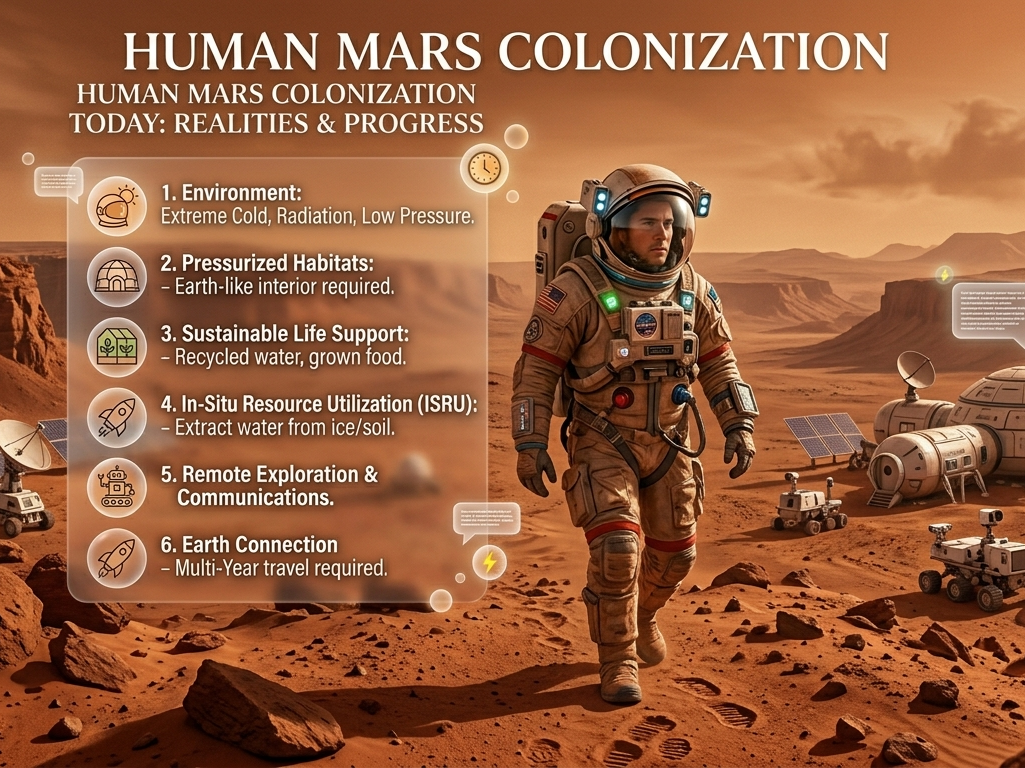
ALT Text: Astronaut walking on the red planet showing if could humans live on Mars today
1. Why Mars? The Appeal of the Red Planet
When discussing the future of space colonization, people often ask, “Why Mars?” Why not Venus, or our own Moon? While the Moon is closer (only a three-day journey) and serves as an excellent testing ground, it lacks an atmosphere and the necessary resources to sustain a large, independent civilization long-term. Venus, on the other hand, is a literal hellscape with crushing atmospheric pressure and lead-melting surface temperatures.
Mars sits in the “Goldilocks Zone” of our solar system, meaning it is neither too hot nor too cold to completely rule out the existence of life. A day on Mars, known as a “Sol,” is remarkably similar to a day on Earth, clocking in at 24 hours and 39 minutes. This similarity would make adjusting to the Martian day-night cycle relatively easy for the human circadian rhythm.
Furthermore, Mars has an axial tilt of 25.2 degrees (compared to Earth’s 23.5 degrees), meaning it experiences four distinct seasons. Most importantly, extensive orbital imaging and rover explorations have proven that Mars holds massive reserves of water ice hidden just beneath its dusty surface and locked at its polar ice caps. Access to water is the absolute most critical factor when planning any human settlement on Mars, making the Red Planet the most viable candidate for our second home.
2. What Do Humans Need to Survive on Mars?
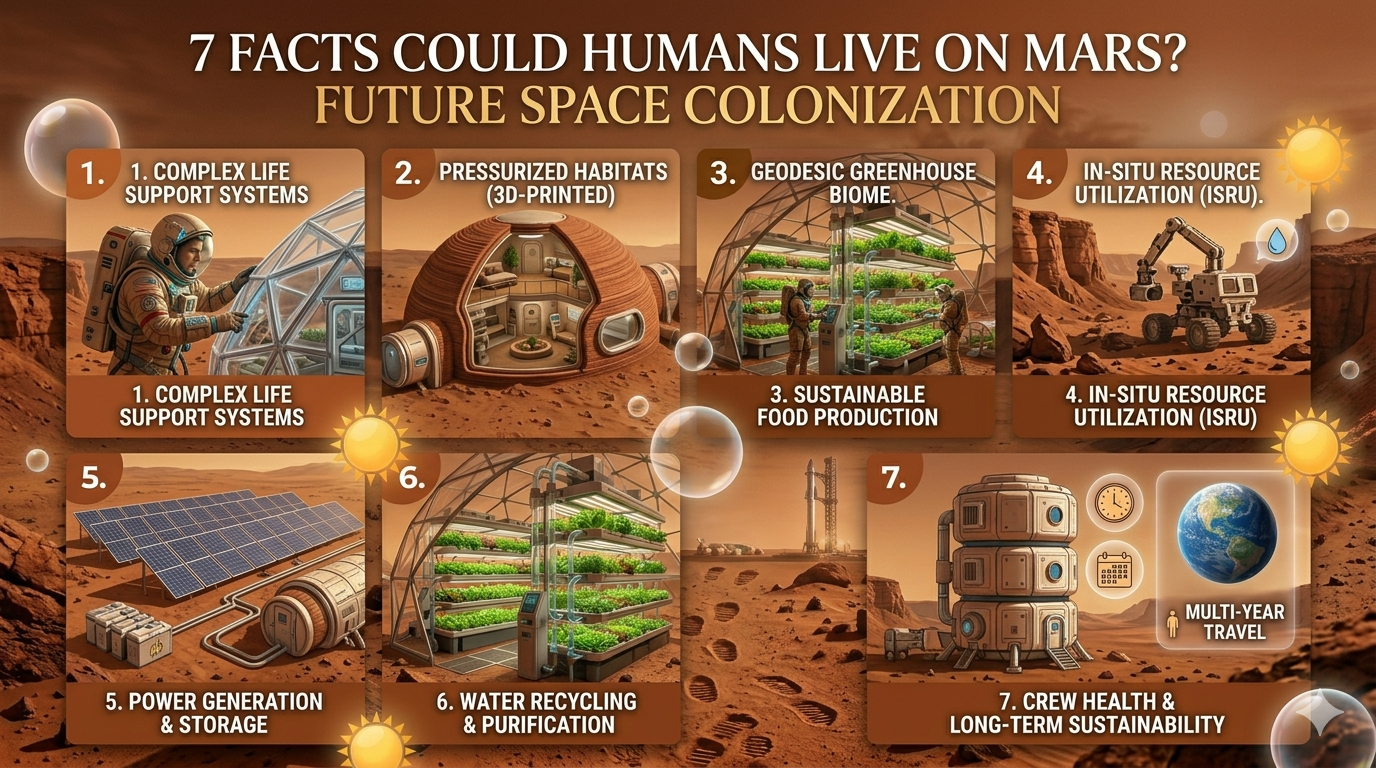
To turn this ambitious dream into a reality, we must first address a fundamental question: what do humans need to survive on Mars? Our bodies evolved to thrive in the lush, oxygen-rich, gravity-heavy environment of Earth. Mars offers none of these comforts. To survive, a Martian colony will require a flawless, closed-loop life support system.
1. Breathable Oxygen
The Martian atmosphere is incredibly thin—about 1% the density of Earth’s—and is composed of 95% carbon dioxide. To survive, we cannot bring all our oxygen from Earth; it is simply too heavy and expensive. Instead, we must manufacture it on-site. NASA has already proven this is possible. Onboard the Perseverance rover is an instrument called MOXIE (Mars Oxygen In-Situ Resource Utilization Experiment). MOXIE acts like a mechanical tree, inhaling Martian carbon dioxide and using solid oxide electrolysis to split it into carbon monoxide and pure, breathable oxygen. Future colonies will rely on massive, scaled-up versions of MOXIE.
2. Water Extraction and Recycling
While water exists on Mars in the form of ice, mining it will require heavy machinery and energy. Once extracted, the water must be purified. Furthermore, a Martian base will require a 100% efficient recycling system. Aboard the International Space Station (ISS), astronauts already drink highly purified, recycled sweat and urine. On Mars, every single drop of moisture—including the vapor from human breath—will be captured and recycled.
3. Sustainable Food Sources
You cannot order a pizza delivery on Mars. Supply missions from Earth will take roughly seven to nine months to arrive, meaning colonists must grow their own food. Because Martian soil is toxic, farming will rely heavily on advanced hydroponics and aeroponics—growing nutrient-dense crops like potatoes, leafy greens, and soybeans in nutrient-rich water solutions under artificial LED lighting.
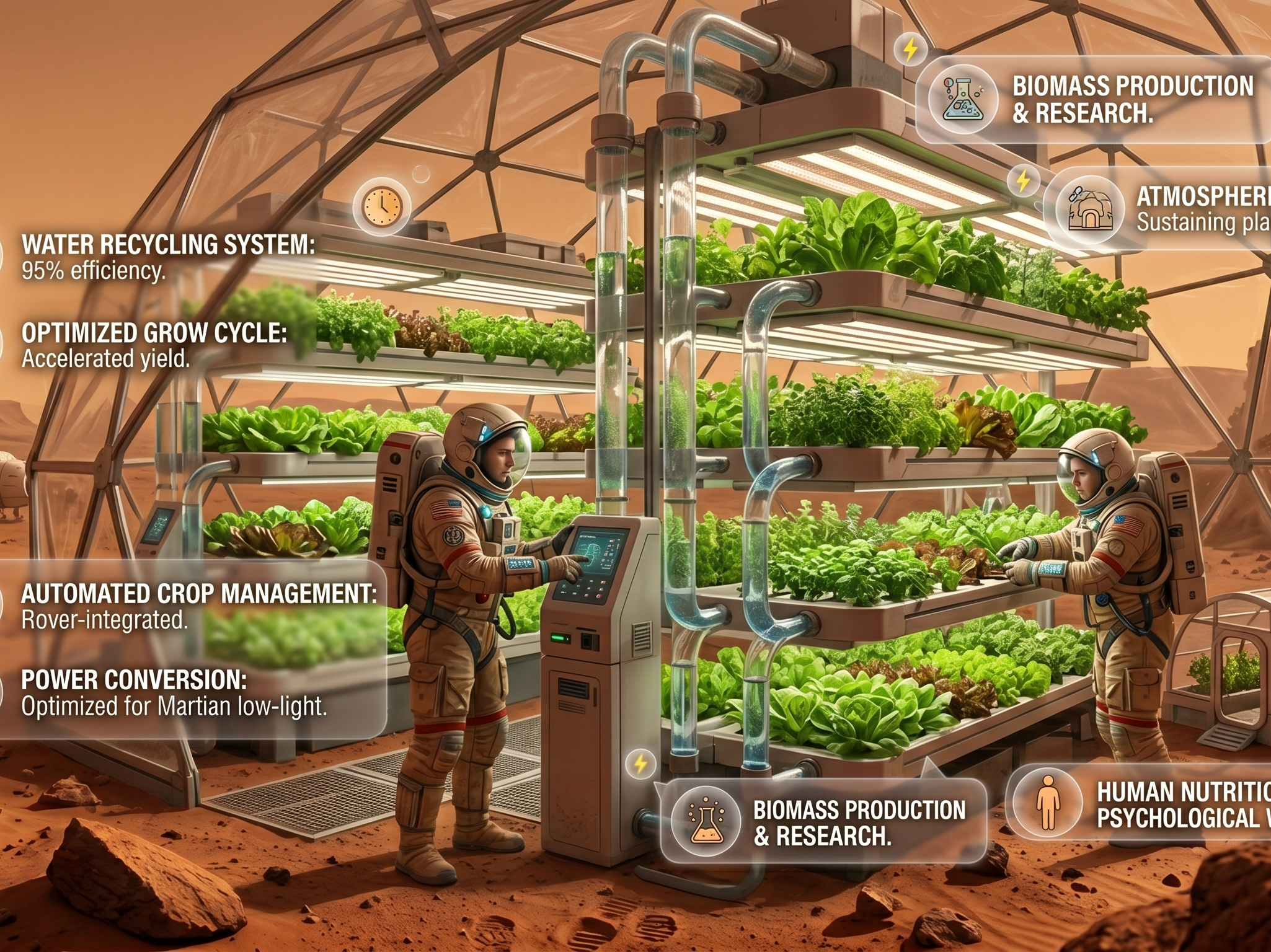
ALT Text: Understanding what do humans need to survive on Mars in future space missions
3. The Brutal Challenges of Living on Mars
While the technology to keep us alive is rapidly advancing, we cannot ignore the profound challenges of living on Mars. The Red Planet is actively hostile to biological life.
Toxic Soil (Perchlorates)
The iconic red dust of Mars is not just dirt; it is heavily laced with perchlorates, a type of highly toxic chemical compound. If Martian dust gets inside a habitat and is inhaled or ingested by humans, it can severely damage the thyroid gland and cause life-threatening health issues. Habitats will require advanced airlocks and “suitports” to ensure that spacesuits remain outside the living quarters, keeping the toxic dust at bay.
Cosmic Radiation
Earth is protected by a thick atmosphere and a powerful global magnetic field that deflects lethal solar flares and cosmic radiation. Mars lost its magnetic field billions of years ago. Without this shield, the surface of Mars is constantly bombarded by high-energy radiation. Prolonged exposure would drastically increase the risk of cancer and genetic mutations.
Low Gravity Environments
Mars has roughly 38% of Earth’s gravity. If you weigh 100 pounds on Earth, you would only weigh 38 pounds on Mars. While bouncing around might sound fun, long-term exposure to partial gravity causes severe bone density loss, muscle atrophy, and cardiovascular weakening. Colonists will be required to exercise intensely for several hours every single day just to maintain their physical health. To learn more about how physical activity impacts human biology and longevity, read our detailed guides on Jivan Jarurat Health Tips.
4. How Will Humans Build Homes on Mars?
Knowing the intense radiation and extreme temperatures (which can plummet to -195°F or -125°C at the poles), you might be wondering, how will humans build homes on Mars? Traditional construction methods using bricks, wood, or steel are entirely impossible.
In-Situ Resource Utilization (ISRU) and 3D Printing
The most viable architectural strategy is utilizing materials that are already there—a concept known as In-Situ Resource Utilization. Companies and space agencies are currently testing massive, autonomous 3D printers. These robots will land on Mars years before humans arrive. They will scoop up the loose Martian dirt (regolith), mix it with a binding agent or melt it using lasers, and 3D print thick, robust dome structures. These thick walls will provide essential insulation and block incoming radiation.
Underground Lava Tubes
Another fascinating proposal is moving the colonies entirely underground. Mars is home to massive, ancient lava tubes—deep underground caves formed by long-dead volcanoes. Building inflatable habitats inside these natural caverns would automatically protect colonists from surface radiation, micrometeorite strikes, and extreme temperature fluctuations, offering a ready-made, natural shield.
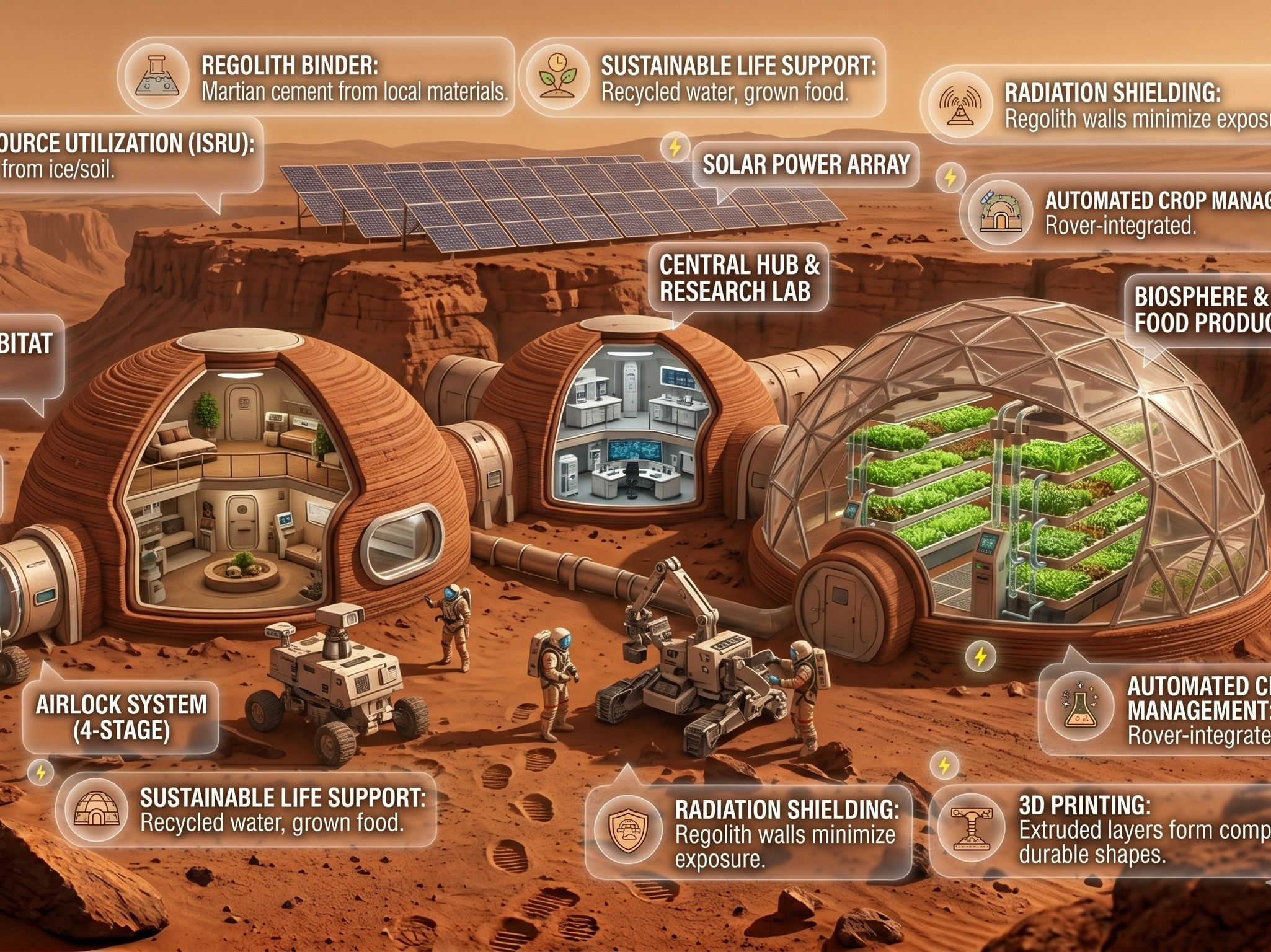
ALT Text: Base camp design explaining how will humans build homes on Mars successfully
5. SpaceX and NASA Mars Exploration Plans
The race to the Red Planet is not a solitary effort. It is a collaborative—and sometimes competitive—push by the greatest aerospace organizations in the world. Evaluating the SpaceX and NASA Mars exploration plans gives us a clear picture of how this monumental task will be achieved.
NASA’s Moon to Mars Strategy
NASA, acting as a high-authority global space agency, is taking a methodical approach. Through the current Artemis program, NASA is focused on returning humans to the Moon and establishing the Lunar Gateway—a space station orbiting the Moon. The Moon will serve as a testing ground for the life support systems, rovers, and habitats needed for Mars. According to the official NASA Mars Exploration Program, the goal is to send the first crewed mission to orbit or land on Mars sometime in the late 2030s or early 2040s.
SpaceX and the Starship
On the private side, Elon Musk’s SpaceX operates with a much more aggressive timeline. SpaceX’s entire foundational mission is to make humanity a multi-planetary species. The vehicle designed to accomplish this is the Starship—a fully reusable, super-heavy lift launch vehicle capable of carrying 100 metric tons or 100 passengers to Mars. SpaceX envisions sending fleets of Starships during the Mars transfer windows (which occur every 26 months when Earth and Mars align). Their ultimate goal is not just a scientific outpost, but a self-sustaining city of a million people by the end of the century.
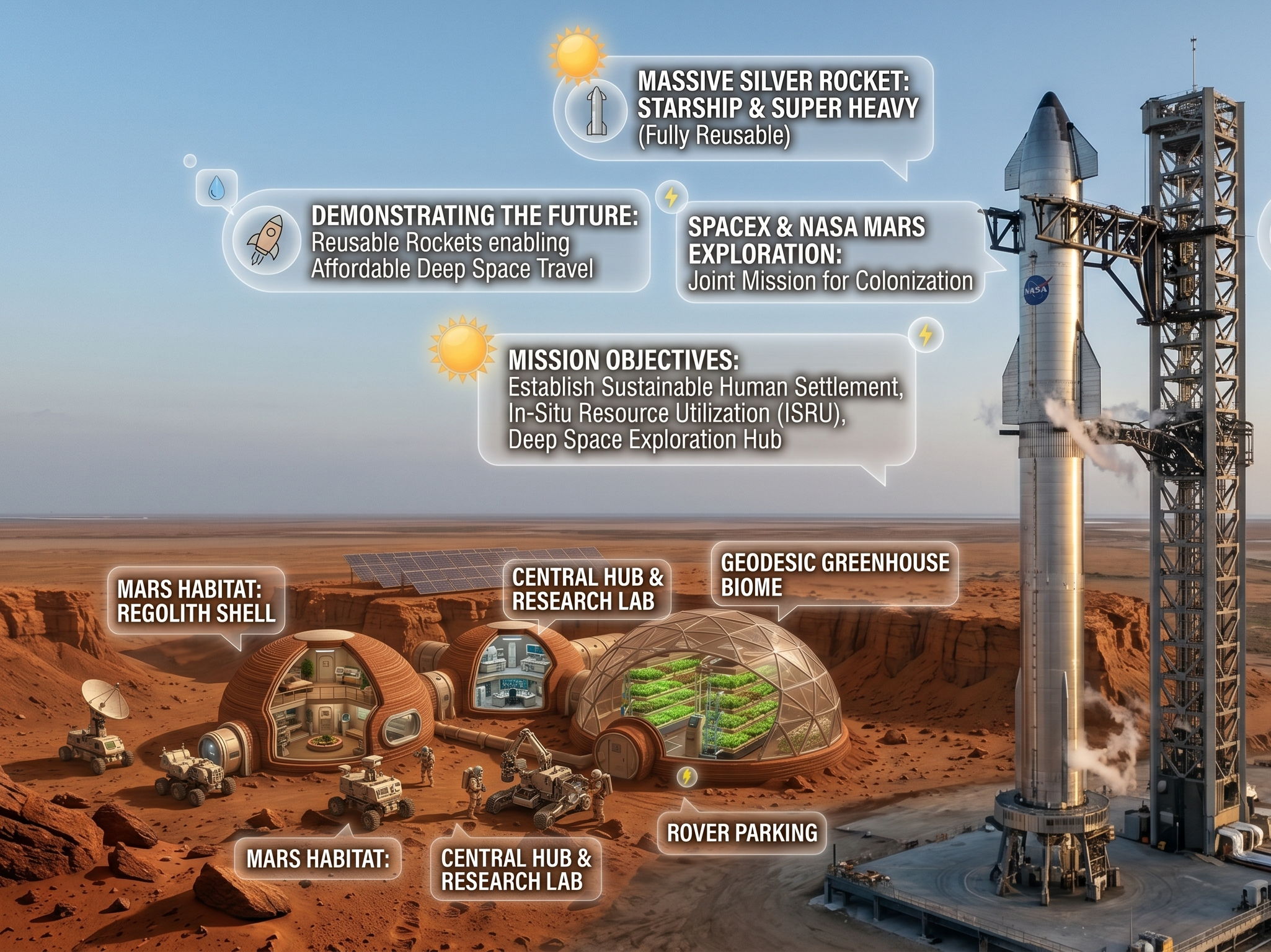
ALT Text: SpaceX and NASA Mars exploration plans demonstrating the future of space colonization
6. The Psychological Toll of a Martian Mission
While we often focus on the hardware and the rockets, the most fragile component of a Mars mission is the human mind. The psychological toll of an interplanetary journey is immense, and solving this is crucial for any long-term human settlement on Mars.
Imagine being confined to a small, metal cylinder with a half-dozen other people for a nine-month journey, followed by years living inside an enclosed dome. You cannot step outside to feel the wind on your face, you cannot swim in an ocean, and you will never see a blue sky. The isolation and sensory deprivation will be extreme.
Furthermore, because of the massive distance between Earth and Mars (up to 250 million miles depending on their orbits), communication experiences a severe time delay. A simple radio message or video transmission takes between 4 and 22 minutes to travel one way. You cannot have a real-time conversation with a loved one, or call mission control for instant help during an emergency. The crew must be incredibly autonomous, emotionally stable, and capable of extreme conflict resolution.
7. Terraforming: The Ultimate Future of Space Colonization
If we truly want to answer “yes” to the question of could humans live on Mars indefinitely, we must look beyond living in confined, pressurized domes. The ultimate, distant goal of Martian colonization is terraforming—the process of deliberately altering the planet’s atmosphere, temperature, and ecology to make it perfectly mimic Earth.
Terraforming Mars is a concept that stretches the limits of current science, but it is theoretically possible. It would begin by intentionally triggering a massive global warming event. By releasing powerful greenhouse gases (like fluorinated gases) into the atmosphere or placing giant reflective mirrors in orbit to focus sunlight onto the polar ice caps, we could melt the frozen carbon dioxide and water.
As the planet warms, the atmospheric pressure would thicken, eventually allowing liquid water to flow on the surface in the form of rivers and lakes. Once the pressure is high enough, genetically engineered, radiation-resistant plants and algae could be introduced to slowly convert the carbon dioxide into breathable oxygen. While full terraforming would take thousands of years, it remains one of the most popular and inspiring concepts in sci-fi media. For reviews of the best space movies and futuristic storytelling, check out our articles on Jivan Jarurat Entertainment.
8. Mars Colonization Timeline: When Will We Go?
So, when can we expect to see humans walking on the red dirt? The Mars colonization timeline is constantly evolving based on budget constraints, technological breakthroughs, and political will.
- 2020s: The decade of robotics. Rovers like Perseverance and Curiosity are actively mapping resources, testing oxygen generation, and gathering soil samples to eventually be returned to Earth.
- 2030s: NASA plans to finalize the Lunar Gateway and conduct long-duration deep space missions. SpaceX hopes to land uncrewed cargo Starships on Mars to pre-position supplies, habitats, and solar arrays.
- Late 2030s to 2040s: The first crewed missions. Small teams of highly trained astronauts will likely touch down, stay for a few months to a year, and return to Earth, similar to the Apollo Moon landings.
- 2050s and Beyond: The transition from exploration to colonization. Permanent, continuously occupied bases will be established. We will begin to see the first civilians, scientists, and engineers moving to Mars to build the infrastructure of a permanent city.
Conclusion: Becoming a Multi-Planetary Species
The question of could humans live on Mars is no longer a matter of if, but when. We stand at the precipice of a new era of exploration. The future of space colonization will undoubtedly be fraught with extreme danger, massive financial costs, and heartbreaking setbacks. Space is unforgiving, and Mars is a deeply hostile world.
Yet, humanity has always been driven by the need to explore what lies over the horizon. From the early seafarers crossing uncharted oceans to the Apollo astronauts taking their first steps on the Moon, overcoming insurmountable odds is woven into our DNA. Establishing a human settlement on Mars will not just act as an insurance policy for the survival of our species; it will unite the globe in a shared, awe-inspiring purpose.
As we continue to develop the technologies needed to conquer the Red Planet, we also develop innovations that improve life right here on Earth—from better water filtration systems to advancements in solar energy and telemedicine. The journey to Mars is the ultimate test of human ingenuity. For more thought-provoking articles on science, lifestyle, and the future, continue exploring Jivan Jarurat. Look up at the stars tonight, and remember: our ultimate destiny lies out there among them.