

INTRODUCTION
Minimal living is often misunderstood as a luxury lifestyle reserved for people living in perfectly designed homes with white walls and expensive furniture. In reality, minimal living tips are about simplifying your life, reducing stress, and creating more space for what truly matters. The philosophy of minimalism is not about owning nothing — it is about making sure your possessions, habits, and distractions do not own you.
In today’s fast-paced world, people are overwhelmed by digital notifications, endless shopping temptations, social pressure, and mental clutter. This is why more individuals are turning toward minimal living tips to regain control over their time, money, and emotional energy.
This comprehensive guide explores how minimalism can improve your mental clarity, finances, relationships, and overall well-being. Whether you want to declutter your home, reduce anxiety, or achieve financial freedom, these minimal living tips will help you begin your transformation.
The Neuroscience Behind Minimal Living Tips
Many people believe decluttering is only about creating an aesthetically pleasing home. However, science shows that clutter directly affects brain chemistry and emotional health.
Our brains constantly scan our surroundings for unfinished tasks, potential threats, or distractions. When your environment is crowded with unnecessary items, your brain experiences “cognitive overload.”
Reducing Cognitive Load
Every object you see requires a small amount of mental attention. This mental strain is known as cognitive load. High cognitive load increases cortisol levels, which are associated with stress and anxiety.
One of the most important minimal living tips is reducing visual clutter to create mental calmness. A clean and organized environment helps your nervous system relax and improves focus, productivity, and emotional balance.
For additional wellness strategies, explore healthy lifestyle habits on Jivan Jarurat.

ALT Text: Minimalist home office setup to reduce stress and improve focus through minimal living tips
1. Digital Minimalism: Decluttering Your Mind
The most cluttered space in modern life is often not the bedroom or closet — it is the smartphone.
Digital distractions constantly compete for our attention, making digital minimalism one of the most valuable minimal living tips for the modern world.
The App Audit
Start your digital reset by deleting apps that do not improve your life or serve a meaningful purpose. If you have not used an app in 30 days, it is probably unnecessary digital clutter.
Disable Non-Essential Notifications
Every notification interrupts your concentration and trains your brain to seek constant stimulation.
Organize Your Digital Space
- Clean your photo gallery
- Unsubscribe from promotional emails
- Remove unnecessary files
- Limit social media scrolling
The Grayscale Phone Trick
One unique minimal living tip is turning your phone screen to grayscale mode. Bright colors are specifically designed to trigger dopamine responses and increase screen addiction.
When your screen becomes gray, apps instantly feel less stimulating, helping you spend more time in the real world.
2. Financial Freedom Through Minimal Living Tips
The goal of minimalism is not deprivation — it is freedom.
One of the most powerful minimal living tips is learning intentional spending habits that prioritize long-term happiness over temporary satisfaction.
Avoiding Lifestyle Inflation
As income increases, many people automatically increase their spending. Minimalism teaches us to separate self-worth from material possessions.
By maintaining simple habits even as your income grows, you create opportunities for:
- Saving money
- Reducing debt
- Building investments
- Achieving financial independence
The 72-Hour Rule
Before buying any non-essential item, wait 72 hours.
This simple practice prevents impulse purchases and helps you determine whether you truly need something or simply desire the temporary dopamine rush of shopping.
These minimal living tips can save thousands of rupees or dollars annually while improving financial security.
Stay informed with more financial insights and lifestyle updates on Jivan Jarurat.

ALT Text: Achieving financial freedom through minimal living tips and intentional spending
3. Creating a Mindful Home Environment
A minimalist home creates emotional peace and mental clarity.
One of the best minimal living tips is using the “Core Four Method” to simplify your physical surroundings.
The Core Four Method
1. Clear Surfaces
Keep tables, desks, and counters mostly empty to reduce visual stress.
2. One-In, One-Out Rule
Whenever you buy a new item, donate or remove an old one.
3. The “Maybe” Box
Place uncertain items inside a box. If you do not open it within six months, donate everything inside.
4. Choose Quality Over Quantity
Buying fewer high-quality items reduces waste and long-term expenses.
Following these minimal living tips creates a home that feels peaceful rather than overwhelming.
4. Social Minimalism: Protecting Your Energy
Minimalism is not only about possessions — it also applies to relationships and commitments.
Many people suffer from “social clutter,” where their schedules become filled with obligations that drain emotional energy.
Learning the Power of “No”
One of the hardest but most important minimal living tips is learning to say “no” without guilt.
By reducing unnecessary social commitments, you create more time for:
- Family
- Creativity
- Rest
- Hobbies
- Self-growth
Social minimalism helps protect mental health and prevents burnout.
5. Minimalism and Sustainability
Another major benefit of minimalism is environmental sustainability.
Modern consumer culture encourages overconsumption and waste. Minimalism challenges this cycle by promoting intentional consumption.
Environmental Benefits of Minimalism
Reduced Waste
Buying fewer unnecessary products reduces trash production.
Lower Carbon Footprint
Minimalists often prioritize experiences over material possessions.
Ethical Consumption
Fewer purchases allow consumers to support ethical and sustainable brands.
These environmentally conscious minimal living tips benefit both personal well-being and the planet.
Visit our entertainment and lifestyle section for more sustainability insights.
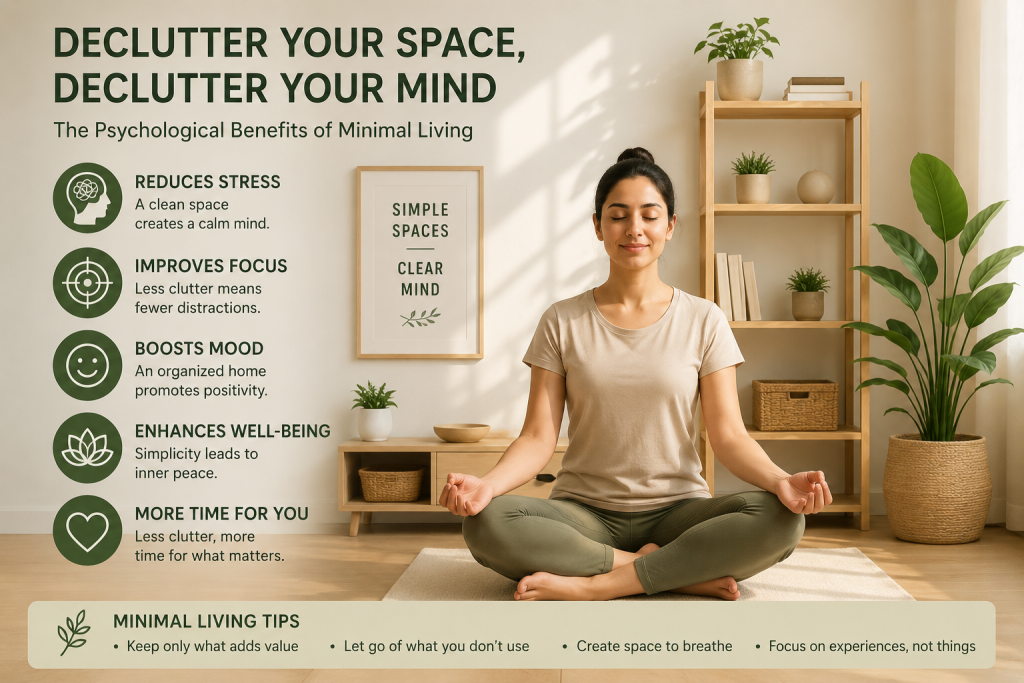
6. Mental Health Benefits of Minimal Living Tips
Minimalism can significantly improve emotional health.
Research suggests clutter contributes to anxiety, mental fatigue, and stress.
Emotional Benefits of Minimalism
- Improved concentration
- Better sleep quality
- Reduced anxiety
- Greater emotional stability
- Increased mindfulness
One of the hidden advantages of minimal living tips is how they create emotional breathing room in everyday life.
7. The Connection Between Minimalism and Productivity
Productivity improves when distractions decrease.
A simplified environment allows the brain to focus deeply on meaningful tasks.
Minimalist Productivity Habits
Time Blocking
Assign specific hours for work, rest, and personal activities.
Single-Tasking
Focus on one task at a time instead of multitasking.
Morning Simplicity
Start the day without immediately checking your phone.
These minimal living tips improve focus, creativity, and work efficiency.
8. How to Start a 30-Day Minimalist Reset
Ready to simplify your life? Here is a practical 30-day plan using actionable minimal living tips.
Week 1: Physical Decluttering
Focus on one room daily. Donate unused items and eliminate unnecessary clutter.
Week 2: Digital Detox
Delete distracting apps, clean your inbox, and create screen-time boundaries.
Week 3: Financial Reset
Track expenses, cancel unused subscriptions, and create a savings goal.
Week 4: Mental Clarity
Practice meditation, journaling, and mindful breathing exercises.
ALT Text: Psychological benefits of decluttering for mental clarity and peace through minimal living tips
Frequently Asked Questions (FAQs)
Is minimalism expensive?
No. Minimalism actually helps save money by reducing unnecessary purchases.
Can families practice minimalism?
Absolutely. Families can use minimal living tips to create calmer homes and teach children to value experiences over possessions.
Does minimalism improve health?
Yes. Reduced stress levels can improve sleep, digestion, and emotional wellness.
Conclusion: The Freedom of Less
Minimalism is not about deprivation — it is about intention.
By following these minimal living tips, you can remove distractions, reduce stress, improve finances, and create more time for meaningful experiences.
When physical, digital, emotional, and financial clutter disappear, life becomes lighter, calmer, and more purposeful.
Start small today:
- Clear one drawer
- Delete one unnecessary app
- Donate one unused item
Over time, these small actions create powerful transformation.
Your future simplified self will thank you.