
The recent clashes at New Delhi’s Jantar Mantar have sent shockwaves across the nation. What began as a massive student-led demonstration demanding accountability for the NEET-UG paper leak quickly escalated into a violent confrontation between protesters and law enforcement. Amid the chaos, a massive political controversy has erupted following a bold statement by Cockroach Janta Party (CJP) founder Abhijeet Dipke.
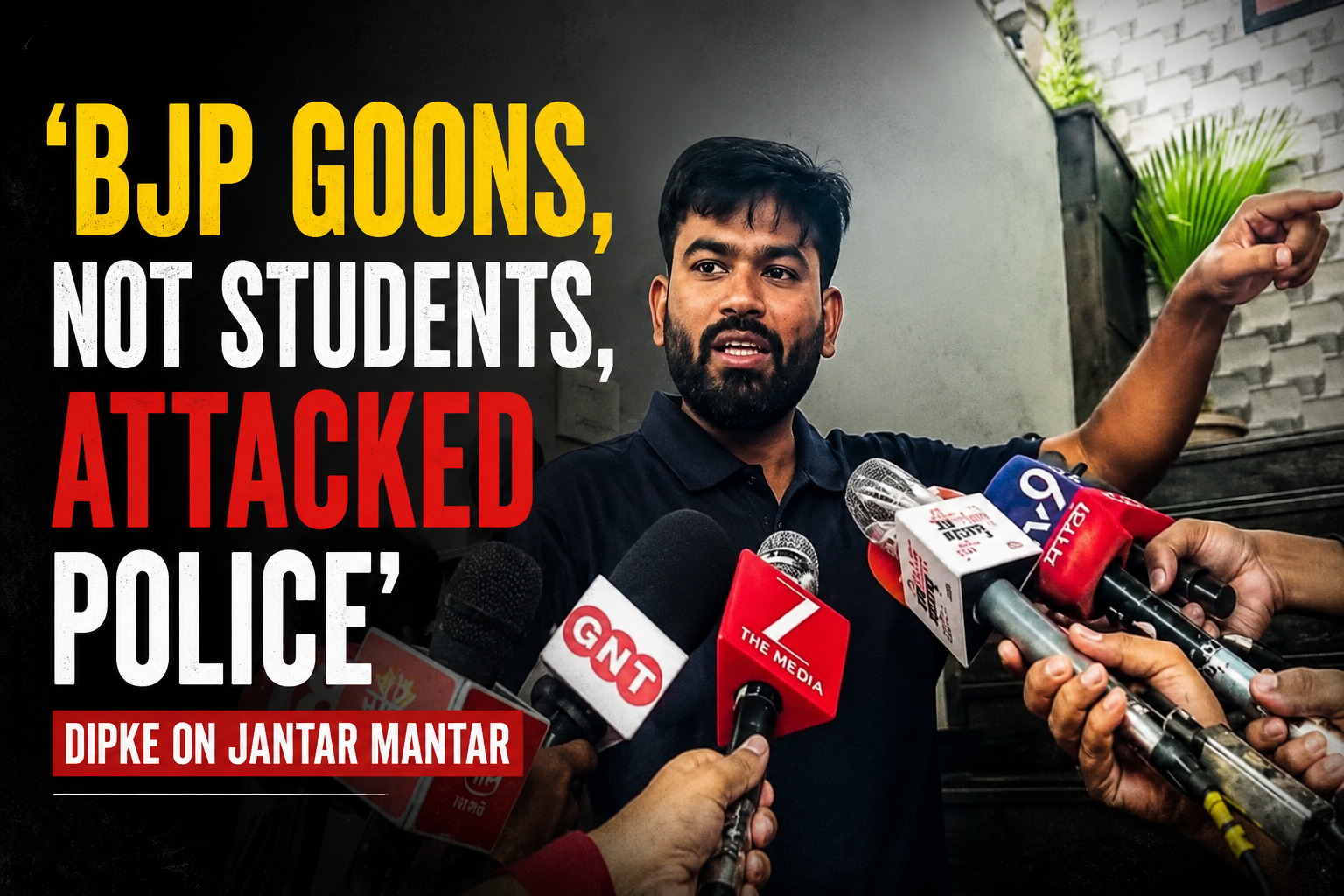
Addressing the media, Dipke made a striking claim: ‘BJP goons, not students, attacked police’. He expressed profound sympathy for the Delhi cops injured during the Jantar Mantar protest but firmly denied that the aspiring students were responsible for the stone-pelting and violence. Instead, he alleged a calculated political conspiracy designed to crush a peaceful youth movement.
This article explores the ground reality of the Jantar Mantar protest, the timeline of the escalating violence, the conflicting narratives between the Delhi Police and student leaders, and the broader political implications of this nationwide issue.
The Root Cause: Why Are Students Protesting?
To understand the current tension in the capital, we must look at the events leading up to the protest. The primary catalyst for the agitation is the massive controversy surrounding the NEET-UG medical entrance examinations.
Demands Over NEET-UG Paper Leak
Millions of students across India rely on the NEET-UG exams to secure a future in the medical field. However, recent allegations of widespread paper leaks, systemic irregularities, and grace-mark controversies have shattered student confidence.
Led by the Cockroach Janta Party (CJP) and supported by prominent activists like Sonam Wangchuk, thousands of students gathered at Jantar Mantar. Their primary demand was straightforward: the immediate resignation of Union Education Minister Dharmendra Pradhan and a transparent, supreme-court-monitored investigation into the exam leaks. Wangchuk even initiated a high-profile hunger strike to draw the government’s attention to the plight of the students.
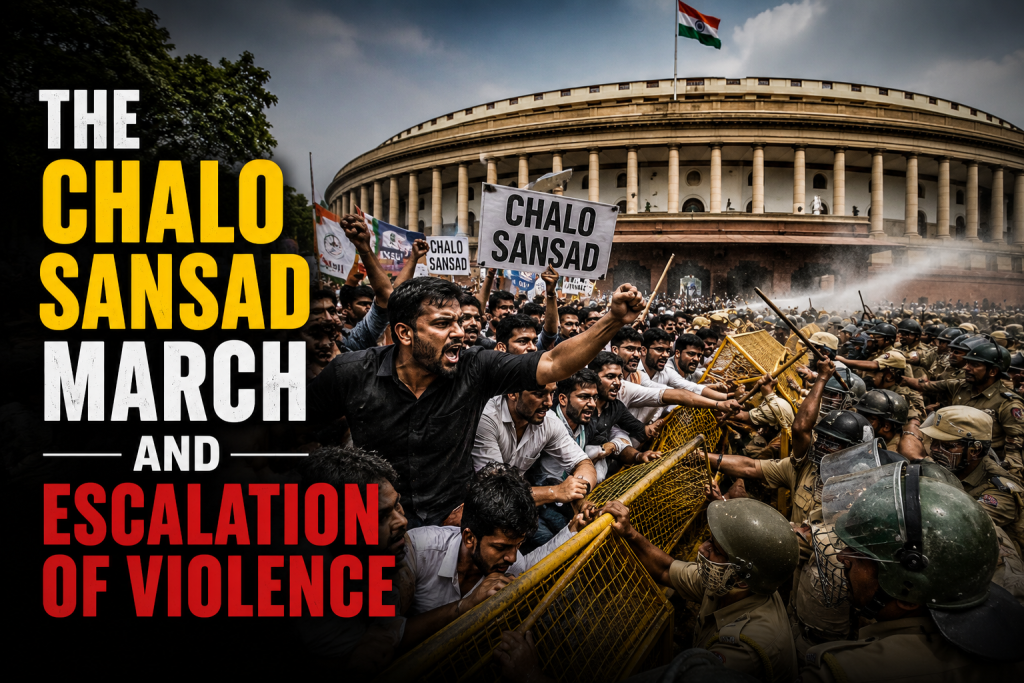
The Chalo Sansad March and Escalation of Violence
The agitation reached a boiling point on July 20, when organizers called for a “Chalo Sansad” (March to Parliament) during the ongoing Monsoon Session.
Breaking the Barricades
Despite the deployment of approximately 3,000 security personnel and multiple layers of heavy barricading, the sheer volume of youth and student protesters overwhelmed the restricted zones. According to government officials, authorities were taken aback by the thousands of young people who managed to reach the doorsteps of Parliament.
As the crowd surged forward, the situation deteriorated. Delhi Police resorted to baton charges (lathi charge) and tear gas to disperse the crowds. Authorities temporarily shut down mobile internet services in central Delhi—the first widespread communications blackout in the capital since the 2021 farmers’ protests—to curb the dissemination of visuals and prevent the gathering of larger crowds.
“‘BJP Goons, Not Students, Attacked Police’: Dipke’s Official Stance
In the aftermath of the severe clashes, families of the injured Delhi Police personnel held a press conference to highlight the trauma faced by law enforcement officers. Reacting to this, Abhijeet Dipke came forward to clarify the stance of the student protesters.
Sympathy for Delhi Cops Injured
Dipke did not dismiss the injuries sustained by the police. Speaking to news agency ANI, he stated, “We have sympathy for the police officers who were targeted in such a manner.” He acknowledged that law enforcement officers were merely performing their duties and should not have been subjected to physical harm.
However, he immediately pivoted to defend the integrity of the students. Dipke questioned the narrative that educated, aspiring medical students would resort to mob violence. “At the same time, the students who were brutally beaten by police officers, what about their families?” he asked, highlighting the disproportionate use of force.
Allegations of a Pre-Planned Conspiracy
Dipke’s most explosive statement was his allegation regarding the true perpetrators of the violence. By stating, ‘BJP goons, not students, attacked police’, he accused the ruling party of deploying habitual offenders to infiltrate the protest.
According to Dipke, he had warned authorities from the very beginning that anti-social elements would be sent to create disruptions. “This was done by BJP goons… I feel sorry that the police officers were targeted by the same people who were carrying out these actions,” he remarked. He further elaborated that people from outside Delhi were brought in to instigate violence, providing the police with an excuse to violently crack down on innocent students. He claimed this was a deliberate tactic to intimidate the youth so they would never dare to question the government again.
The Delhi Police’s Perspective
While the CJP maintains that the violence was orchestrated by outsiders, the Delhi Police have presented a vastly different account of the evening’s events.
Injuries to Key Personnel and Press Conference
The police reported that they faced unprovoked aggression from the mob. Miscreants allegedly attacked police cordons with stones, bricks, and glass bottles. Over 50 police personnel sustained injuries during the clashes.
A notable casualty was ACP Vivek Bhagat of Connaught Place, who was severely injured when the mob turned violent near Tolstoy Marg. The sheer intensity of the stone-pelting forced the police to don riot gear and deploy tear gas to restore law and order.
Denials of Unprovoked Brutality
Delhi Police firmly rejected claims that they initiated the violence. They stated that the protesters were denied permission to march to Parliament due to security protocols surrounding the Monsoon Session. When the mob attempted to breach the barricades forcefully, the police were compelled to use necessary crowd-control measures. Authorities also dismissed social media rumors claiming that children were deliberately targeted or that unprovoked brutality was unleashed on peaceful sit-ins.
The Toll on Student Protesters and Activists
The aftermath of the Jantar Mantar violence has left the student community deeply traumatized and angry.
Claims of Police Lathi Charge and Tear Gas
Witnesses and organizers painted a grim picture of the police crackdown. Protesters reported that officers ruthlessly beat students sitting peacefully on the pavements. Around 60 protesters reportedly suffered injuries, with at least one individual placed on a ventilator in a hospital’s intensive care unit.
Furthermore, CJP representatives alleged that prominent figures were mistreated. Claims surfaced that Gitanjali Angmo, wife of activist Sonam Wangchuk, was assaulted and had her hair pulled by police officers while representing her husband at the march. Abhijeet Dipke himself alleged that he was beaten and temporarily detained during the crackdown, though he later returned to reclaim the dismantled protest site.
Statement by CJP Spokesperson Ratna Singh
Lawyer-turned CJP spokesperson Ratna Singh backed Dipke’s statements. She emphasized that while the police have the state’s backing to hold press conferences about their injuries, the marginalized students lack similar platforms. She challenged the authorities, stating that if the injured protesters and their families held a conference, the brutal reality of the state’s crackdown on youth would be exposed to the world.
Why This Matters for Indian Democracy
The events at Jantar Mantar are not just about a delayed or leaked exam; they represent a fundamental flashpoint in India’s democratic fabric.
Firstly, the NEET-UG paper leak affects the dreams of millions of lower- and middle-class families who invest their life savings into their children’s education. When these students feel ignored by the Ministry of Education, protesting becomes their last resort.
Secondly, the way a state handles student protests is a direct reflection of its democratic health. If Dipke’s claims that ‘BJP goons, not students, attacked police’ hold any truth, it suggests a dangerous trend of using proxy violence to delegitimize genuine citizen grievances. Conversely, if protesters genuinely resorted to attacking police, it highlights a severe breakdown in communication and trust between the youth and the state.
An independent, court-monitored probe is urgently required not only for the NEET paper leak but also to investigate the CCTV footage of the July 20 violence to identify the actual instigators.